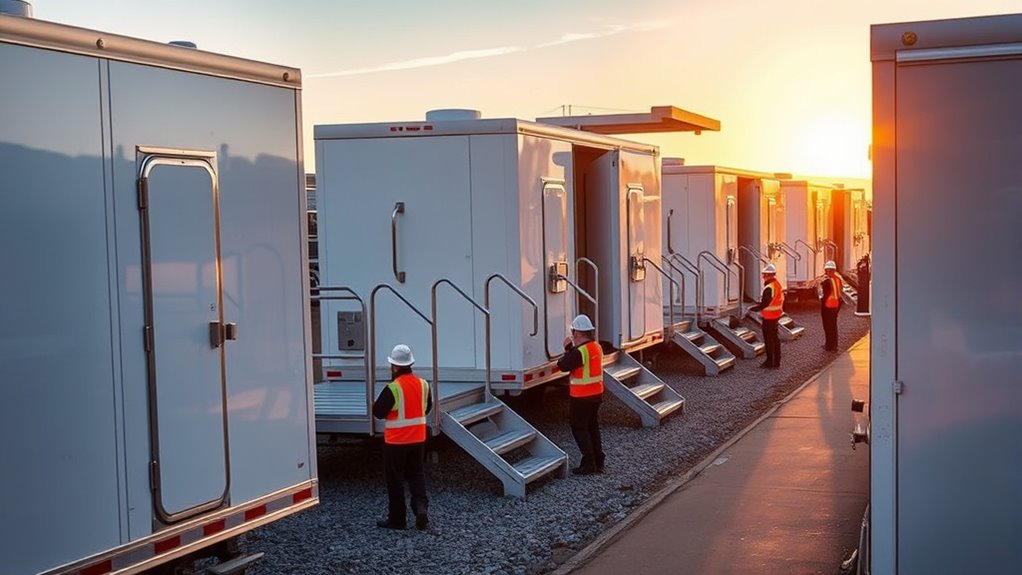

When planning load-in and load-out timelines for restroom trailers, start by confirming utility hookups and evaluating site accessibility early. Coordinate with your delivery team to set clear scheduling windows, allowing buffer times for unexpected delays. Remove obstacles and prepare the ground to ensure smooth maneuvering. Maintain ongoing communication with all involved vendors, sharing detailed instructions and site maps. Staying organized and proactive helps keep the process efficient—keep going to discover more tips for a seamless setup and departure.
Key Takeaways
- Confirm utility hookups and site readiness before arrival to prevent delays during setup.
- Evaluate site accessibility, including route clearance and ground conditions, to facilitate smooth trailer maneuvering.
- Coordinate delivery schedules with the team, including buffer times and utility connection confirmation.
- Prepare the site by removing obstacles and using temporary pads on uneven terrain for safe placement.
- Share detailed site plans and communicate clearly with all involved to ensure efficient load-in/load-out processes.
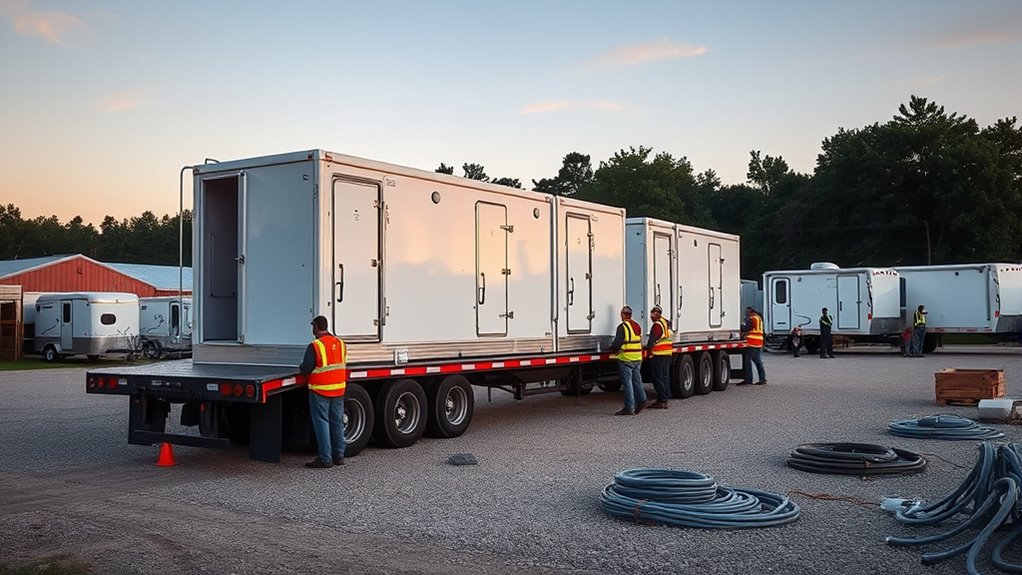
Planning the load-in and load-out of restroom trailers requires careful timing to guarantee everything runs smoothly. You need to coordinate multiple elements, starting with utilities setup. Ensuring that water, electricity, and sewage connections are ready before your arrival minimizes delays. Before the trailer even leaves the warehouse, confirm that the site has the necessary utilities hookups and that your team knows how to connect them efficiently. This preparation prevents last-minute scrambling and helps keep your timeline on track.
Coordinate utilities early to ensure smooth restroom trailer setup and stay on schedule.
Site accessibility plays a vital role in your planning process. You’ll want to evaluate the route your trailer will take to reach its designated spot. Narrow roads, low bridges, or tight turns can complicate delivery and positioning, so make sure the site can accommodate your trailer’s size. Additionally, check for clear access points, such as wide entryways or open spaces, to facilitate easy maneuvering. If the site has uneven terrain or soft ground, consider bringing in temporary pads or mats to prevent getting stuck or causing damage. The more accessible the site, the fewer obstacles you’ll face during load-in and load-out.
Timing is everything. Coordinate with your delivery team to set specific windows for arrival and departure, allowing buffer time for unforeseen issues. When you arrive, double-check that utilities are ready for hookup—water lines should be clear, electrical outlets accessible, and sewage connections prepared. Having a dedicated team member on-site to oversee utilities setup speeds up the process and reduces errors. Also, confirm that the site is free of obstacles like parked vehicles or equipment that could impede the trailer’s placement. Proper preparation guarantees your team can work efficiently without unnecessary delays.
Effective communication throughout this process is crucial. Before the scheduled load-in, share detailed site maps and utility instructions with your crew and delivery team. Clear instructions about site accessibility, utility hookup points, and access routes help everyone stay aligned. During load-out, maintain the same level of coordination to ensure a smooth departure, especially if multiple vendors are involved. Additionally, understanding the importance of contrast ratio can help in selecting the right setup to ensure optimal visibility and image clarity during presentations or events.
Frequently Asked Questions
How Early Should I Schedule the Load-In Process Before the Event?
You should schedule the load-in process at least 2-3 hours before your event starts. This allows ample time for delivery timelines and setup preparations, guaranteeing everything is ready on time. Rushing can cause delays or issues, so planning ahead helps you coordinate with delivery crews and avoid last-minute stress. Always confirm with your vendor about their recommended load-in time to ensure a smooth setup process.
What Are Common Challenges Encountered During Load-Out?
Load-out can be like untangling a knot—you might face parking issues and timing delays. You often deal with logistical challenges, such as limited space or last-minute access problems, which slow down the process. Coordinating with vendors and ensuring everyone’s on the same page helps, but unexpected hiccups like traffic or equipment malfunctions can still cause delays. Planning ahead and staying flexible are key to a smooth load-out.
Are There Specific Permits Required for Restroom Trailer Delivery?
You’ll need to check permit requirements before delivering a restroom trailer, as delivery permits are often necessary. Local regulations vary, so contact your city or county authorities to confirm if you need special permits for delivery and setup. Securing these permits beforehand helps avoid delays or fines, ensuring a smooth load-in process. Always plan ahead and verify permit requirements to keep your delivery on schedule and compliant with local laws.
How Do Weather Conditions Affect Load-In and Load-Out Schedules?
Think of weather delays as a sudden gust that can shift your plans overnight. Rain, snow, or high winds can postpone load-in and load-out, so seasonal planning is vital. You might need to build extra buffer time into your schedule or have contingency plans ready. Keeping an eye on weather forecasts guarantees you stay ahead, preventing unexpected delays that could turn your smooth operation into a chaotic scramble.
What Equipment Is Needed to Facilitate Efficient Trailer Setup and Removal?
You’ll need equipment like ramps, dollies, and power tools to facilitate efficient trailer setup and removal. Make certain you have proper equipment logistics in place to move heavy components safely. Coordinate your crew effectively by assigning specific roles for hooking up utilities, leveling, and securing the trailer. Clear communication and proper tools help speed up the process, minimizing delays and ensuring a smooth load-in and load-out.
Conclusion
Now that you understand the importance of precise load-in and load-out timelines, you’ll find that planning becomes almost instinctive. When timing aligns perfectly, everything flows smoothly, and setbacks become rare coincidences. With a little preparation, you’ll notice how seamlessly your restroom trailers integrate into your event. It’s almost as if the schedule and the trailers work together in harmony, creating a flawless experience that leaves everyone impressed and your team confident for the next occasion.