When conducting a site survey, you should systematically check restrooms, power, water, and access points to identify potential issues early. Evaluate existing infrastructure, utility capacities, and locate ideal entrances for smooth traffic flow. Guarantee facilities meet accessibility standards and plan for future growth. Pay attention to environmental factors and safety considerations. By covering these essential elements, you’ll set a strong foundation for your project’s success; continue exploring for detailed tips to optimize your survey.
Key Takeaways
- Verify the availability and capacity of utilities for power and water supply to meet project needs.
- Assess existing restroom facilities and plan for additional or upgraded amenities as required.
- Evaluate access points, including road conditions, curb cuts, and traffic flow for vehicles and deliveries.
- Identify environmental sensitivities and plan construction to minimize ecological disturbance.
- Ensure parking arrangements support visitor, staff, and delivery needs while complying with regulations.
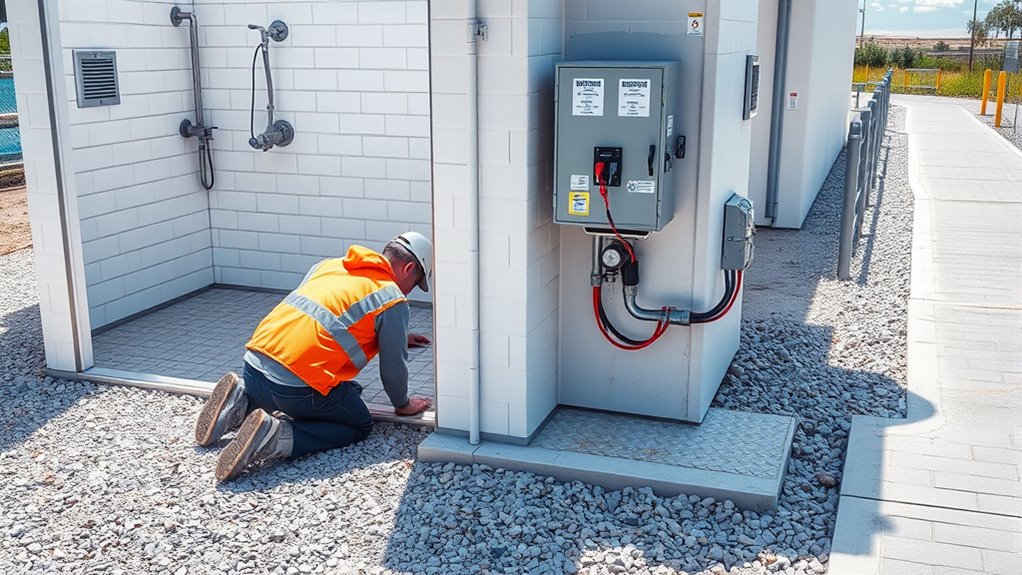
Conducting a thorough site survey is essential for guaranteeing the success of your project. One of your first priorities should be evaluating the existing infrastructure and planning for future needs. When assessing the site, pay close attention to parking considerations. Adequate parking isn’t just about convenience; it impacts user experience and compliance with local regulations. You need to determine if there’s enough space for visitors, staff, and deliveries. Think about how parking will be organized to minimize congestion and ensure safety. Also, consider future expansions—will the current parking setup accommodate growth? Addressing these factors early prevents costly adjustments later.
Prioritize parking considerations early to enhance safety, meet regulations, and support future growth.
Another critical aspect to evaluate is the environmental impact of your project. Your site survey should include an assessment of how construction and ongoing activities might affect the local ecosystem. Identify sensitive areas, such as wetlands, protected habitats, or water bodies, and plan to minimize disturbance. Consider implementing eco-friendly practices, like stormwater management systems or native landscaping, to reduce your project’s footprint. Understanding the environmental impact helps you develop sustainable solutions that comply with regulations and promote community goodwill. It’s also wise to document potential risks, such as soil erosion or pollution, so you can address them proactively. Recognizing the importance of beach destinations and natural beauty can guide sustainable development practices that preserve scenic views and ecosystems.
Power and water availability are fundamental to your project’s functionality. During your survey, verify existing utilities and determine if they meet your needs or require upgrades. For power, check the capacity of local grids and whether additional infrastructure will be necessary. For water, assess sources for potable water, wastewater disposal, and stormwater management. Confirm the proximity of utility lines, as extending services can greatly influence your budget and timeline. Planning for reliable power and water sources from the start prevents interruptions and ensures smooth operations once construction is complete.
Access points are another vital consideration. You need clear routes for vehicles, deliveries, and emergency services. Evaluate the current road conditions, curb cuts, and traffic flow to optimize access. Ensure that entrances and exits are strategically located to minimize congestion and enhance safety. Accessibility features should be incorporated to accommodate all users, including those with disabilities. Properly planned access routes streamline construction logistics and facilitate daily operations afterward.
Frequently Asked Questions
How Long Does a Typical Site Survey Take?
A typical site survey takes about 2 to 4 hours, depending on the complexity. You should allocate enough time for thorough survey preparation, including reviewing your equipment checklist and planning the inspection. During the survey, you’ll assess key areas like restrooms, power, water, and access points. Being organized and prepared helps guarantee you gather all necessary data efficiently, making the process smooth and all-encompassing.
What Permits Are Needed Before Conducting a Site Survey?
Picture a locked gate guarding your project’s future. Before you step through, you need permit requirements and regulatory approvals to open it. You must obtain permits from local authorities, ensuring your survey aligns with zoning, environmental, and safety standards. These approvals act as your key, unblocking the way for a smooth site survey. Without them, you risk delays or legal trouble, so secure all necessary documentation first to proceed confidently.
Who Should Be Present During the Survey?
During the survey, guarantee key personnel like safety officers and facility managers are present to prioritize occupant safety and verify equipment accessibility. Their presence helps identify hazards, ensures compliance, and confirms that restrooms, power, water, and access points meet safety standards. You should also include technicians for technical assessments and security staff to address access concerns. Collaborating with these stakeholders guarantees accurate data collection and a safer, more accessible environment.
How Is Environmental Impact Assessed During the Survey?
Evaluating environmental impact is like peeling an onion—layer by layer. You should conduct an ecological assessment by observing local flora, fauna, and existing land use. Check for sensitive habitats and water sources, and consider potential pollution risks. Document environmental considerations carefully, including any disruptions to the ecosystem. This helps ensure your project minimizes ecological impact and aligns with sustainability goals.
What Are Common Challenges Faced During Site Surveys?
During site surveys, you often face challenges like hazard identification, where unseen risks can cause delays or safety issues. You also need to coordinate with stakeholders, which can be tricky if communication isn’t clear or schedules don’t align. These obstacles require good planning and proactive engagement. By addressing hazards early and maintaining open stakeholder communication, you can guarantee a smoother survey process and accurate data collection.
Conclusion
Now that you’ve checked off every box—restrooms, power, water, access—you’re practically ready to host the event of the century. Just remember, if you forget something, your guests will happily survive without Wi-Fi or a decent bathroom. But hey, at least you’ll have a shiny checklist to remind you that you’re not completely unprepared. Congratulations—you’re officially the master of site surveys, or at least, slightly better than a clueless amateur. Cheers to your organizational prowess!