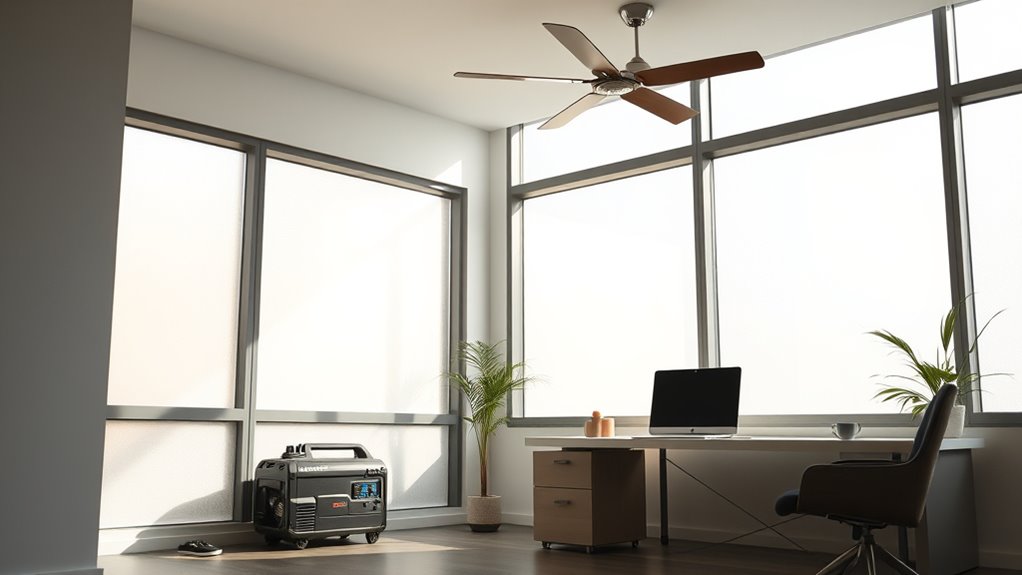

To minimize generator and fan noise in your space, you should focus on soundproofing strategies like enclosing noisy equipment in sealed, vibration-isolated cabinets and lining walls, ceilings, and floors with dense materials such as mass-loaded vinyl or acoustic drywall. Adding acoustic panels and diffusers can control internal reflections, while sealing all openings prevents sound leaks. Implementing these measures can markedly reduce noise, and below you’ll find more tips to create a quieter environment for your needs.
Key Takeaways
- Enclose generators and fans in soundproof cabinets lined with absorbent and mass-loaded materials.
- Install vibration isolators beneath equipment to prevent noise transmission through floors and walls.
- Use dense drywall, acoustic foam panels, and mass-loaded vinyl to block and absorb sound pathways.
- Seal all openings, gaps, and vents with weatherstripping and acoustic sealants to prevent noise leaks.
- Add internal acoustic treatments like panels and diffusers to control reflections and reduce reverberation.
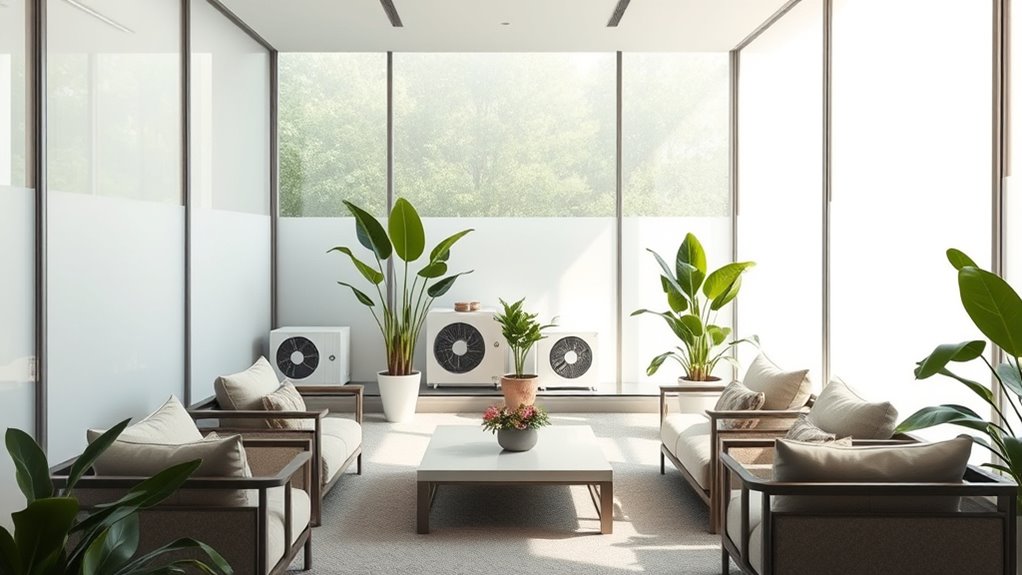
Have you ever wished for a peaceful space away from constant noise? If you’re dealing with loud generators and fans, creating a quiet zone can seem like a formidable task. But with the right approach, you can considerably reduce the noise and enjoy a more tranquil environment. The key lies in understanding soundproofing materials and acoustic treatments, which work together to absorb, block, and dampen unwanted sounds.
Start by evaluating the noise sources and the space’s structure. To minimize generator and fan noise, you should focus on adding soundproofing materials to the walls, ceilings, and floors. Mass-loaded vinyl, acoustic foam panels, and dense drywall are excellent choices for absorbing and blocking sound waves. These materials prevent the noise from penetrating through walls and into adjacent areas, giving you a noticeable reduction in loud sounds. Installing these materials strategically around noisy equipment creates a barrier that muffles the sound before it escapes the enclosure.
In addition to soundproofing materials, acoustic treatments play a vital role in managing noise levels within the space. Acoustic panels and diffusers help control how sound bounces around the room, preventing echoes and reverberations that can amplify the noise. By placing these treatments on reflective surfaces, you create a more controlled acoustic environment, making the space feel quieter and more comfortable. For areas where noise is most intense, specialized acoustic treatments like bass traps or sound diffusers can help further diminish harsh or low-frequency sounds generated by larger fans or generators.
Another effective strategy involves isolating the noise source itself. Enclosing the generator or fan in a soundproof cabinet lined with suitable materials can cut down the noise considerably. While this may require some upfront investment, it’s a highly efficient way to contain loud machinery. Additionally, mounting equipment on vibration isolators prevents sound from transmitting through floors and walls, further reducing disturbance. Understanding the importance of soundproofing techniques can greatly enhance your results.
Finally, sealing any gaps or openings is essential. Small cracks and vents can allow sound to escape, undermining your efforts. Use weatherstripping, acoustic sealants, and door sweeps to ensure a tight fit around doors, windows, and vents. This step is vital for creating a truly quiet zone, especially in environments where noise needs to be kept to an absolute minimum.
Frequently Asked Questions
How Do I Measure Noise Levels in a Quiet Zone?
To measure noise levels in a quiet zone, you should perform acoustic testing using a sound level meter. Place the meter at various points within the zone to get accurate readings of ambient noise. Make sure to use a calibrated sound level meter and record the decibel levels over time to identify any fluctuations. This approach helps guarantee your quiet zone maintains the required sound standards effectively.
Are There Specific Regulations for Noise Limits in Quiet Zones?
Yes, there are specific regulations for noise limits in quiet zones. You need to follow regulatory standards set by local, state, or federal agencies, which specify maximum noise levels for different environments. To guarantee noise compliance, regularly measure sound levels with appropriate equipment and compare them to these standards. Staying within these limits helps maintain the tranquility of the zone and avoids penalties or legal issues.
Can Noise Reduction Compromise Generator or Fan Performance?
You can reduce noise without compromising generator or fan performance by focusing on effective noise insulation and regular equipment maintenance. Proper insulation minimizes sound transmission while guaranteeing airflow isn’t restricted. Maintaining your equipment keeps components operating efficiently, preventing increased noise from wear or malfunction. By balancing insulation and maintenance, you ensure quiet operation without sacrificing performance, meeting noise regulations and protecting your equipment’s longevity.
What Materials Are Most Effective for Noise Insulation?
When it comes to noise insulation, you’ll want to use soundproof barriers and insulating foams. These materials are like a fortress, blocking noise from escaping. Soundproof barriers, often made of dense materials like mass loaded vinyl, are highly effective. Insulating foams, such as open-cell or closed-cell foam, absorb sound waves. Combining these materials guarantees maximum noise reduction without sacrificing performance, turning a noisy environment into a peaceful oasis.
How Often Should Noise Levels Be Monitored in Quiet Zones?
You should monitor noise levels regularly, ideally weekly or bi-weekly, to stay within noise level thresholds. Consistent checks help identify any increases early, allowing you to adapt maintenance scheduling as needed. By maintaining a routine, you ensure the quiet zone remains effective and compliant with noise regulations. Use sound level meters during monitoring to accurately track noise and prevent disruptions, keeping the environment peaceful and noise levels in check.
Conclusion
Creating quiet zones can markedly reduce generator and fan noise, making your environment more peaceful. Studies show that proper sound management can cut noise levels by up to 50%, improving comfort and safety. By implementing effective noise-minimizing strategies, you not only enhance your space’s tranquility but also protect your hearing and overall well-being. So, take action today—your ears will thank you, and you’ll enjoy a calmer, more focused environment that’s worth every effort.