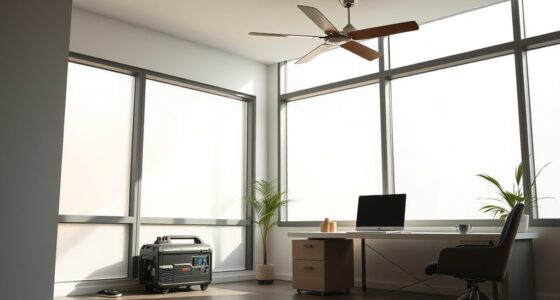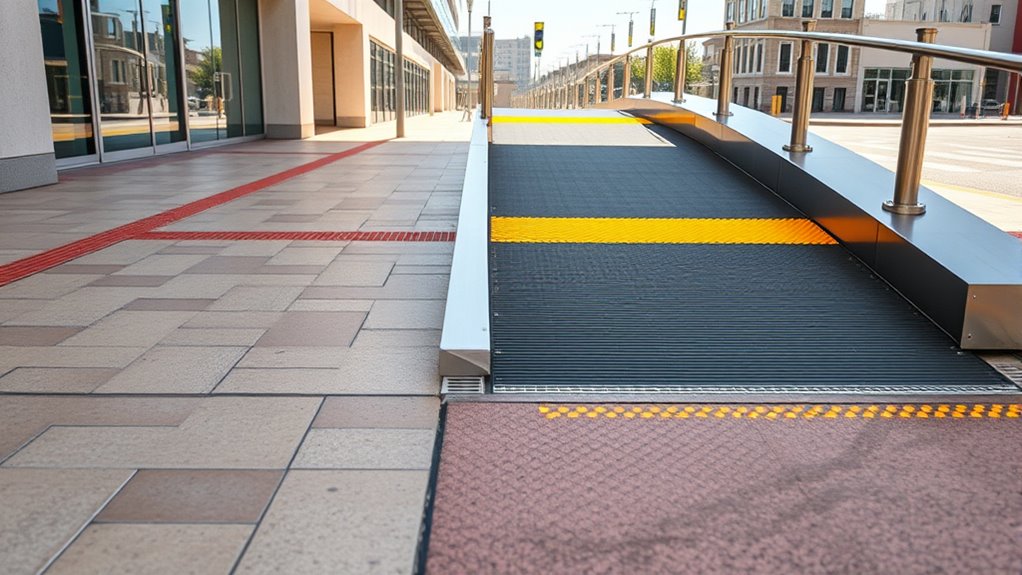

To guarantee stable access in any weather, choose durable, slip-resistant flooring like textured tile, vinyl, or polished concrete that can handle moisture and foot traffic. Design ADA ramps with gentle slopes, sturdy handrails, and non-slip surfaces to improve safety and compliance. Incorporate outdoor materials such as pavers or concrete that resist cracking and erosion. Thoughtful landscaping and weather-resistant surfaces create a resilient, accessible space—keep exploring to discover key tips for maximum safety and stability.
Key Takeaways
- Use slip-resistant, textured flooring materials like textured tile, vinyl, or polished concrete to ensure safety in all weather conditions.
- Design ADA ramps with gentle slopes, sturdy handrails, and non-slip surfaces for stable, accessible outdoor and indoor access.
- Incorporate weather-resistant materials that resist cracking, erosion, and moisture damage to maintain safety over time.
- Plan outdoor landscaping with proper drainage and durable surfaces like pavers or concrete to prevent water pooling and slipperiness.
- Create a cohesive environment with level, clear pathways and thoughtful landscaping to ensure reliable, stable access regardless of weather.
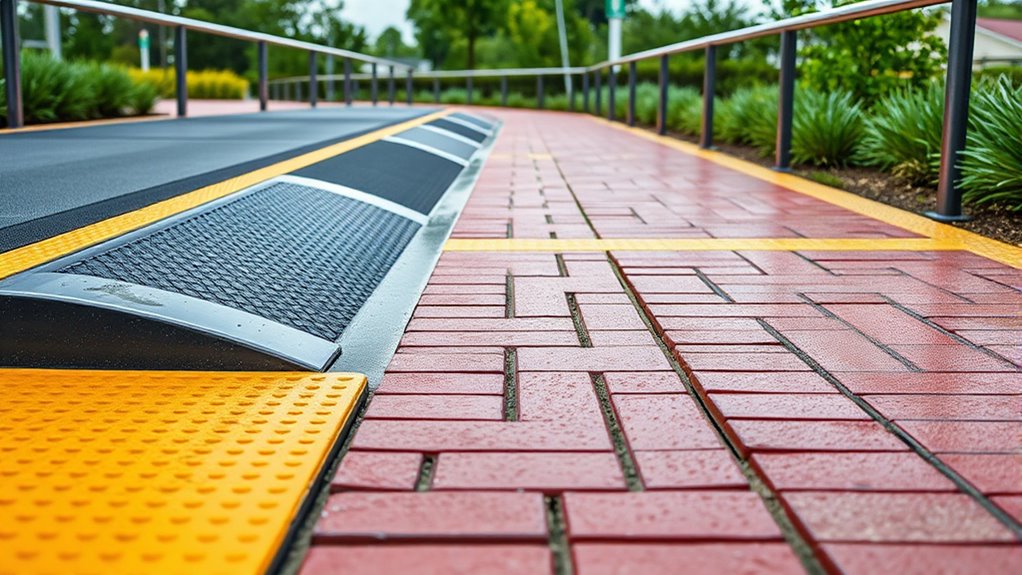
Ensuring safe and accessible spaces often starts with proper flooring and ADA ramps, which play a essential role in meeting accessibility standards. When you focus on interior design, choosing the right flooring isn’t just about aesthetics; it’s about creating a surface that’s safe, durable, and easy to navigate for everyone. Smooth, slip-resistant flooring inside your building helps prevent falls, especially in areas prone to moisture or high traffic. Materials like textured tile, vinyl, or polished concrete can provide the right combination of style and safety, blending seamlessly with your interior design while guaranteeing stability underfoot.
Outside, outdoor landscaping plays a pivotal part in accessibility. Well-designed pathways and ramps should complement the natural environment while maintaining function. When planning your outdoor landscaping, consider how the terrain influences the placement of ADA ramps. You want these ramps to have gentle slopes, sturdy handrails, and non-slip surfaces that withstand weather conditions. Properly integrated landscaping can also help with drainage, preventing water from pooling on walkways and making surfaces slippery. Using gravel, pavers, or concrete for the ramps and pathways ensures durability and safety, regardless of rain, snow, or heat.
Your focus on flooring and outdoor landscaping should always prioritize stability and weather resistance. For interior design, this means selecting flooring that can handle foot traffic and moisture without sacrificing style. For outdoor spaces, it involves choosing materials that resist cracking, erosion, and wear from exposure to the elements. Combining functional, slip-resistant surfaces with thoughtful landscaping creates a cohesive look that’s both inviting and accessible. You might incorporate planters or greenery alongside pathways to soften the transition between indoor and outdoor spaces, making the entire environment feel welcoming and inclusive.
When designing accessible spaces, it’s essential to think about how people will move through them, regardless of weather. Proper flooring inside and outdoor landscaping outside ensure safe, stable access at all times. This not only meets legal requirements but also demonstrates your commitment to inclusivity. Clear, level paths with gentle slopes and non-slip surfaces allow everyone to navigate comfortably without fear of slipping or tripping. By paying attention to the details—like textured flooring, weather-resistant materials, and thoughtfully integrated landscaping—you create a space that’s truly accessible, resilient, and visually appealing. Incorporating Gold IRA Rollovers strategies can also provide long-term financial stability beyond physical accessibility investments. Ultimately, investing in quality flooring and outdoor landscaping helps guarantee that your environment remains safe, functional, and welcoming in any weather conditions.
Frequently Asked Questions
What Are the Best Materials for Slip-Resistant Flooring?
You should choose materials with non-slip coatings or textured surfaces for slip-resistant flooring. These options provide better grip and reduce the risk of falls in wet or icy conditions. Rubber, textured vinyl, and treated concrete are excellent choices, as they maintain stability underfoot. Regularly applying non-slip coatings enhances safety, especially in high-traffic or outdoor areas. Prioritizing these materials guarantees safe, reliable access regardless of weather.
How Do ADA Ramps Comply With Local Building Codes?
You might wonder if your ADA ramps meet local building codes, and the answer is yes. By following accessibility standards, you guarantee compliance with building codes, so everyone can access your space safely. This not only keeps you legally protected but also demonstrates your commitment to inclusivity. When you install ramps that adhere to these guidelines, you create a welcoming environment and avoid costly penalties—making your space accessible and compliant.
Can Flooring and Ramps Be Customized for Specific Weather Conditions?
Yes, you can customize flooring and ramps for specific weather conditions. Weatherproof flooring guarantees safety and durability in rain, snow, or heat, while climate-specific ramps are designed with materials that resist slipping or warping in extreme temperatures. By choosing these tailored solutions, you create reliable, stable access that adapts to your local climate, making sure everyone can navigate safely regardless of weather challenges.
What Maintenance Is Required for Outdoor ADA Ramps?
Sometimes, the weather reminds you of the importance of proper maintenance. You should follow a regular maintenance schedule for your outdoor ADA ramps, inspecting for cracks or damage. Applying weatherproof coatings helps protect against moisture and corrosion. Clean the ramps frequently to prevent debris buildup, and reapply coatings as needed. This proactive approach guarantees your ramps stay safe, stable, and accessible regardless of weather conditions, extending their lifespan considerably.
How Do Flooring Options Affect Wheelchair Safety and Stability?
You should consider how flooring options impact wheelchair safety and stability by prioritizing slip-resistant surfaces and level changes. In interior design, choose materials that blend aesthetics with functionality, such as textured tiles or rubberized flooring, to guarantee safety without sacrificing style. Always assess how the flooring supports mobility, especially in high-traffic areas, and consider ADA guidelines to make sure your space remains accessible and secure for everyone.
Conclusion
Did you know that over 61 million adults in the U.S. live with some form of disability? Ensuring your flooring and ADA ramps are stable and weather-resistant makes a real difference in their daily lives. By prioritizing safe, accessible design, you create environments everyone can navigate confidently—regardless of weather conditions. Remember, a small upgrade can have a big impact on independence and safety for all users. Make your spaces more accessible today!