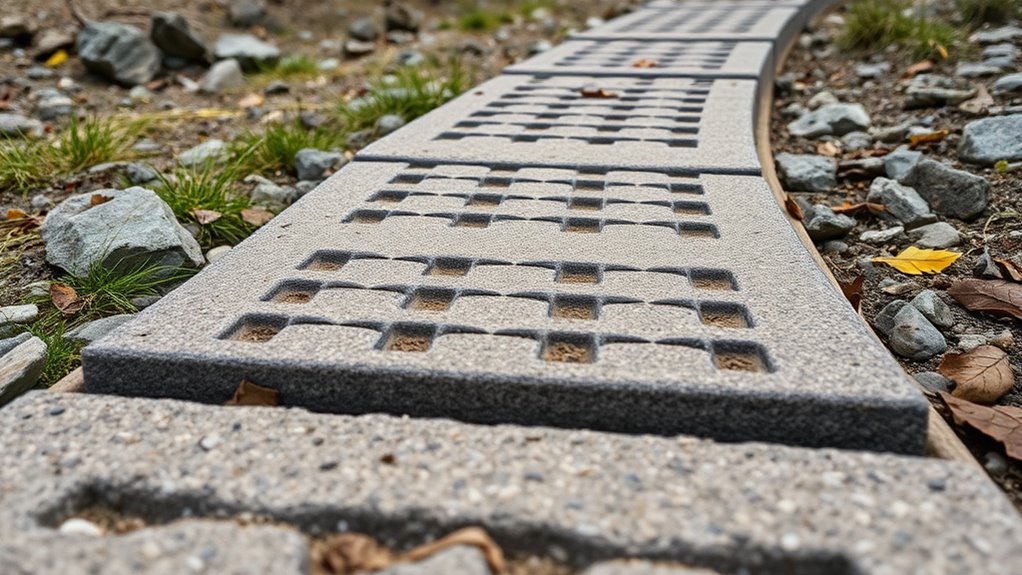

To improve accessibility on uneven terrain, focus on leveling paths to create smooth, stable routes that accommodate wheelchairs and assistive devices. Make certain that tactile paving is evenly spaced and well-maintained to provide reliable tactile cues without clutter. Properly designed progressions between levels with ramps and appropriate spacing between features make navigation safer and more intuitive. Continuing further will reveal more tips on how precise leveling and spacing enhance outdoor accessibility for everyone.
Key Takeaways
- Ensure pathways are properly leveled with gentle slopes and minimal uneven surfaces to facilitate safe navigation.
- Maintain consistent spacing between tactile paving indicators to prevent confusion and support reliable tactile cues.
- Connect tactile indicators seamlessly with ramps and level landings for continuous, accessible routes.
- Regularly inspect and repair uneven terrain and damaged paving to maintain safety and effectiveness.
- Design pathways with appropriate width and surface firmness to accommodate assistive devices and promote ease of use.

Navigating uneven terrain can be a significant challenge for many people, especially those with mobility impairments or using assistive devices. When paths aren’t level or properly spaced, it becomes more difficult to move safely and comfortably. That’s why implementing adaptive pathways is essential for creating accessible environments. These pathways are designed to accommodate different mobility needs, ensuring everyone can travel through outdoor spaces without unnecessary obstacles. Adaptive pathways often feature gentle slopes, firm surfaces, and enough width to allow wheelchairs, walkers, or other assistive devices to pass easily. Properly designed pathways reduce the risk of falls and frustration, making outdoor spaces enjoyable and inclusive for all users.
A key component of making uneven terrain more accessible is tactile paving. Tactile paving consists of textured ground surface indicators that communicate important information through touch, usually for people who are visually impaired. These textured surfaces are strategically placed at crossings, stairways, and transitions to alert users about potential hazards or changes in the environment. By feeling the textured surface with a cane or underfoot, individuals can better understand their surroundings and make safer decisions about where to go next. Incorporating tactile paving into pathways helps bridge the gap between visual and tactile cues, fostering independence for people with vision impairments. Additionally, understanding the shelf life of materials used in tactile paving can help ensure their longevity and effectiveness over time.
Designing adaptive pathways with tactile paving requires careful planning. You need to guarantee that tactile surfaces are continuous, well-maintained, and placed at appropriate heights and locations. The paving should seamlessly connect with other accessibility features, such as ramps or level landings, to create a cohesive route. When these elements work together, they markedly improve navigation on uneven terrain, making outdoor spaces more navigable and safer. Proper spacing between tactile indicators is vital; too far apart, and they lose effectiveness, too close, and they can create clutter or confusion. Consistent, standardized designs help users quickly learn and rely on these cues.
Ultimately, the goal is to make outdoor environments welcoming and accessible to everyone, regardless of physical ability. Adaptive pathways combined with tactile paving create a comprehensive approach to tackling uneven terrain. They ensure that routes are not only physically navigable but also perceptible through multiple senses. When these features are thoughtfully integrated, they empower individuals with mobility challenges to explore, commute, and enjoy outdoor spaces confidently. Accessibility on uneven terrain isn’t just about compliance; it’s about fostering independence, safety, and inclusion for all users.
Frequently Asked Questions
What Materials Are Best for Creating Durable Uneven Terrain Pathways?
For durable uneven terrain pathways, you should choose materials with high surface durability like compacted gravel, crushed stone, or concrete pavers. These options withstand heavy foot traffic and weather conditions. Proper material selection guarantees stability and longevity, preventing erosion and uneven surfaces. Incorporate proper leveling techniques during installation to enhance accessibility and safety. Using quality materials and correct installation methods guarantees your pathway remains functional and accessible over time.
How Do I Maintain Accessibility Features Over Time?
To sustain accessibility features over time, you should implement regular maintenance routines like inspecting and repairing uneven surfaces and guaranteeing proper drainage. Use adaptive strategies such as adding gravel or compacted soil to stabilize pathways and prevent erosion. Keep pathways level and well-spaced, addressing issues promptly. Consistent upkeep ensures safety and accessibility, allowing everyone to navigate the terrain comfortably and reliably.
Are There Specific Design Guidelines for Different Terrains?
You’d think designing for every terrain was like trying to tame a wild beast, but actually, it’s all about terrain adaptation and following accessibility standards. Different terrains demand specific guidelines—think of steep slopes needing gentle inclines or uneven surfaces requiring extra cushioning. By prioritizing these standards, you guarantee your design adapts seamlessly, making every space inviting and accessible, no matter how wild or uneven the ground gets.
How Can Technology Improve Accessibility on Uneven Surfaces?
Technology can improve accessibility on uneven surfaces by integrating assistive devices like smart wheelchairs or wearable sensors that adapt to terrain changes. You’ll benefit from sensory feedback systems that alert you to obstacles or unstable areas, helping you navigate safely. These innovations enhance mobility, giving you more confidence and independence on challenging terrains, making everyday activities more manageable and accessible.
What Funding Options Are Available for Accessible Terrain Modifications?
Think of funding options like a treasure map—you’ll find hidden gems in grant opportunities and tax incentives. You can apply for government grants dedicated to accessibility projects or explore local and federal programs that support terrain modifications. Tax incentives also act as rewards for making improvements. By steering through these pathways, you can access the funds needed to transform uneven terrain into accessible spaces, making everyone’s journey smoother and more inclusive.
Conclusion
By mastering leveling and spacing techniques, you can transform even the most rugged terrain into an accessible wonderland. Don’t underestimate the power of proper planning — it’s your secret weapon against the chaos of uneven ground. With each step you take, you’re making a monumental difference in creating an inclusive environment that could outshine the most perfect landscape. So, get out there and turn challenging terrain into a smooth, welcoming space — because accessibility isn’t just a goal; it’s a revolution!