
To keep your electrical connections safe in wet weather, you need to implement a rainproof plan that includes waterproof outlets, weatherproof covers, and sealed junctions. Use outdoor-rated wiring and verify all seals and covers are intact and properly installed. Elevate outlets and junction boxes to prevent water pooling and regularly inspect for damage. A solid weatherproofing strategy reduces risks of shorts and corrosion, helping your systems stay reliable—continue exploring for more tips on protecting your electrical connections from rain.
Key Takeaways
- Use outdoor-rated, water-resistant outlets with weatherproof covers for reliable protection against rain.
- Ensure all electrical junctions are sealed in weatherproof enclosures with gaskets and proper sealing.
- Regularly inspect and maintain covers, seals, and components to prevent water ingress.
- Elevate outlets and junctions to avoid water pooling and direct exposure to rain.
- Incorporate proper wiring, connectors, and barriers to create a continuous water-resistant barrier.
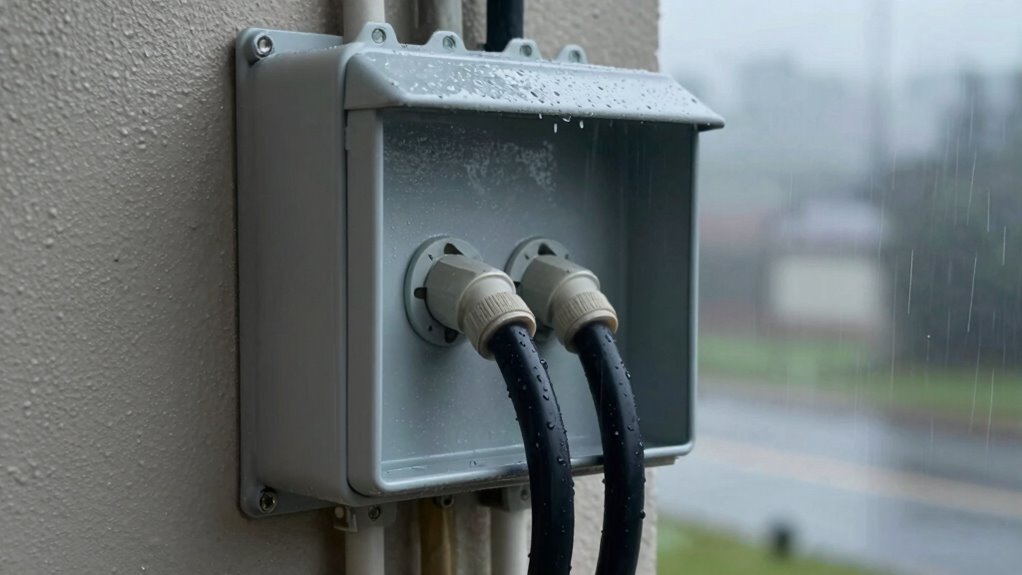
Rainproof electrical connections are crucial for guaranteeing safety and reliability in outdoor and damp environments. When you’re working outside or in areas prone to moisture, protecting your electrical system from water intrusion isn’t just a good idea—it’s indispensable. Water resistant outlets are designed to prevent water from getting inside the receptacle, reducing the risk of shorts, corrosion, and electrical failures. These outlets typically feature weatherproof covers or enclosures that seal tightly when not in use, providing a barrier against rain, snow, and humidity. Installing water resistant outlets is a straightforward way to safeguard your wiring and equipment, especially in exposed locations like gardens, patios, or outdoor sheds.
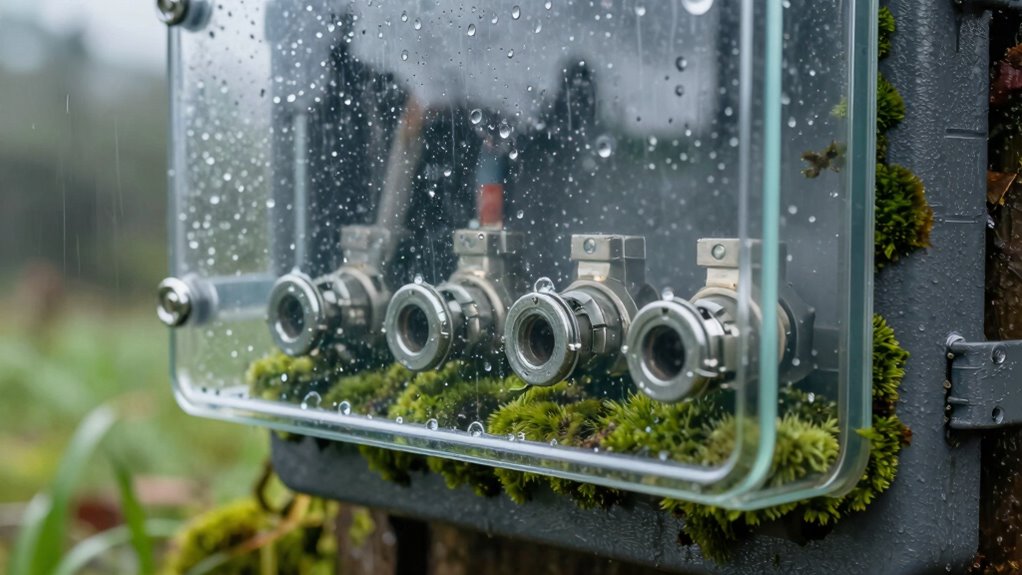
Rainproof outlets protect outdoor electrical systems from water damage and ensure safety.
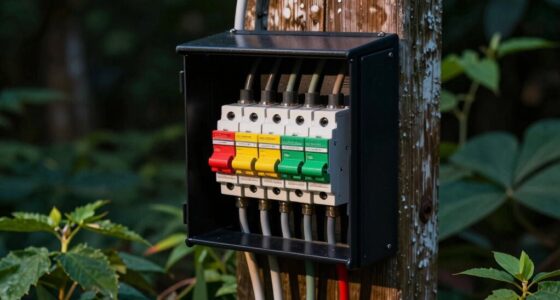
In addition to using water resistant outlets, you should pay close attention to sealed junctions where wires connect. Sealed junctions are designed to keep moisture out, maintaining a safe and reliable connection over time. They’re often enclosed in weatherproof boxes or fittings with gaskets and seals that prevent water ingress even during heavy rain. When you create sealed junctions, you’re effectively protecting the integrity of your electrical system. This is especially critical in outdoor settings where weather conditions can fluctuate suddenly and unpredictably. Proper sealing ensures that moisture doesn’t travel along the wiring or reach sensitive components, which could cause corrosion, short circuits, or electrical hazards.
To maximize safety, always ensure that all outdoor electrical connections are properly weatherproofed from the start. Use high-quality, outdoor-rated wiring and connectors designed for moisture resistance. When installing or maintaining your electrical system, check that all covers and seals are intact and functioning correctly. Don’t forget to regularly inspect these components for wear or damage, replacing any that show signs of deterioration. A well-maintained, weatherproof connection system minimizes the risk of electrical failures and prolongs the lifespan of your equipment.
It’s also a good idea to keep connections elevated and away from direct contact with water whenever possible. When rain or snow falls, moisture tends to collect in low-lying areas or around exposed wiring. Elevating outlets and junctions helps prevent water from pooling and seeping into delicate parts. Remember, the goal is to create a continuous barrier against water intrusion—every component needs to be sealed and protected. Properly weatherproofed electrical connections aren’t just about compliance; they’re about peace of mind, knowing your electrical system can withstand the elements and operate safely in outdoor conditions. Additionally, understanding the importance of waterproofing standards helps ensure your setup meets safety regulations and performs reliably over time.
Frequently Asked Questions
Can Outdoor Electrical Connections Be Used Underwater Safely?
You shouldn’t use outdoor electrical connections underwater, as submersion risks can cause shorts and electrical hazards. Even if they seem waterproof, most connections don’t meet waterproofing standards needed for underwater use. Always check the manufacturer’s specifications and verify your connections are rated for underwater or submersion environments. Proper waterproofing standards are essential to keep your electrical system safe and functional, especially in wet or submerged conditions.
How Often Should Rainproof Electrical Connections Be Inspected?
You should inspect rainproof electrical connections at least every six months, especially before and after heavy rain seasons. Adopting a regular maintenance schedule guarantees their integrity and safety. During each inspection, check for signs of wear, corrosion, or damage to seals and enclosures. Promptly address any issues to prevent moisture intrusion. Consistent inspection frequency keeps your electrical connections reliable and safe under adverse weather conditions.
What Is the Cost Difference Between Standard and Weatherproof Wiring?
Think of the cost comparison as a journey through a landscape of savings. Weatherproof wiring might seem like a steeper climb initially, with higher installation expenses, but it shields you from rain’s relentless assault, reducing long-term repair costs. Standard wiring, like a fragile bridge, is cheaper to install but risks costly damage. Investing in weatherproof wiring offers peace of mind, turning a risky shortcut into a durable, rain-resistant path.
Are There Eco-Friendly Options for Waterproof Electrical Solutions?
Yes, you can choose eco-friendly waterproof electrical solutions. Look for products with sustainable insulation made from recycled or biodegradable materials, reducing environmental impact. Additionally, biodegradable connectors break down naturally, minimizing waste. These options guarantee your electrical connections stay protected from water while being gentle on the planet. By selecting sustainable insulation and biodegradable connectors, you make a responsible choice that benefits both your project and the environment.
How Do I Troubleshoot a Rainproof Connection That Isn’t Working?
To troubleshoot a rainproof connection that’s not working, start by testing the connection with troubleshooting tools like a multimeter to check for voltage or continuity issues. Make certain all waterproof seals are intact and correctly installed. If the connection still fails, recheck wiring and connections for corrosion or damage. Proper connection testing helps identify whether the problem lies in the seals, wiring, or the power source itself, allowing you to fix it efficiently.
Conclusion
So, next time you’re caught in unexpected rain, remember that a simple rainproof connection can save your day—and your equipment. It’s funny how a small detail like waterproofing can turn a soggy mishap into a smooth, worry-free experience. Just like finding that missing sock in the laundry, it’s those little things that make all the difference. Stay prepared, stay dry, and keep your electrical connections weatherproof—because life’s full of surprises.