
To prevent running dry at your event, first estimate water needs by multiplying the number of guests by their average use (about 0.5 to 1 gallon per person per hour). Factor in total duration and extra water for activities like cleaning or food prep, then add a buffer of 10-20%. Choosing a tank slightly larger than your calculations guarantees a continuous supply. Keep these simple gallon math tips in mind to plan effectively, and you’ll discover more ways to keep your water supply reliable.
Key Takeaways
- Calculate total water needs by multiplying expected guests by per-person usage, then add 10-20% buffer.
- Consider event duration and activities to refine water consumption estimates accurately.
- Choose a tank capacity that slightly exceeds total estimated needs for flexibility and to prevent shortages.
- Ensure tank features allow easy filling, cleaning, and maintenance to support continuous water supply.
- Plan for potential fluctuations in attendance or activity levels by selecting appropriately sized, accessible tanks.
Are you unsure how much water you’ll need for your upcoming event? Calculating water needs might seem straightforward, but without proper planning, you risk running out or overspending on unnecessary capacity. The key is understanding water consumption and matching it with an appropriately sized tank. Your goal is to find the right balance — enough water to keep everyone hydrated and the event running smoothly, but not so much that you’re paying for unused capacity. To do this effectively, you need to consider the number of attendees, the duration of your event, and the activities planned.
Start by estimating how much water each person will consume during the event. On average, a person drinks about 0.5 to 1 gallon of water per hour, depending on factors like weather, activity level, and age. If your event lasts several hours, multiply that per-person estimate by the expected attendance. For example, if you’re expecting 200 guests and the event lasts four hours, you’ll want to plan for roughly 400 to 800 gallons of water. This calculation gives you a solid starting point for your water consumption needs.
Next, consider other uses for water beyond drinking — such as handwashing stations, food preparation, or cleaning. These needs can considerably increase overall water consumption. If your event includes catering or outdoor activities, add a buffer—say 10-20%—to account for unforeseen water uses. Additionally, incorporating high-efficiency fixtures can help reduce overall water demand and make your supply last longer. Once you’ve estimated total water consumption, you can determine your ideal tank capacity. Remember, selecting a tank that’s too small will lead to shortages, disrupting your event. Conversely, choosing one that’s excessively large means unnecessary expense and space utilization.
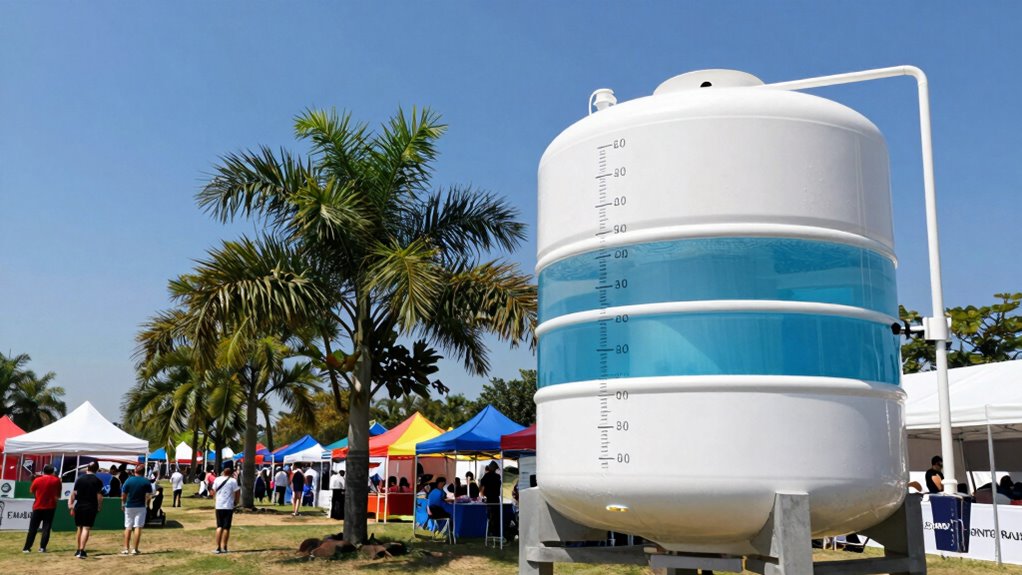
Knowing your water consumption helps you choose a tank size that aligns with your needs. For instance, if your calculations show you’ll need around 1,000 gallons, look for tanks with capacities that match or slightly exceed this number to provide a buffer. This approach prevents running dry during critical moments and allows for flexibility if your guest count or activities change unexpectedly. Also, consider the tank’s design, ensuring it’s easy to fill, clean, and maintain, especially if your event spans multiple days or involves food service.
Frequently Asked Questions
How Do Outdoor Weather Conditions Affect Water Tank Needs?
Outdoor weather conditions considerably impact your water tank needs through climate impact and evaporation loss. Hot, dry, and windy weather increases evaporation, causing you to refill more often. Rain or cooler temperatures reduce demand, but you should still account for potential evaporation. By understanding these factors, you can adjust your tank size and refill schedule, ensuring you always have enough water without overestimating, preventing shortages during your event.
What Safety Considerations Are Essential for Large Water Tanks?
Prioritize protective precautions by ensuring proper tank stabilization and strategic safety valve placement. You should secure tanks to prevent tipping, especially in windy conditions, and position safety valves correctly to release excess pressure safely. Regular inspections and maintenance are essential to identify leaks or weaknesses. Use sturdy foundations, avoid overcrowding, and follow all safety standards to keep everyone safe and prevent accidents during your event.
How Often Should Water Tanks Be Cleaned During Events?
You should clean water tanks regularly during events to guarantee ideal tank maintenance and water quality. Ideally, clean the tanks at least once daily or whenever you notice debris, algae, or cloudiness. Regular cleaning prevents bacteria buildup and keeps the water safe for attendees. Using proper sanitation methods, like disinfection and filter checks, helps maintain water quality and reduces health risks, ensuring your event runs smoothly and safely.
Can Temporary Water Tanks Be Reused for Multiple Events?
Yes, you can reuse temporary water tanks for multiple events, but it depends on proper event water logistics and thorough cleaning between uses. Confirm you sanitize the tanks to prevent contamination and check for any damage. Reusing tanks can save costs and streamline planning, but always assess the tank’s condition after each event. Proper maintenance and cleaning are key to safe, effective temporary tank reuse across multiple events.
What Are the Best Practices for Emergency Water Supply Planning?
Imagine a sturdy, sealed reservoir ready to quench sudden needs. You should plan for emergency water supply by prioritizing water conservation, ensuring minimal waste, and regularly inspecting water quality to prevent contamination. Keep a reserve of clean, potable water, and establish quick access points. Practice routine drills, maintain clear documentation, and coordinate with local agencies. This proactive approach guarantees reliable water availability when emergencies strike, safeguarding everyone involved.
Conclusion
By understanding the math behind water tank sizing, you guarantee your event runs smoothly, just like a well-oiled machine. Don’t let a dry tank be the unwelcome surprise that dampens your plans. Think of it as safeguarding your guests’ comfort and your peace of mind—after all, water is the lifeblood of any gathering. With the right calculations, you hold the power to turn potential chaos into seamless celebration.