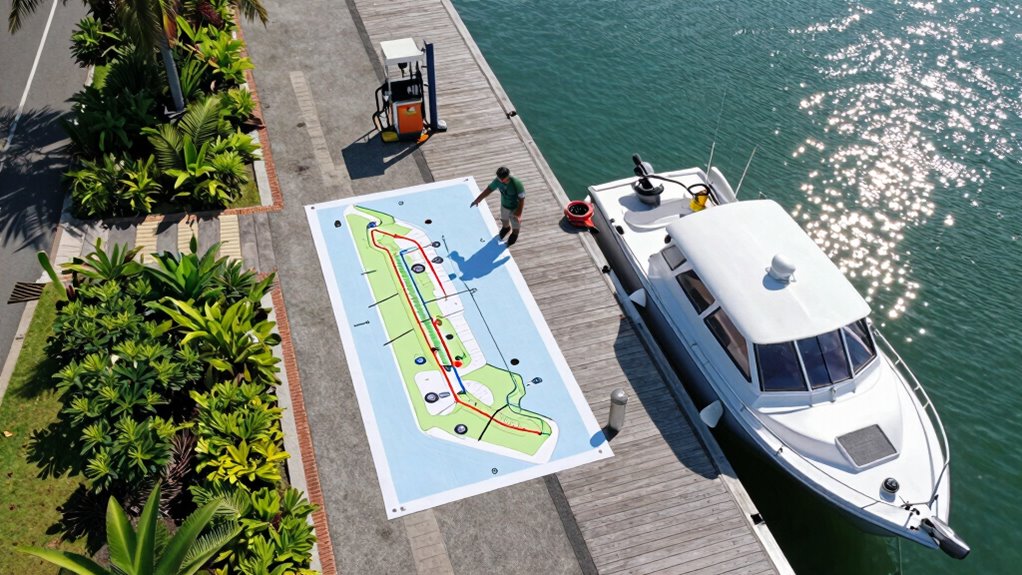

The biggest mistake that causes delays in pump-out access is poor route planning and station placement. When stations are not strategically located near busy docking areas or pathways aren’t clear, boats waste time traveling, leading to congestion and environmental risks. Proper planning guarantees quick access, reduces waiting, and minimizes pollution. If you want to avoid these costly delays and protect your waterway, there’s more to take into account for efficient pump-out operations.
Key Takeaways
- Improper placement of pump-out stations can cause boat congestion and excessive maneuvering, leading to delays.
- Routing that forces boats to navigate narrow or congested channels increases wait times and operational bottlenecks.
- Failing to designate clear, direct pathways for pump-out access results in confusion and unnecessary delays.
- Overlooking seasonal traffic patterns can cause route congestion during peak times, hindering efficient pump-out operations.
- Ignoring signage and communication protocols leads to misdirection and longer wait times, impacting overall service flow.
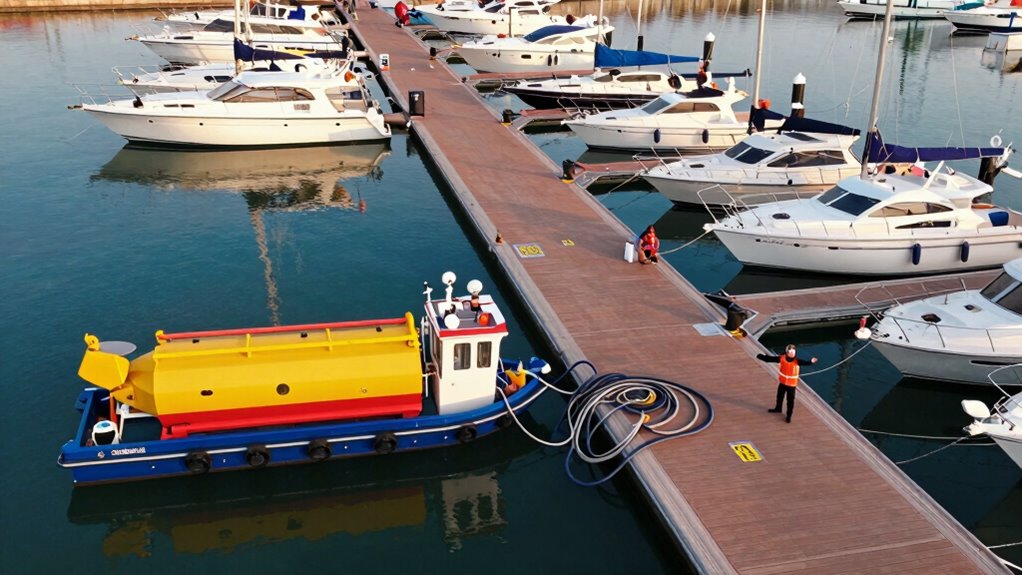
Effective pump-out access planning is essential for maintaining environmentally responsible and efficient marina operations. When you overlook key details about marina regulations, you risk creating delays and environmental hazards that can compromise your facility’s reputation and compliance. Proper planning ensures that boats can quickly and easily access pump-out stations, reducing the likelihood of sewage overflows, pollution, and regulatory violations. By understanding and adhering to marina regulations, you help safeguard water quality and protect surrounding ecosystems, which is a core responsibility of responsible marina management.
Failing to contemplate the layout and accessibility of pump-out stations often leads to frustrating bottlenecks. If stations are placed too far from popular docking areas or are difficult to reach, boaters might avoid using them entirely or attempt unsafe, makeshift solutions. This not only hampers operational efficiency but also increases the environmental impact, as untreated waste can enter waterways through improper disposal. You should prioritize clear signage, unobstructed pathways, and designated access points to facilitate smooth pump-out operations. When you plan routes that minimize boat movement and congestion, you prevent unnecessary delays and reduce the chance of sewage spills, which are detrimental to water quality.
Proper pump-out station placement and clear pathways prevent delays and environmental hazards.
A common mistake in pump-out access planning is neglecting to communicate effectively with boaters. You need to ensure that boat owners and crew are aware of the location of pump-out stations and understand the importance of their proper use. Providing clear instructions and signage helps streamline the process, minimizing time spent at each station and decreasing waiting times. When you foster awareness about marina regulations related to waste disposal, you reduce the risk of violations that could lead to hefty fines or environmental damage.
Additionally, ignoring seasonal or operational variations can cause unexpected delays. For instance, during peak seasons, pump-out stations may become overused if not adequately scaled or positioned. Planning for these fluctuations by adding extra stations or optimizing existing routes can prevent backups and environmental impacts caused by sewage overflows. You should also regularly inspect and maintain pump-out equipment to ensure it functions properly, preventing downtime that delays boaters and compromises environmental safety.
Furthermore, integrating smart‑home solutions such as automated reminders or monitoring systems can help optimize pump-out schedules and maintenance, ensuring consistent service and reducing delays. In essence, effective pump-out access planning hinges on understanding marina regulations, considering environmental impact, and designing routes that are accessible, clear, and efficient. When you pay close attention to these details, you create a well-organized environment that promotes swift, safe, and environmentally responsible waste disposal. This proactive approach not only keeps your marina compliant with regulations but also preserves water quality, promotes customer satisfaction, and sustains the long-term health of your facility and surrounding ecosystems.
Frequently Asked Questions
How Can I Identify Hidden Pump-Out Access Points?
You can identify hidden pump-out access points by closely inspecting the area for access markers, which often indicate underground or concealed locations. Use detailed charts and satellite images to spot possible hidden locations. Talk to local marina staff or boaters who might know about less obvious access points. Remember, paying attention to subtle signs and markers can help you find these hidden locations quickly and avoid delays.
What Permits Are Required for Pump-Out Infrastructure?
Imagine a maze with hidden paths—you need clear signs. For pump-out infrastructure, you’ll require infrastructure permits from local authorities, ensuring your project complies with regulations. Permit requirements vary but typically include environmental, zoning, and building permits. Securing these permits early streamlines your process, avoiding delays. Always check with local agencies to confirm specific permit requirements for your project, so your pump-out system gets built smoothly and efficiently.
How Do Weather Conditions Affect Pump-Out Scheduling?
Weather conditions directly impact your pump-out schedule, especially during storm delays. Storms can halt operations to make certain safety, and heavy winds or rain can damage sensitive equipment. You should observe weather forecasts closely and plan pump-outs during calm, clear conditions. This proactive approach prevents delays, protects equipment, and ensures efficient service. Always have backup plans ready in case weather unexpectedly worsens, minimizing disruptions to your pump-out schedule.
What Are the Cost Implications of Different Pump-Out Routes?
You’ll find that choosing different pump-out routes impacts costs considerably. Conducting a thorough cost analysis helps identify the most efficient route, saving you money on fuel and labor. Route optimization ensures you avoid unnecessary detours and delays, further reducing expenses. By focusing on these strategies, you streamline operations, cut costs, and improve overall efficiency. Remember, a well-planned route minimizes expenses and maximizes productivity in your pump-out process.
How Can Technology Improve Pump-Out Access Planning?
Did you know that 85% of pump-out delays are due to poor route planning? Technology like digital mapping and real-time monitoring can dramatically improve access planning. Digital mapping helps you visualize ideal routes, reducing travel time. Real-time monitoring provides instant updates on pump-out station statuses, avoiding unnecessary trips. Combining these tools ensures smoother operations, saves costs, and minimizes delays, making your pump-out process more efficient and reliable.
Conclusion
Remember, neglecting proper pump-out access planning can lead to costly delays—up to 40% longer project timelines, according to recent industry studies. By carefully mapping out your route and ensuring access points are well-coordinated, you prevent unnecessary setbacks. Don’t underestimate the importance of thorough planning; it’s your best defense against delays. When you streamline pump-out access, you keep your project moving smoothly and on schedule, saving time and money in the long run.