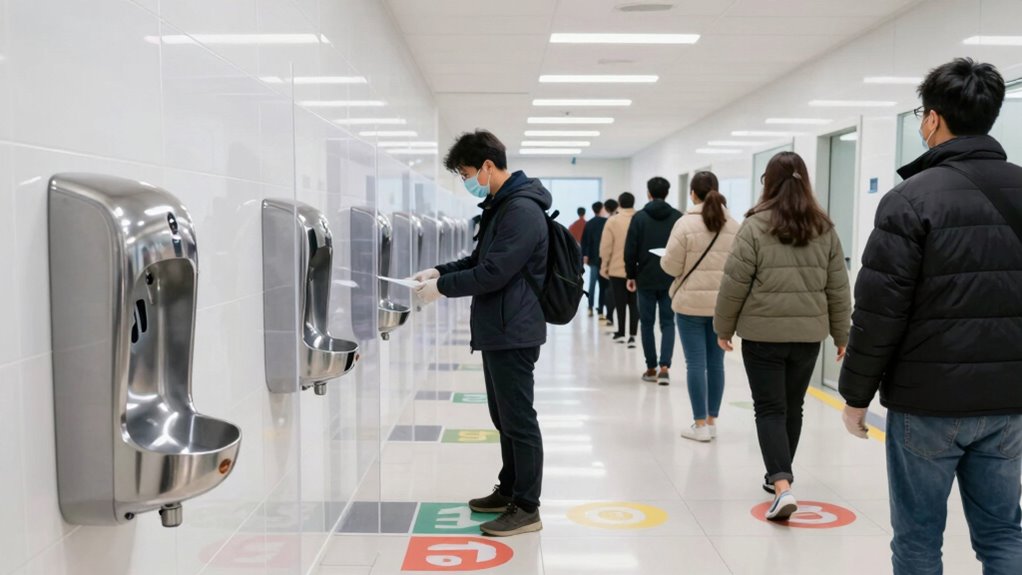

To keep lines moving smoothly at your hygiene station zone, design clear flow pathways with signage and floor markings, guiding visitors seamlessly through disinfection steps. Incorporate touchless dispensers and strategically place hand sanitizers at eye level for quick access. Schedule routine cleaning and assign staff to monitor queue management, using barriers or appointment slots to prevent congestion. Continue exploring how smart layouts and technology can enhance efficiency and safety in your facility.
Key Takeaways
- Design spacious layouts with clear signage and floor markings to facilitate smooth visitor flow and social distancing.
- Implement appointment systems or timed entry slots to stagger arrivals and prevent congestion.
- Place touchless hand sanitizer dispensers and soap stations at eye level for quick, easy access.
- Use physical barriers and designated pathways to guide movement and minimize cross-contact in the queue area.
- Assign staff to monitor queues, provide assistance, and enforce hygiene protocols for continuous flow.

Designing an effective hygiene station zone is vital for maintaining cleanliness and reducing the spread of germs. When you set up your station properly, you create a safe environment that encourages proper hygiene practices while keeping lines efficient. One of the key elements in this setup is implementing clear disinfection procedures. These procedures guarantee that high-touch surfaces, sanitizer dispensers, and hand-washing stations stay sanitized throughout the day. Regularly disinfecting these areas minimizes contamination risks and reassures visitors that hygiene is a top priority. To facilitate this, designate specific staff members or schedule routine cleaning intervals so that disinfection becomes an integral part of your daily routine. Using appropriate cleaning agents and following manufacturer guidelines guarantees effective germ removal without damaging surfaces or equipment.
Effective hygiene stations rely on regular disinfection of high-touch surfaces and proper staff routines.
Alongside disinfection, queue management strategies play a pivotal role in keeping lines moving smoothly. You want to prevent bottlenecks and reduce wait times, which can lead to crowding and compromise safety. Start by designing the space to accommodate expected traffic, making sure there’s enough room for people to stand comfortably apart. Clear signage and floor markings help guide visitors to the proper entry and exit points, minimizing confusion and congestion. Consider implementing appointment systems or timed entry slots to stagger arrivals, especially during peak hours. Additionally, deploying staff to monitor queues can help redirect or assist visitors, preventing long lines from forming or becoming unruly. Using physical barriers or designated pathways can further streamline movement, ensuring a steady flow and reducing the risk of cross-contact. Incorporating connected fitness technology into your planning can also provide real-time data to optimize flow and monitor hygiene compliance.
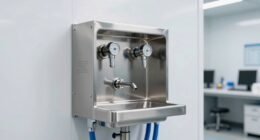
You also want to make sure your hygiene station is user-friendly. This means placing hand sanitizers at eye level and ensuring soap dispensers are easy to access and refill. If possible, integrate touchless features, such as automatic soap and water dispensers, to decrease contact points. Clear instructions on proper handwashing and sanitizing procedures should be visible and easy to understand, encouraging visitors to follow best practices. Having a well-organized layout not only helps maintain cleanliness but also boosts efficiency. When visitors see a clean, well-managed space, they’re more likely to comply with hygiene protocols, creating a safer environment for everyone.
Ultimately, success depends on your commitment to consistent disinfection procedures and smart queue management strategies. By proactively designing your hygiene station zone with these principles in mind, you’ll keep lines flowing smoothly, reduce the risk of germ transmission, and foster confidence in your facility’s safety standards.
Frequently Asked Questions
How Can Technology Improve Hygiene Station Efficiency?
You can boost hygiene station efficiency by implementing contactless sanitization systems and smart sensor integration. Contactless methods reduce touchpoints, speeding up the process and minimizing contamination risks. Smart sensors can monitor sanitizer levels, detect user presence, and activate dispensers automatically, ensuring stations are always ready for use. This seamless technology streamlines flow, reduces wait times, and enhances overall hygiene, keeping lines moving smoothly and safely.
What Are Cost-Effective Materials for Hygiene Stations?
You can use cost-effective materials like durable plastic or stainless steel for hygiene stations, which are easy to clean and resist wear. Incorporate hand sanitizer dispensers and disposable wipes holders made from these materials to keep costs low while maintaining hygiene standards. Visualize sturdy, sleek stations that are affordable, easy to maintain, and accessible, ensuring your line moves smoothly without breaking the budget.
How to Customize Zones for Different Event Sizes?
You can customize zones for different event sizes by adjusting the layout and number of hygiene stations based on expected attendance. Use flexible, scalable solutions that allow you to add or remove stations easily, ensuring smooth flow regardless of event scale. Focus on zone customization by designing adaptable setups, so larger events incorporate multiple stations and smaller ones remain efficient without overcrowding, maintaining ideal hygiene and line management.
What Training Is Needed for Staff Managing Hygiene Stations?
You need to provide staff with thorough training on hygiene protocols, including proper handwashing, sanitizer use, and glove procedures. guarantee they understand how to assist guests efficiently while maintaining safety standards. Conduct role-playing scenarios to reinforce quick response and communication skills. Regular refreshers help keep staff updated on any new protocols. Well-trained staff manage hygiene stations smoothly, reduce wait times, and promote a safe environment for everyone.
How Do Hygiene Stations Impact Overall Customer Experience?
You notice how a well-designed hygiene station, with smart sanitizer deployment and thoughtful station layout, can transform the customer experience. It keeps lines flowing smoothly, reducing frustration and building trust. When customers see easy access and cleanliness, they feel safer and more valued. This seamless experience encourages repeat visits, boosting satisfaction. In short, your hygiene stations become silent ambassadors, elevating the overall customer journey without a word.
Conclusion
By implementing the Hygiene Station Zone blueprint, you guarantee smoother lines and healthier environments. But remember, the true strength lies in consistent effort and shared responsibility. Even the best system can’t succeed without your commitment. So, question the theory—are you truly doing enough? When everyone plays their part, the lines flow seamlessly, and safety becomes a natural habit. Keep pushing for improvement; it’s the key to lasting success and peace of mind.