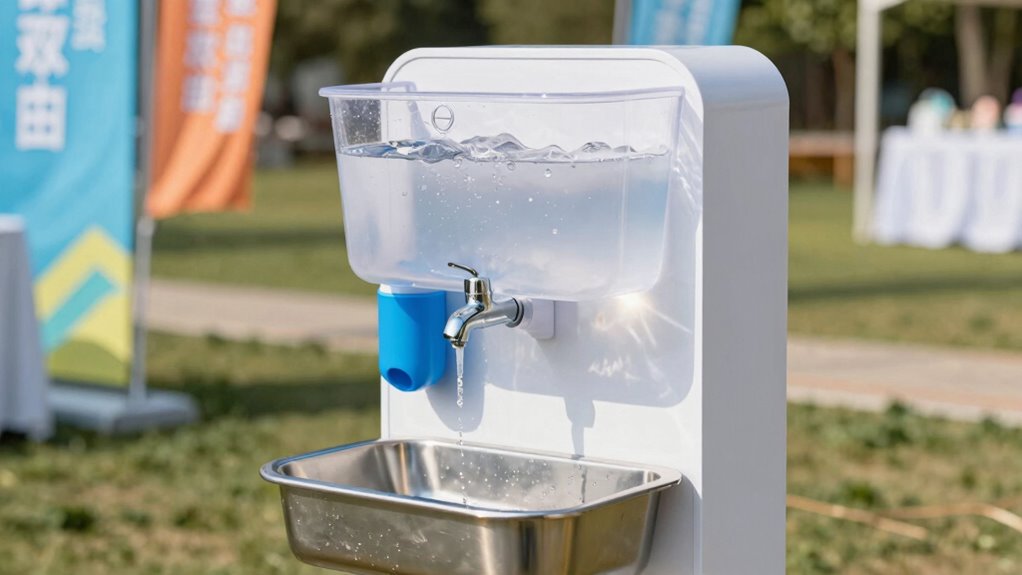
To prevent mid-event failures, you need to accurately calculate water use for your portable handwashing stations. Consider that each wash takes about 15 seconds and uses roughly 1.5 liters of water. Estimate your expected foot traffic and usage patterns to determine the right tank size. Monitoring water levels and designing efficient features like touchless dispensers help conserve water and ensure continuous operation. Keep exploring these tips to master water planning for seamless hygiene coverage during your event.
Key Takeaways
- Calculate water needs per wash (~1.5 liters) based on expected usage to size tanks accurately.
- Monitor water levels regularly to anticipate refills and prevent station failures during events.
- Use water-efficient fixtures and touchless features to reduce consumption and extend water supply.
- Estimate total water volume by multiplying per-use requirements with anticipated foot traffic for continuous operation.
- Incorporate safety margins in calculations to account for unexpected high usage and avoid mid-event shortages.

Portable handwashing stations have become essential for maintaining hygiene in temporary or outdoor settings. Whether you’re managing a construction site, outdoor festival, or emergency relief operation, ensuring proper hand hygiene is critical to prevent the spread of germs. But beyond just providing a sink, it’s vital to understand the water-use math behind these stations. When you plan correctly, you can prevent mid-event failures that disrupt hygiene compliance and waste resources.
Water conservation is a key factor in designing effective portable handwashing stations. By calculating how much water each station needs per use, you avoid over- or under-supplying. For instance, if you know an average user will wash their hands for about 15 seconds, using approximately 1.5 liters of water, then you can estimate total water requirements based on expected foot traffic. This helps you select the right water tank size, ensuring continuous operation without running out mid-event. Proper water conservation also means you’re reducing waste, lowering costs, and minimizing environmental impact, which is increasingly important for event organizers and facility managers. Additionally, understanding water-use math allows for more sustainable planning and resource management.
Calculating water needs prevents waste, ensures continuous operation, and promotes eco-friendly hygiene solutions.
Hygiene compliance is another crucial aspect. When handwashing stations are under-supplied or malfunction, people tend to skip handwashing altogether, increasing health risks. To prevent this, you need to ensure a steady flow of water and soap, along with easy access and clear signage. Regular monitoring of water levels and usage rates allows you to anticipate when refills are necessary, avoiding the embarrassment and health hazards that come with empty or poorly functioning stations. By keeping a close eye on water consumption patterns, you can fine-tune your supply, ensuring that every person who needs to wash their hands can do so properly.
Understanding the water-use math behind portable handwashing stations also helps in designing stations that maximize hygiene compliance. For example, incorporating features like touchless operation reduces cross-contamination and encourages more frequent handwashing. Additionally, choosing stations with efficient water flow and soap dispensers that minimize waste keeps the station functioning optimally throughout the event. When you plan with these details in mind, you’re not just providing a sink—you’re creating a reliable hygiene solution that maintains compliance and promotes health.
Frequently Asked Questions
How Long Can a Portable Handwashing Station Operate Without Refilling?
Your portable handwashing station can keep flowing for about 2 to 4 hours, depending on water consumption and how many people use it. Think of it as a well that runs dry after a good splash; once the water runs out, it’s time for a refill. To avoid mid-event failures, plan your refill frequency based on estimated usage, ensuring everyone stays clean and the event runs smoothly.
What Are the Maintenance Requirements for Portable Handwashing Stations?
You need to follow a regular maintenance schedule and cleaning protocols for your portable handwashing stations. Check the water levels daily, refill as needed, and clean the sink and faucet surfaces to prevent buildup. Empty and sanitize the wastewater tank regularly, ideally after each event. Inspect hoses and fittings for leaks, and ensure soap dispensers are filled. Consistent maintenance keeps your station operational and hygienic throughout your event.
Are Portable Handwashing Stations Suitable for Outdoor or Harsh Environments?
You’re in for a surprise—portable handwashing stations are built tough enough for the most extreme outdoor and harsh environments. With superior environmental durability, they withstand rain, dirt, and rough handling like superheroes. Sure, cost considerations matter, but investing in durable stations saves money long-term by reducing replacements and repairs. So, yes, these stations are perfect for outdoor use, even in the toughest conditions, keeping hands clean no matter where you are.
How Do Water Conservation Features Impact Station Performance?
Water conservation features considerably improve station performance by reducing water waste and ensuring consistent supply throughout your event. When you implement water-saving technology, you minimize environmental impact and optimize water use efficiency. This means fewer interruptions, lower operational costs, and a more eco-friendly setup. By choosing stations with these features, you help conserve resources while maintaining hygiene standards, making your event more sustainable and reliable.
What Safety Standards Do Portable Handwashing Stations Meet?
You’ll find that portable handwashing stations meet strict safety standards through safety compliance and certification standards. These stations are tested and certified by reputable organizations to ensure they are safe and reliable for public use. They adhere to health and safety regulations, including proper sanitation, non-toxic materials, and reliable water delivery. Always check for official certification labels to confirm the station’s adherence and safety, giving you peace of mind during events.
Conclusion
Now that you understand the water-use math behind portable handwashing stations, you’re better equipped to prevent mid-event failures. By calculating water needs accurately, you guarantee hygiene stays consistent and your event runs smoothly. Isn’t it worth taking a little time upfront to avoid the chaos of running dry? When you plan smart, you keep everyone clean and happy without surprises. So, why not use these insights to make your next event a flawless success?