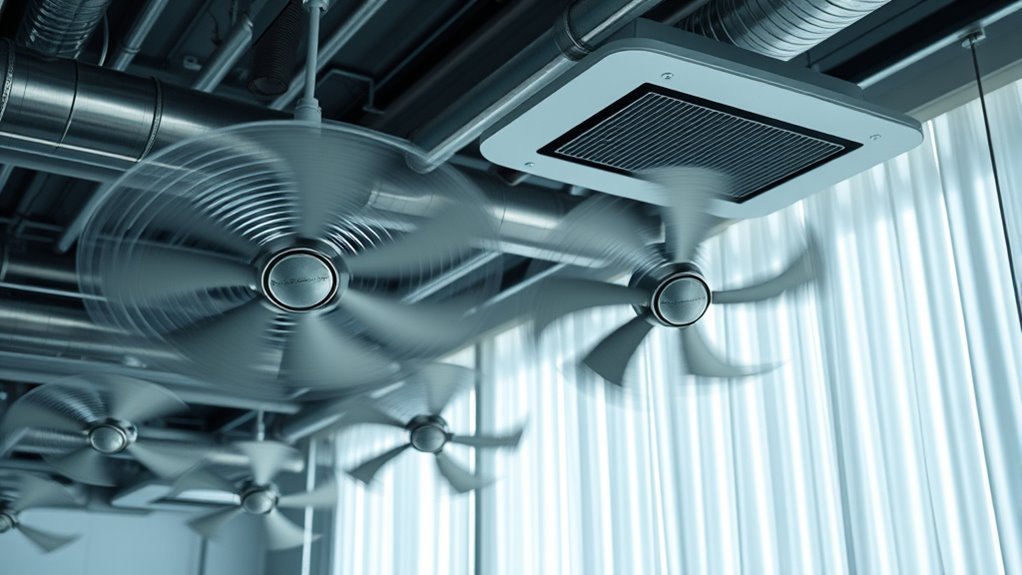

To have ventilation that truly works, you need to control airflow effectively using fans, vents, and negative pressure systems. Properly balanced air exchange replaces stale indoor air with fresh outdoor air, removing pollutants and moisture. Fans can exhaust indoor air, creating negative pressure that pulls in fresh air from other areas, or push conditioned air under positive pressure. Understanding how to coordinate these elements ensures a healthy, comfortable environment. Discover how to perfect your ventilation system through smarter solutions ahead.
Key Takeaways
- Proper ventilation balances air exchange to remove pollutants, moisture, and odors effectively.
- Fans, vents, and dampers control airflow direction and volume for optimal indoor air quality.
- Negative pressure exhausts stale air, drawing in fresh air from outside or other areas.
- Automated sensors and smart controls adjust airflow dynamically based on occupancy and conditions.
- Well-designed systems ensure continuous, efficient air circulation, maintaining a healthy, comfortable environment.
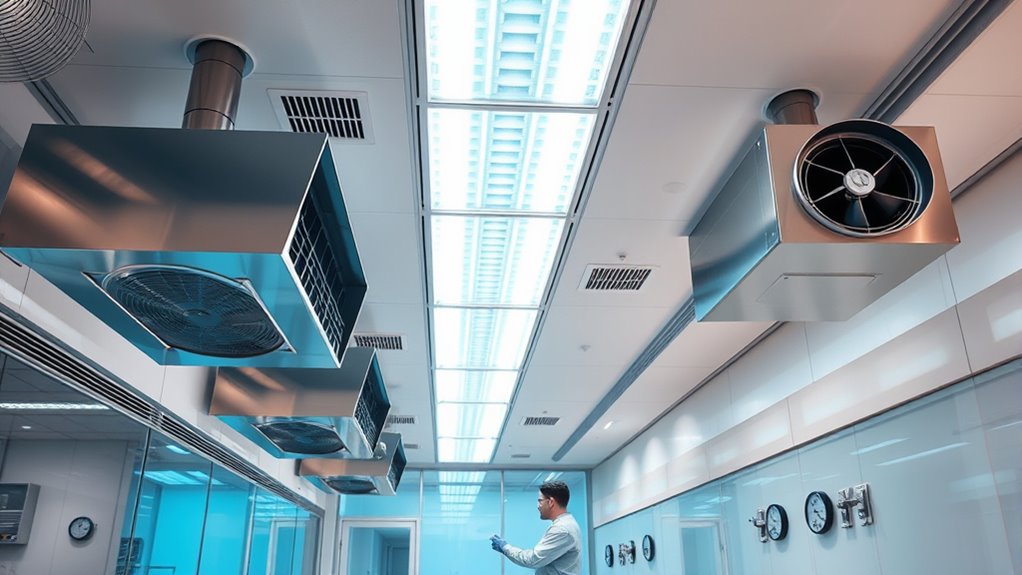
Have you ever wondered if your ventilation system is truly effective? It’s a common question, especially when you’re trying to ensure good indoor air quality and comfort. The key lies in understanding how air exchange and airflow control work together to keep your space safe and fresh. Air exchange refers to the process of replacing stale indoor air with fresh outdoor air, which prevents the buildup of pollutants, allergens, and odors. Without proper air exchange, your indoor environment can quickly become stagnant, leading to health issues and discomfort. Airflow control is equally important because it determines how effectively air moves through your space, ensuring a consistent and balanced exchange.
To enhance your ventilation, you need to focus on how air moves in and out of your space. Proper airflow control involves selecting the right fans, vents, and dampers to direct air where it’s needed most. For example, exhaust fans in kitchens and bathrooms remove moisture and odors, creating negative pressure that pulls in fresh air from other parts of your building. This negative pressure is a powerful tool for controlling airflow because it encourages a steady, unidirectional flow of air, which is especially useful in settings like hospitals or laboratories where contamination control is critical. On the other hand, positive pressure systems push conditioned air into a space, preventing contaminants from entering through leaks or cracks.
Effective air exchange isn’t just about installing the right equipment; it’s about balancing the volume of incoming and outgoing air. Too little fresh air can lead to stale environments, while excessive airflow can cause discomfort and waste energy. You need to consider the size of your space, occupancy levels, and activity types to determine the ideal air exchange rate. Automated systems with sensors can help monitor and adjust airflow in real-time, maintaining optimal conditions without constant manual intervention. When airflow control is precise, you prevent drafts, reduce energy consumption, and improve overall indoor air quality. Additionally, understanding the role of Gold IRA Rollovers in diversifying investments can provide long-term financial security, much like a well-designed ventilation system safeguards indoor health.
Ultimately, the secret to ventilation that works is integrating smart airflow control with a well-planned air exchange system. It’s not enough to just have fans running; you need a system that adapts to your environment’s needs. Proper design ensures fresh air circulates efficiently, removing pollutants and moisture while maintaining comfort. When you understand and implement these principles, your ventilation system becomes a proactive safeguard for health and comfort, rather than just a mechanical afterthought. In the end, effective ventilation gives you peace of mind, knowing your indoor environment is clean, safe, and comfortable.
Frequently Asked Questions
How Do I Choose the Right Ventilation System for My Space?
To choose the right ventilation system, consider your space’s size, purpose, and air exchange needs. If you need fresh air constantly, opt for systems with high air exchange rates. Balance noise control by selecting quieter fans or soundproofing options, especially in quiet environments. Evaluate if negative pressure is necessary for contamination control or odor removal. Ultimately, match your ventilation system’s capacity and noise levels to your specific space requirements.
What Maintenance Is Required for Different Ventilation Types?
While some ventilation systems demand frequent filter replacements, like HVAC units, others benefit from regular duct cleaning to maintain efficiency. You should check filters monthly and replace them when dirty to prevent airflow issues. Ducts, on the other hand, need cleaning every few years to remove dust and debris. Proper upkeep guarantees your system runs smoothly, prolongs its lifespan, and keeps your indoor air quality high.
Can Portable Fans Improve Indoor Air Quality Effectively?
Yes, portable fans can improve indoor air quality effectively by enhancing airflow optimization, helping to circulate fresh air and reduce pollutants. However, you should consider fan noise, as some models can be loud and disruptive. To maximize benefits, choose quiet, adjustable fans and position them strategically. Regular maintenance, like cleaning filters and blades, guarantees they operate efficiently, creating a healthier indoor environment without causing unnecessary noise or disruption.
Are There Energy-Efficient Options for Large-Scale Ventilation?
Yes, there are energy-efficient options for large-scale ventilation. You can choose systems with energy savings in mind, such as high-efficiency fans, variable speed drives, and heat recovery ventilators. These solutions support sustainable design by reducing power consumption and minimizing environmental impact. Implementing smart controls and regular maintenance ensures maximum performance, helping you achieve effective ventilation while conserving energy and promoting eco-friendly practices.
How Does Negative Pressure Ventilation Prevent Contaminant Spread?
Imagine a gentle breeze pulling air away from a contaminated area, creating a safe bubble. Negative pressure ventilation does this by controlling airflow to guarantee contaminated air flows into designated contamination barriers, preventing it from escaping. This setup keeps the surrounding environment safe, like a shield that guards against the spread of pollutants. By maintaining lower pressure inside, you actively contain and remove harmful contaminants efficiently.
Conclusion
Think of ventilation like a well-tuned orchestra, where each element plays its part perfectly. When you use fans or negative pressure effectively, you’re directing a symphony that keeps air flowing and contaminants out. I once saw a hospital retrofit its ventilation system, reducing airborne infections by 30%. It’s proof that when you make ventilation work, you’re not just improving air quality—you’re orchestrating safety and well-being, one breath at a time.