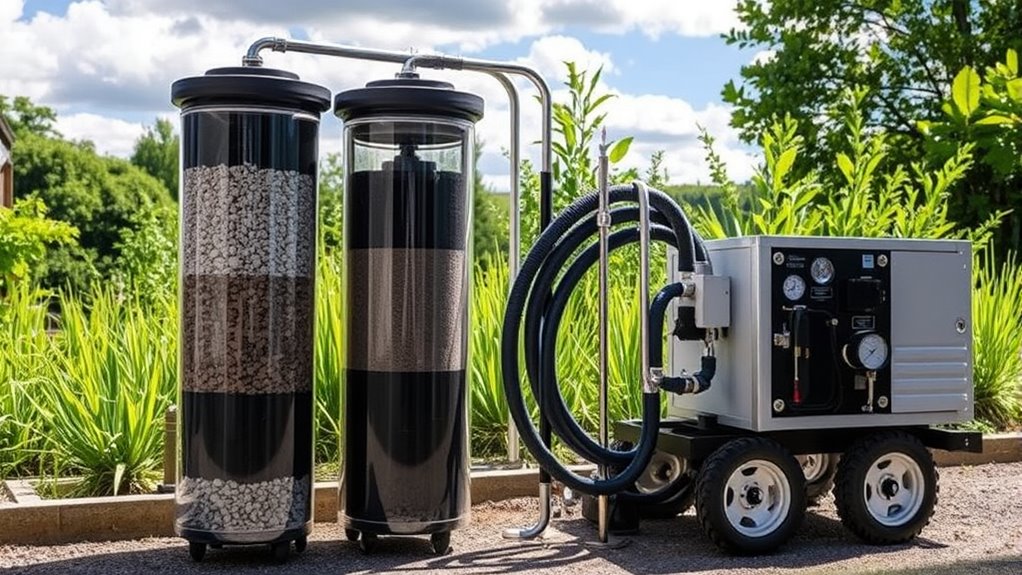

For mobile greywater systems, start with coarse filtration like mesh screens or strainers to remove large debris and leaves, especially from rainwater sources. Follow this with fine filters such as cartridge or sand filters to eliminate smaller particles and oils. Adding UV sterilization or chemical treatment ensures bacteria and pathogens are killed before reuse. Proper pre-treatment prevents clogs, odors, and damage, helping keep your system safe and efficient—learn more about optimizing your setup as you explore further.
Key Takeaways
- Implement coarse filters like mesh screens or strainers to remove large debris from greywater before further treatment.
- Use compact cartridge or sand filters to eliminate smaller particles and improve water clarity for mobile systems.
- Incorporate UV sterilizers or chemical disinfectants post-filtration to eliminate bacteria and pathogens safely.
- Ensure rainwater harvesting debris is filtered with leaf catchers and mesh screens to prevent contamination of greywater.
- Select modular, easy-to-maintain filtration units suitable for mobile setups to reduce maintenance and prevent system damage.
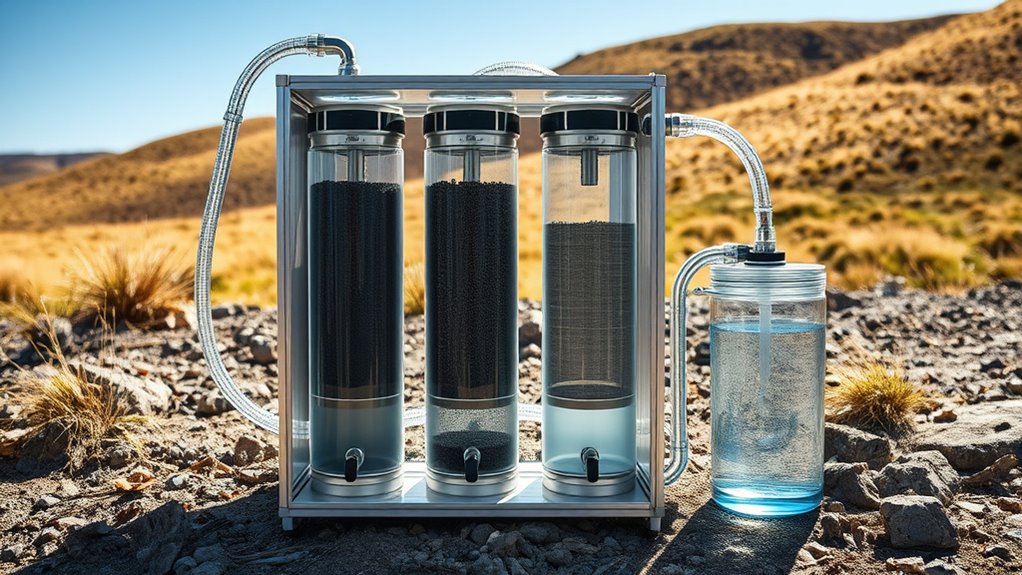
When using greywater in mobile applications, effective pre-treatment is indispensable to prevent clogs, odors, and damage to downstream systems. This is especially important when considering sources like rainwater harvesting and other collection methods. Rainwater harvesting can be be a valuable supplement or alternative to greywater, but it also requires proper filtration to guarantee water quality. In mobile setups, where space and resources are limited, selecting the right filtration methods becomes vital for maintaining system integrity and safety.
You need to understand that greywater often contains dirt, soap residues, oils, and other contaminants that can quickly clog pipes and filters. To minimize these issues, you should implement a series of filtration steps. First, a coarse filter or strainer can be used to remove large debris and particles from the greywater right after collection. This initial step prevents larger solids from reaching more delicate filtration stages. For rainwater harvesting, filters such as mesh screens or leaf catchers are effective at removing leaves and organic debris before the water enters the storage or treatment system.
After the initial coarse filtration, finer filtration methods are necessary to eliminate smaller particles and improve water clarity. Examples include cartridge filters, sand filters, or membrane-based systems. These methods are designed to trap finer sediments, soap scum, and oils that can cause odors or clogging further down the line. In mobile applications where space is limited, compact filtration units that combine multiple stages are ideal. They are easy to install, maintain, and transport, making them suitable for RVs, boats, or temporary installations.
Another important consideration is the use of UV sterilization or chemical disinfection after filtration. While filtration removes physical contaminants, sterilization guarantees that bacteria and pathogens are eliminated, making the greywater safer for reuse or disposal. When integrating rainwater harvesting with greywater systems, you should also consider cross-contamination risks. Properly designed filtration and treatment stages prevent rainwater from mixing with greywater, reducing health hazards and odor issues.
Understanding the importance of water quality and proper filtration techniques can significantly extend the lifespan of the entire system and ensure safe reuse.
Frequently Asked Questions
How Do Greywater Pre-Treatment Options Vary for Different Mobile Water Sources?
You’ll find that greywater pre-treatment options vary based on source variability, as different mobile water sources have diverse contaminants and volumes. Treatment adaptability is key—you may need portable filtration, UV sterilization, or chemical treatments tailored to specific sources. By evaluating each source’s unique characteristics, you can select flexible pre-treatment methods that efficiently handle fluctuating contaminants, ensuring safe reuse or disposal.
What Are the Maintenance Requirements for Mobile Greywater Pre-Treatment Systems?
You need to regularly clean the system to prevent buildup and make certain of efficient operation. Check and clean filters frequently, replacing them as needed to maintain water quality. Keep an eye on system components for wear or damage, and follow the manufacturer’s maintenance schedule. Performing routine system cleaning and filter replacement helps extend the lifespan of your mobile greywater pre-treatment system and keeps it functioning effectively.
Are Portable Greywater Treatment Units Suitable for All Types of Contaminants?
Portable greywater treatment units aren’t suitable for all types of contaminants due to contaminant complexity and treatment limitations. They excel at handling common pollutants like soap residues and organic matter but struggle with complex chemicals or heavy metals. You should assess your greywater’s specific contaminants before choosing a portable system, ensuring it can effectively address the treatment needs without risking system failure or environmental harm.
How Do Weather Conditions Impact the Effectiveness of Mobile Greywater Pre-Treatment?
Ironically, weather fluctuations and seasonal variations can sabotage your greywater pre-treatment efforts. Cold temperatures might freeze components, while heavy rains overwhelm systems designed for dry conditions. Hot, dry weather can cause evaporation and concentrate contaminants, reducing effectiveness. So, you must adapt your mobile setup to withstand these changes. Proper insulation, weatherproofing, and flexible design become essential to guarantee your pre-treatment system functions reliably across all seasons and weather conditions.
What Are the Environmental Regulations Affecting Mobile Greywater Pre-Treatment Systems?
You need to guarantee regulatory compliance and follow legal restrictions when operating mobile greywater pre-treatment systems. Local, state, and federal regulations dictate discharge limits, treatment standards, and permissible uses. Failing to meet these requirements can lead to penalties or system shutdowns. Stay updated on relevant laws, obtain necessary permits, and implement proper treatment protocols to ensure your system remains compliant and environmentally responsible.
Conclusion
Think of greywater pre-treatment as the key to unblocking sustainable mobility. By choosing the right options, you’re planting seeds for a cleaner future, where each drop you treat becomes a ripple of change. Your actions act as a bridge, connecting responsible innovation with environmental harmony. Remember, every small step in pre-treatment is like tending a garden—nurturing hope and growth for a greener, more resilient world on the move.