TL;DR
European researchers are developing sensor-based systems to better manage fertilizer application, aiming to reduce waste and environmental impact. The initiative is in early stages, with potential benefits for agriculture and sustainability.
European research institutions are initiating projects to deploy sensor technology for real-time monitoring of soil nutrients, aiming to optimize fertilizer application and reduce waste. This effort reflects a growing focus on sustainable agriculture and environmental protection, with the potential to transform fertilizer management practices across the continent.

Get pool and patio gear delivered free with Prime
- Fast, free delivery on millions of items
- Prime Video, Amazon Music and more included
- Member-only deals all year
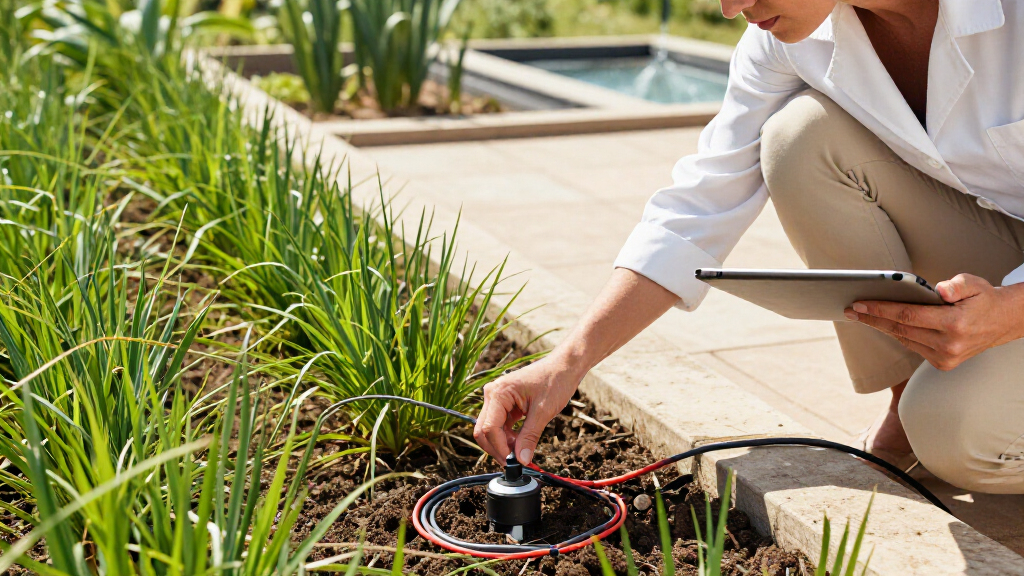
The new projects involve developing sensor systems capable of measuring soil nutrient levels, moisture, and other key parameters in real time. These sensors will be integrated into farming operations to provide precise data, enabling farmers to apply fertilizers only when and where needed. The initiative is part of broader efforts to reduce fertilizer runoff, which contributes to water pollution and greenhouse gas emissions.
According to sources familiar with the projects, several European research centers and agricultural technology firms are collaborating to test these sensor systems in different crop environments. The goal is to create scalable, cost-effective solutions that can be adopted by farmers of varying sizes and resources. While specific technical details are still emerging, early prototypes suggest promising accuracy and usability.
Funding for these projects is reportedly coming from European Union sustainability initiatives and national research grants, emphasizing the strategic importance of reducing agriculture’s environmental footprint. The projects are still in the pilot phase, with initial field trials expected to begin within the next year.
Impacts on Sustainable Agriculture and Environmental Protection
This development matters because it addresses critical environmental concerns linked to fertilizer overuse, such as water pollution, eutrophication, and greenhouse gas emissions. By enabling precise fertilizer application, sensor technology could significantly reduce waste, lower costs for farmers, and improve crop yields.
Furthermore, the project aligns with broader European policies aimed at promoting sustainable farming practices and climate change mitigation. If successful, it could serve as a model for global adoption of sensor-based nutrient management systems, fostering more environmentally responsible agriculture worldwide.
Products Worth Considering

Ring Battery Doorbell 2K Plus, Indoor Cam 2K, and Window & Door Sensor Bundle

eufy Baby Monitor E21 with 4K UHD Camera and 5-Inch 720p Screen

Dyson Cyclone V10 Origin Cordless Vacuum
As an affiliate, we earn on qualifying purchases.
Growing Interest in Precision Farming Technologies in Europe
Interest in sensor and precision agriculture technologies has been increasing across Europe, driven by policy targets for sustainability and climate action. Recent years have seen a surge in research funding and pilot projects aimed at integrating digital tools into traditional farming practices.
While the concept of using sensors for soil and crop monitoring is not new, recent coverage spikes suggest heightened attention, possibly linked to growing environmental concerns and economic pressures on farmers. The exact trigger for this renewed focus remains unconfirmed, but it coincides with broader efforts to modernize agriculture and reduce chemical inputs.
Experts note that widespread adoption faces challenges, including cost, technical complexity, and the need for farmer training. Nonetheless, the potential benefits are prompting increased investment and research activity.
Unconfirmed Details About Project Scope and Implementation
It is not yet clear how widespread the deployment of these sensor systems will be across European farms or the precise timeline for full adoption. Details about the cost, scalability, and farmer training programs are still emerging, and the effectiveness of the technology in diverse agricultural settings remains to be proven in large-scale trials.
Upcoming Field Trials and Funding Announcements
The next steps include initiating pilot programs in selected regions, with initial field trials expected to commence within the next 12 months. Further funding announcements and technical developments are anticipated, which will clarify the feasibility and economic viability of large-scale implementation.
Key Questions
How will sensor technology reduce fertilizer waste?
Sensors will provide real-time data on soil nutrient levels, allowing farmers to apply fertilizers only when necessary and in appropriate amounts, thus minimizing excess application and runoff.
Are these sensor systems expensive for farmers to adopt?
Cost details are still emerging, but the projects aim to develop affordable solutions. Initial prototypes suggest potential for scalable deployment, though widespread adoption may depend on subsidies or support programs.
When can farmers expect to use these sensor systems in practice?
Pilot projects are planned to start within the next year, with broader adoption possibly taking several years depending on the results of initial trials and funding support.
Will this technology work for all types of crops and soils?
While early testing shows promise, the effectiveness across diverse crops and soil types is still under evaluation. Adaptations may be necessary for different farming environments.
What are the environmental benefits of using sensor-based fertilizer management?
Reduced fertilizer runoff will decrease water pollution, eutrophication, and greenhouse gas emissions, contributing to healthier ecosystems and climate change mitigation efforts.
Source: rss