
TL;DR
A study from the Autonomous University of Barcelona indicates that rooftops across the city might generate up to 31% of the tomatoes consumed in Barcelona. This could significantly boost urban agriculture, but the feasibility remains under assessment.
The study by the Autonomous University of Barcelona estimates that up to 31% of the tomatoes consumed in Barcelona could be produced on municipal rooftops. This highlights a significant potential for urban agriculture to contribute to local food supply, though practical implementation details are still under review.
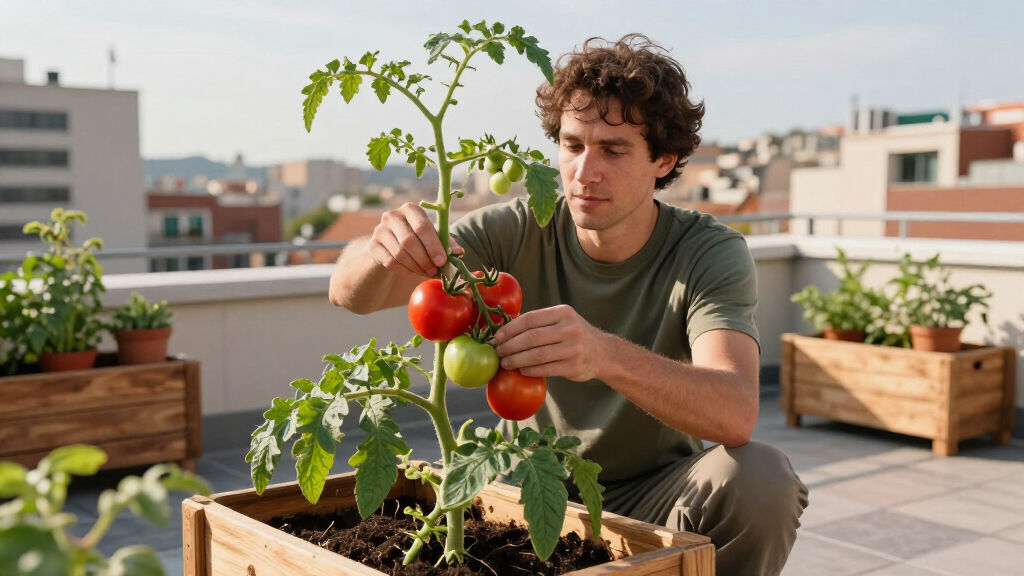
The research focused on assessing the capacity of rooftops across Barcelona to support tomato cultivation, considering factors such as available space, sunlight exposure, and structural suitability. The findings suggest that, if fully utilized, these rooftops could supply nearly a third of the city’s tomato demand, which is a notable proportion given the city’s dense urban environment.
Officials and urban planners see this as a promising avenue to increase local food resilience and reduce reliance on imported produce. The study, however, emphasizes that these figures are preliminary and depend on overcoming logistical, infrastructural, and regulatory challenges. The project is still in the early stages, with pilot programs and feasibility studies ongoing to determine real-world viability.
Potential Impact on Urban Food Security and Sustainability
This development could transform Barcelona’s approach to urban food production, making the city more self-sufficient and environmentally sustainable. By utilizing existing rooftops for agriculture, the city could reduce transportation emissions associated with food imports and promote local employment in urban farming sectors. The initiative aligns with broader trends toward sustainable city planning and resilient food systems, especially in light of supply chain disruptions experienced globally.
However, the actual impact depends on successful implementation, including structural modifications, water management, pest control, and community engagement. If scaled effectively, this could serve as a model for other densely populated cities seeking to enhance local food production.
As an affiliate, we earn on qualifying purchases.
Growing Interest in Urban Agriculture and Food Resilience
Urban agriculture has gained increasing attention worldwide as cities seek sustainable solutions to food security challenges. In Barcelona, the idea of utilizing rooftops for growing produce is not new, but recent interest has surged amid concerns over climate change, supply chain vulnerabilities, and the environmental footprint of food transportation.
The Autonomous University of Barcelona has been conducting research into the potential of city rooftops for agriculture, with preliminary results indicating promising capacity. This trend coincides with broader initiatives in European cities to integrate green spaces and promote local food systems. The specific focus on tomatoes reflects their popularity and importance in the Mediterranean diet, as well as their high consumption rates in the city.
While the concept is gaining traction, practical challenges such as structural integrity, water access, and urban regulations remain hurdles to widespread adoption. The current study is part of a larger movement to explore innovative urban solutions for food production.
Uncertainties in Practical Implementation and Scale
While the study presents promising estimates, it remains unclear how feasible large-scale rooftop tomato cultivation will be. Challenges such as structural capacity of buildings, water supply, pest control, and regulatory approvals are still under review. The actual proportion of tomatoes that can be produced sustainably and economically on rooftops is yet to be confirmed through pilot projects and detailed feasibility studies.
Additionally, the impact of weather variability, soil quality, and maintenance requirements on crop yields requires further investigation. The current figures are based on theoretical models, not confirmed operational projects.
Next Steps Include Pilot Projects and Feasibility Trials
The city and research institutions plan to initiate pilot rooftop farming projects to test the practical aspects of cultivating tomatoes at scale. These trials will evaluate infrastructure needs, crop yields, and community engagement strategies. Based on pilot results, policymakers will decide whether to develop broader urban farming policies and regulations.
Further research will also explore the economic viability of rooftop tomato farming, potential subsidies, and partnerships with local farmers and community groups. The goal is to develop a scalable model that can be integrated into Barcelona’s urban planning framework.
Key Questions
How realistic is growing tomatoes on rooftops in Barcelona?
While the study suggests significant potential, actual feasibility depends on structural, logistical, and regulatory factors. Pilot projects are underway to assess real-world viability.
Could rooftop farming reduce the city’s reliance on imported produce?
If scaled successfully, rooftop farming could supply a substantial portion of local demand, reducing dependence on imports and transportation emissions.
What challenges need to be addressed before rooftop tomato farms become widespread?
Key challenges include structural integrity of buildings, water access, pest management, and city regulations. These are currently being studied and addressed through pilot programs.
Will this initiative impact local food prices?
Potentially, increased local production could stabilize or reduce prices, but economic analyses are still ongoing to determine the full impact.
Source: local