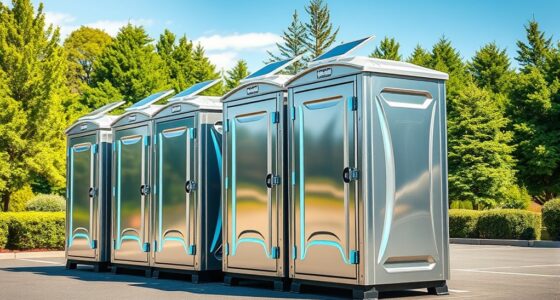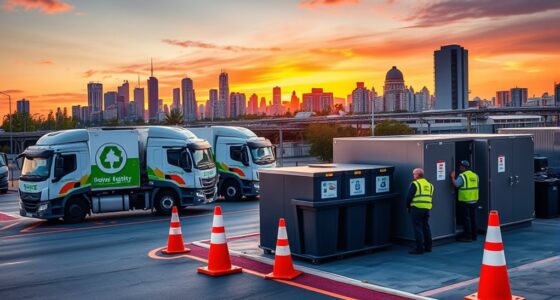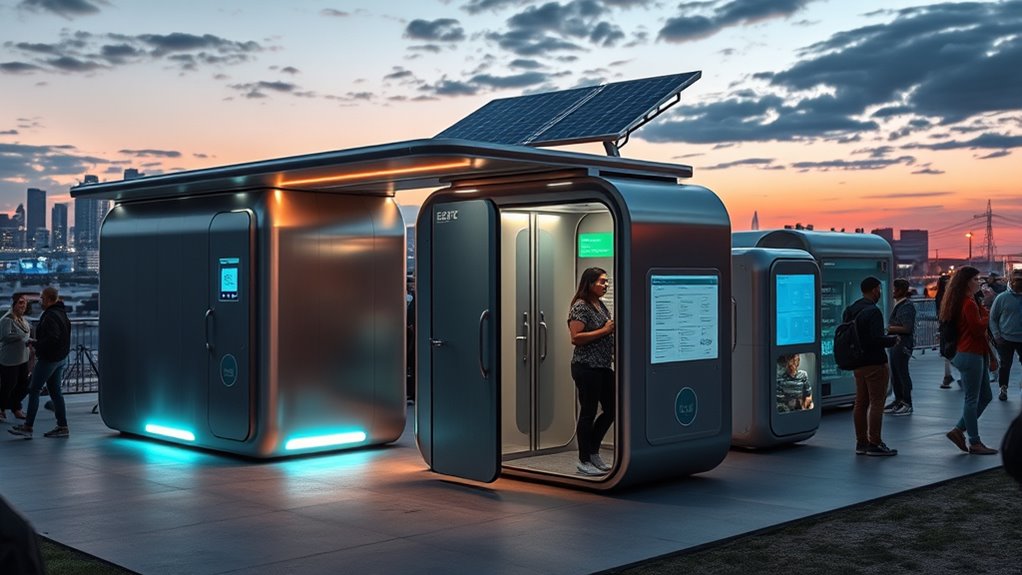

By 2026, expect portable sanitation to be smarter and more sustainable. Advanced sensors and IoT devices will offer real-time waste tracking and proactive maintenance, while solar-powered units with water recycling will reduce environmental impact. Automated disinfecting systems using UV-C light will boost hygiene standards. Urban integration will improve, making sanitation facilities more seamless and resilient. Stay with us to discover how these innovations will reshape sanitation and enhance urban life.
Open a free Amazon Business account
Business pricing, bulk buying and tax-exempt orders.
As an affiliate, we earn on qualifying purchases.
Key Takeaways
- IoT and smart sensors will enable real-time monitoring and predictive maintenance of portable sanitation units.
- Eco-friendly, solar-powered units with water recycling will become standard in urban sanitation infrastructure.
- Automated disinfection using UV-C light and ozone will improve hygiene while reducing manual cleaning efforts.
- Data analytics will optimize sanitation deployment, routing, and usage tracking for enhanced efficiency.
- Integration of portable units into smart city frameworks will enhance resilience, public health, and urban sustainability.

As we approach 2026, sanitation practices are evolving rapidly, driven by technological innovations and increasing awareness of public health. The landscape of portable sanitation is no exception, especially as urban infrastructure adapts to meet new demands for efficiency, hygiene, and sustainability. You’ll notice that cities are increasingly integrating advanced technology into sanitation systems, transforming how portable units are deployed, maintained, and monitored. Smart sensors, for instance, now track waste levels in real-time, allowing for proactive servicing that reduces overflow incidents and improves overall cleanliness. These innovations are fundamentally changing the way portable sanitation services operate, making them more reliable and environmentally friendly.
Smart sensors revolutionize portable sanitation, enabling real-time waste tracking and proactive maintenance for cleaner, more efficient urban solutions.
Urban infrastructure plays a critical role in this transformation. As cities grow denser and more complex, traditional portable units alone can’t keep pace with the need for hygienic solutions. Modern infrastructure upgrades are incorporating modular, eco-friendly facilities that blend seamlessly into urban environments. These systems often feature solar-powered units with water recycling capabilities, reducing dependency on external resources while maintaining high standards of sanitation. You’ll also see greater emphasis on integrating these units into public spaces, event venues, and construction sites, ensuring accessibility without disrupting city life. The goal is to create a more resilient infrastructure that can adapt swiftly to fluctuating demands and emergencies.
Technology innovations are at the heart of this evolution, making portable sanitation smarter, safer, and more sustainable. Automated cleaning systems are becoming standard, reducing the need for manual labor and minimizing the spread of germs. Some units now use UV-C light sterilization or ozone treatment to disinfect surfaces without harsh chemicals. Mobile apps and GPS technology enable service providers to optimize routes, track usage, and schedule maintenance more efficiently. This not only cuts costs but also minimizes environmental impact by reducing unnecessary trips and waste. For users, these advancements translate into cleaner, more comfortable experiences, with less waiting time and greater confidence in hygiene standards.
Looking ahead, you can expect further integration of IoT (Internet of Things) devices, providing continuous data streams that help manage sanitation infrastructure proactively. Urban planners and service providers will leverage this data to design smarter layouts and respond swiftly to sanitation needs. Additionally, advanced monitoring systems will enhance the ability to maintain cleanliness and track usage patterns more effectively. The emphasis will be on creating systems that are adaptable, eco-conscious, and user-friendly, ensuring that portable sanitation keeps pace with the evolving demands of modern cities. As technology continues to advance, you’ll see portable sanitation becoming an even more integral part of urban infrastructure, fundamentally enhancing public health and quality of life in 2026 and beyond.
portable sanitation units with IoT sensors
As an affiliate, we earn on qualifying purchases.
As an affiliate, we earn on qualifying purchases.
Frequently Asked Questions
How Will Portable Sanitation Technology Improve Environmental Sustainability?
You’ll see portable sanitation technology improve environmental sustainability by using biodegradable materials, which reduce plastic waste and pollution. Water conservation features, like low-flush or waterless systems, help cut water usage considerably. These advancements make sanitation more eco-friendly, minimizing the environmental impact. As a result, you’re contributing to a healthier planet by choosing solutions that prioritize sustainability and responsible resource management in portable sanitation.
What New Materials Are Being Developed for Portable Toilets?
You’ll see new materials like biodegradable plastics and antimicrobial coatings used in portable toilets. Biodegradable plastics help reduce environmental impact by breaking down faster, making disposal easier and greener. Antimicrobial coatings prevent bacteria growth, improving hygiene and safety. These innovations make portable sanitation more sustainable and user-friendly, helping you enjoy cleaner, eco-friendly solutions during outdoor events or on construction sites, all while supporting environmental conservation efforts.
How Will Sanitation Access in Remote Areas Evolve by 2026?
By 2026, you’ll see improved sanitation access in remote areas through enhanced rural infrastructure and active community engagement. New portable sanitation solutions will be designed to suit local needs, making installation easier and more sustainable. As communities become more involved, you’ll notice increased adoption and maintenance of these systems, ensuring better hygiene and health outcomes. This collaborative approach will bridge gaps in sanitation, promoting equitable access across underserved regions.
What Role Will Iot Play in Sanitation Management?
Imagine your sanitation system automatically alerts maintenance when a tank’s full. IoT will play a crucial role by enabling smart sensor integration, providing real-time data that improves efficiency. You’ll need robust data security protocols to protect sensitive information. This technology streamlines management, reduces downtime, and guarantees safe sanitation, transforming how you monitor and maintain sanitation infrastructure effortlessly and securely in 2026.
How Are User Privacy Concerns Addressed in Smart Sanitation Solutions?
You can trust that user privacy is prioritized in smart sanitation solutions by implementing data encryption, which secures your information from unauthorized access. Additionally, user anonymity is maintained by anonymizing data before analysis, ensuring your identity remains protected. These measures help address privacy concerns while allowing systems to operate efficiently, giving you confidence that your personal details stay secure as technology advances in sanitation management.
Conclusion
As you navigate 2026’s portable sanitation scene, imagine a world where toilets are smarter than your phone, and waste management finally gets its act together—literally. With trends like eco-friendly designs and AI-powered facilities, you might just find yourself marveling at a portable throne that’s as sleek as a spaceship. So, get ready to flush away old ideas and embrace a future where sanitation’s smarter, cleaner, and maybe even a little glamorous—because who said poop can’t be high-tech?
Fall Picks
fall essentials
As an affiliate, we earn on qualifying purchases.