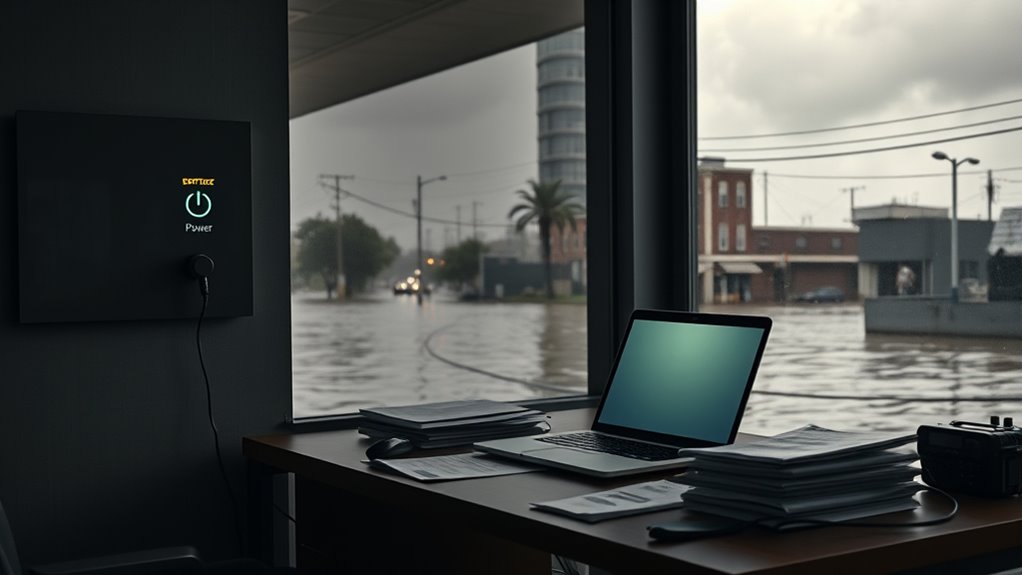

To prepare for power loss and flooding, establish clear evacuation routes and identify safe zones. Stock emergency kits with water, food, medications, and backup power sources like generators or batteries. Keep communication devices charged and share your plans with neighbors or family. Regularly test backup systems and stay informed about local risks. Having these preparedness steps in place helps you respond swiftly and effectively—keep going to learn more about creating a robust emergency plan.
Key Takeaways
- Prepare an emergency kit with water, non-perishable food, medications, and important documents for power outages and flooding.
- Establish backup power sources like standby generators and regularly test their functionality.
- Identify elevated safe zones or shelters in flood-prone areas and plan alternative evacuation routes.
- Keep backup communication devices such as battery-powered radios or satellite phones and know how to operate them.
- Share emergency plans and contact information with neighbors and community members for coordinated response.

Having a solid emergency plan can make all the difference when disaster strikes. When you’re faced with a sudden power loss or flooding, knowing exactly what steps to take can reduce chaos and keep you safe. One of the most critical components of your plan is establishing clear evacuation procedures. You need to know your primary and secondary routes out of your home or workplace, considering potential obstacles like road closures or debris. Practice these routes regularly so they become second nature, ensuring you can evacuate quickly without hesitation. It’s also essential to have designated meeting points where everyone can regroup safely after evacuating. This reduces confusion and helps emergency responders locate everyone more efficiently.
Practice your evacuation routes regularly to ensure quick, safe escapes during emergencies.
Equally important are your communication strategies. During a disaster, traditional communication lines like cell towers or internet services might be compromised. To stay connected, you should have a backup plan, such as a battery-powered radio or satellite phone. Make sure everyone in your household knows how to use these devices and understands the importance of keeping lines of communication open. Establish a family or team contact person outside the affected area so everyone knows whom to reach in case local networks are down. Sharing a family emergency plan and practicing communication drills ensures everyone stays informed and coordinated during a crisis.
In developing your evacuation procedures, consider the specific risks your area faces, such as flooding or power outages. For floods, identify elevated safe zones or shelters nearby, and prepare an emergency kit with essentials like water, food, medications, and important documents. For power outages, plan for alternative lighting sources, like flashlights or candles, and ensure your backup power options are functional. Keep these items in an accessible location and check them regularly to confirm they’re in working order. Additionally, consider the use of reliable backup power solutions to ensure continued safety and comfort during extended outages.
Your communication strategies should also include informing neighbors, friends, or coworkers about your plan. Sharing your evacuation routes and contact information ensures that others can assist or alert authorities if needed. You might also want to set up a group chat or message chain to keep everyone updated during an emergency. Remember, the goal is to stay calm, organized, and prepared, so everyone involved can respond swiftly and safely.
Having a detailed emergency plan that includes well-practiced evacuation procedures and reliable communication strategies will help you navigate even the most unpredictable situations with confidence. When you’re prepared, you’re less likely to panic and more likely to protect yourself and those around you effectively.

DaranEner Portable Power Station, 192Wh LiFePO4 Battery Backup Solar Generator with w/2 300W (Peak 600W) AC Outlets, USB-C PD 60W Fast Charge, Power Bank for Camping, Outdoor, Home,Emergency
- Capacity and Power Output: 192Wh, 300W pure sine wave output
- Battery Type and Longevity: LiFePO4 battery with 3500+ cycles
- Safety Features: Smart BMS protects against overcharge and overheating
As an affiliate, we earn on qualifying purchases.
As an affiliate, we earn on qualifying purchases.
Frequently Asked Questions
How Often Should Emergency Plans Be Reviewed and Updated?
You should review your emergency plan at least once a year to guarantee it’s current and effective. Conducting regular emergency plan review helps identify gaps and adapt to any changes in your environment or personnel. Plan update frequency depends on major changes, like new equipment or procedures, but annual reviews are generally recommended. Staying proactive ensures you’re prepared for power loss, flooding, or other emergencies when they happen.
What Are the Best Portable Power Sources During Outages?
Wondering what the best portable power sources are during outages? You should consider solar generators and portable batteries for reliable backup power. Solar generators harness sunlight, providing renewable energy, while portable batteries store electricity for immediate use. Both options are lightweight, easy to transport, and require minimal setup. By choosing these, you’ll stay powered up during emergencies without relying solely on traditional generators, ensuring safety and continuity when outages hit.
How Can I Ensure My Backup Data Remains Secure?
To keep your backup data secure, use strong encryption standards like AES-256 to protect sensitive information. Implement access controls such as multi-factor authentication and role-based permissions to limit who can view or modify your backups. Regularly update security protocols and monitor access logs for suspicious activity. By combining encryption and access controls, you guarantee that your data remains safe even if your backup storage is compromised.
What Signs Indicate a Flood Might Be Imminent?
Think of flood signs as early warning bells ringing loudly. You’ll notice rising water levels, darkening skies, and strong, persistent rain — all part of a flood risk assessment. Keep an eye on weather reports and activate your emergency notification systems. If you see water approaching or hear flood alerts, it’s time to act quickly. Recognizing these signs helps you prepare and safeguard your property before the floodwaters arrive.
How Do I Coordinate With Local Authorities During Emergencies?
You should establish clear communication channels with local authorities beforehand. During emergencies, stay informed through official updates and share essential information with your community. Coordinate resource allocation by following guidance from authorities and assisting neighbors when possible. Maintaining open communication ensures everyone receives timely alerts and helps manage the situation effectively. By working closely with local agencies, you can help ensure a swift, organized response to emergencies.
Conclusion
Now, picture yourself calmly walking through a stormy night, knowing your emergency plans are in place. With power flickering out and floodwaters rising, you stay steady, guided by your backups and preparedness. The wind might howl and the rain pour, but your confidence keeps you grounded. When chaos surrounds you, your plans become your safe harbor, turning fear into resilience. Stay prepared, stay safe, and face any storm with unwavering strength.