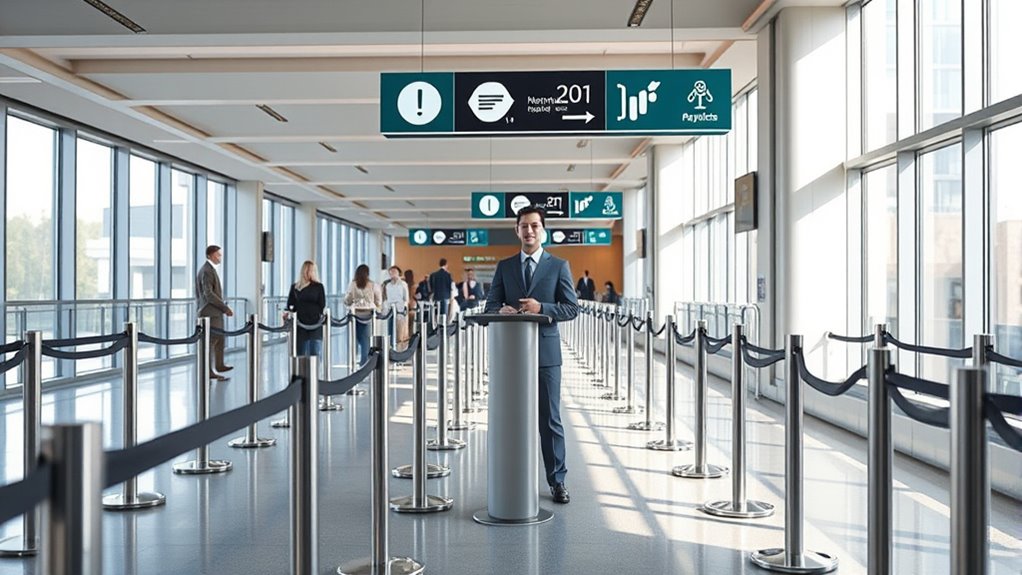

To manage queues effectively, use clear signage to guide customers and set expectations from the start. Ropes help organize lines and prevent chaos, while polite attendant scripts reassure visitors and provide important information. Combining physical tools with attentive communication minimizes congestion, improves flow, and enhances overall experience. Incorporating digital elements like notifications can further streamline operations. If you want to explore how to integrate these strategies seamlessly, there’s more to discover below.
Key Takeaways
- Signage provides clear instructions, estimated wait times, and directional guidance to manage customer expectations effectively.
- Ropes organize physical queues, prevent chaos, and create visual cues for orderly line formation.
- Attendant scripts ensure polite, consistent communication, reassuring customers and managing expectations professionally.
- Combining signage, ropes, and scripts enhances physical queue efficiency and improves overall customer experience.
- Integrating digital notifications with physical signage and attendants reduces congestion and streamlines queue flow.
Have you ever wondered how businesses keep lines moving smoothly and customers satisfied? One key method is the effective use of queue management systems, which often combine signage, ropes, and attendant scripts to create seamless experiences. A essential component of modern queue management is the virtual queue, allowing you to wait comfortably without standing in physical lines. Instead of physically lining up, you receive a ticket or a notification that your turn is approaching. This system often uses mobile notifications to keep you informed, so you don’t have to keep checking in person. When your turn is near, your phone buzzes or displays a message, alerting you to return or prepare to be served. This approach reduces congestion, improves flow, and enhances your overall experience.
Implementing a virtual queue with mobile notifications requires clear communication. Businesses set up a system where you can join the queue remotely via an app or website, freeing you from physical waiting areas. When you sign up, you often receive a digital ticket or a notification with estimated wait times. As your turn approaches, the system sends a mobile notification, so you can relax or explore nearby shops. This method minimizes the frustration of long waits and helps you plan your time more effectively. It also benefits the business by reducing crowding and allowing staff to focus on providing quality service rather than managing physical lines. Clear signage at the entrance or waiting area directs you on how to join the virtual queue, while digital notifications keep you engaged and informed. Incorporating vibrational cues can also help alert you subtly when your turn is imminent, enhancing the overall queue experience.
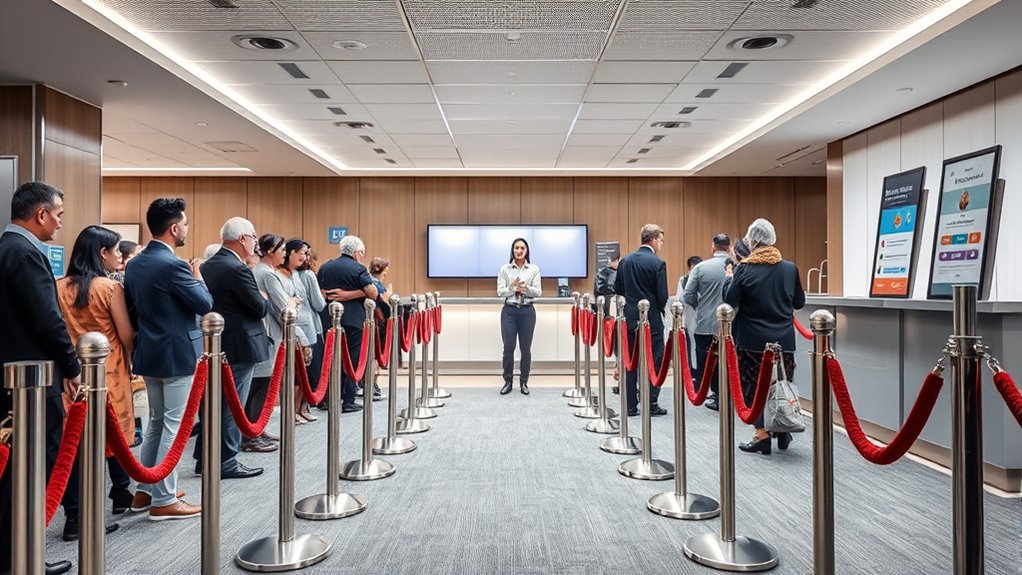
Ropes and signage still play an essential role in queue management, especially in physical settings. Ropes organize lines neatly, providing visual cues that help prevent chaos and confusion. Signage offers instructions, estimated wait times, and directional guidance, which keep customers oriented and reduce uncertainty. Attendants trained to communicate effectively use scripts that are polite, informative, and reassuring. Their words help manage expectations and create a friendly environment, whether customers are waiting physically or virtually. These scripts can include greetings, updates on wait times, or instructions on how to use mobile notifications, ensuring everyone understands the process. Together, signage, ropes, and attendant scripts form a thorough system that balances physical organization with digital convenience.

Winco CGSF-12K Stanchion Top Sign Frame, Black,Medium
- Heavier base for stability: Secure crowd control guidance
- Trusted and reliable: High-quality construction
- Versatile product range: Tabletop to kitchen utensils
As an affiliate, we earn on qualifying purchases.
As an affiliate, we earn on qualifying purchases.
Frequently Asked Questions
How Do Signage Designs Impact Customer Patience?
Your signage designs directly impact customer patience by using visual hierarchy and color psychology to guide their expectations. Clear, well-organized signs with contrasting colors help customers quickly understand directions, reducing frustration. When you use inviting colors, like green or blue, it fosters calmness and patience. By effectively combining these elements, you make the queue experience smoother, encouraging customers to stay patient and feel more comfortable while waiting.
What Training Is Needed for Effective Attendant Scripts?
To guarantee effective attendant scripts, you need training in customer communication and script customization. You should learn how to convey clear, friendly messages that address customer needs and manage expectations. Practice active listening and adapt your script based on each situation. Training should also cover tone, body language, and handling difficult questions. This helps attendants communicate confidently, making the queue experience smoother and more positive for everyone.
How Do Ropes Influence Crowd Flow Efficiency?
Ropes act like invisible guides in crowd psychology, shaping how people move through space. They create physical barriers that channel your guests efficiently, preventing chaos and confusion. When used skillfully, ropes turn a crowded chaos into a well-orchestrated dance, helping flow smoothly. Without them, people may hesitate or cluster, slowing movement. Properly positioned, they transform a bottleneck into a streamlined pathway, making the queue feel like a graceful parade rather than a jam.
Can Digital Signage Improve Queue Management?
Digital signage can markedly improve your queue management by leveraging queue psychology. It captures attention, provides clear instructions, and reduces perceived wait times, making customers feel more engaged and less frustrated. You can use digital signage to display real-time updates, estimated wait times, or motivational messages, guiding crowd flow smoothly. This technology helps create a more organized environment, enhancing overall customer experience and efficiency in managing queues.
What Are Common Mistakes in Deploying Queue Signage?
You might overlook how poorly placed queue signage can disrupt customer flow, causing confusion instead of clarity. Common mistakes include unclear messages, inconsistent branding, or signage that’s too small to read. If you don’t consider visibility and timing, you risk frustrating customers and slowing down lines. Keep signs simple, strategic, and easy to understand, or you’ll undermine your entire queue management effort without even realizing it.
Conclusion
Remember, a well-managed queue isn’t just about signs or ropes—it’s about creating a smooth experience for everyone. By clearly guiding your visitors and using friendly attendants, you’ll turn lines into a breeze. As the saying goes, “A stitch in time saves nine.” When you invest a little effort upfront, you’ll prevent chaos later. So, stay proactive, stay organized, and watch your queue transform from a hassle into harmony.