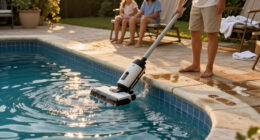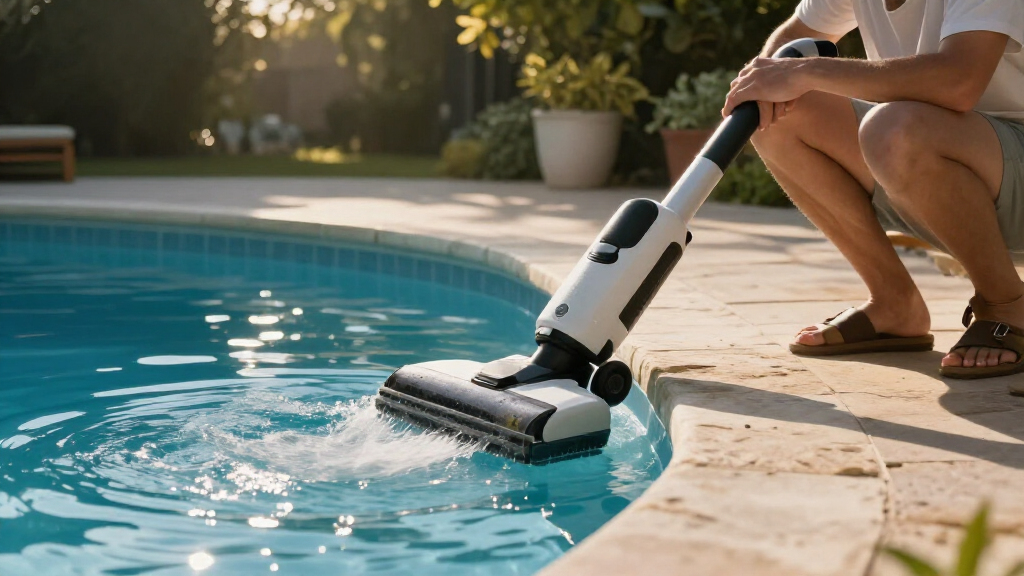
When shoppers compare automatic pool vacuum cleaners, the central choice is often between a robotic cleaner and a suction-side cleaner. Both move around the pool without being pushed by hand, but they use different power and filtration systems. A robot has its own motor, pump, and debris filter; a suction-side model connects to a pool skimmer or dedicated vacuum line and relies on the pool pump to draw in debris.

Get pool and patio gear delivered free with Prime
- Fast, free delivery on millions of items
- Prime Video, Amazon Music and more included
- Member-only deals all year

Zodiac G3 Suction-Side In-Ground Pool Cleaner
- ✔ Cleaning coverage: Floors, walls, and steps
- ✔ Pool type: In-ground
- ✔ Compatible surfaces: Tile, vinyl, gunite, fiberglass
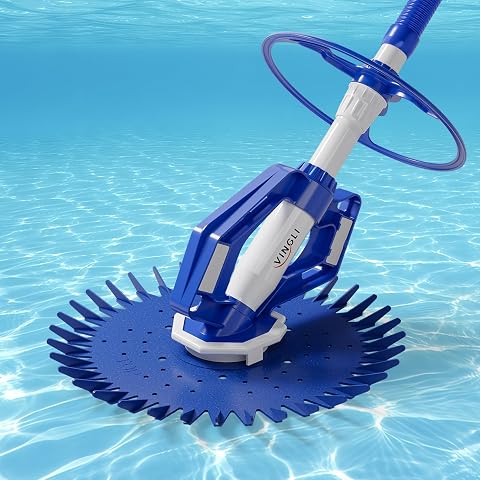
VINGLI Automatic Wall-Climbing Suction Pool Cleaner with 33-Foot Hoses
- ✔ Cleaning type: Automatic suction-side
- ✔ Pool type: In-ground
- ✔ Minimum pump requirement: 3/4 HP or 1600 GPH

XtremepowerUS Automatic Suction-Side Pool Cleaner with 30-Foot Hose Set
- ✔ Cleaning type: Automatic suction-side
- ✔ Pool type: In-ground
- ✔ Cleaning coverage: Pool floors and walls
That difference shapes everyday ownership. Robots usually cost more upfront and require handling a separate machine, but they can clean without running the pool pump and keep collected debris out of the main filter. Suction cleaners are generally less expensive and mechanically simpler, but their cleaning depends on pump operation, hose placement, and the pool’s circulation setup. Choose a robot when independent cleaning and reduced dependence on the circulation system matter most. Choose suction when purchase cost and straightforward operation matter more, and the pool system can support it.
At a Glance
| Criteria | Robotic pool vacuum | Suction-side pool vacuum | Winner |
|---|---|---|---|
| Upfront cost | Usually higher; models and features vary | Usually lower; may require compatible hose or fittings | B |
| Pump and energy use | Runs from its own power supply; pool pump can often stay off during cleaning | Uses the pool pump, which must run during cleaning | A |
| Debris collection | Collects debris in an onboard filter or basket | Sends debris through the circulation system’s filter or pump basket | A |
| Cleaning coverage | Often includes programmed movement; coverage depends on model and pool shape | Movement is commonly driven by suction and water flow; coverage can vary | A |
| Setup and daily handling | Requires placing and removing a separate unit and managing its cable | Connect hose to skimmer or vacuum line, then remove and store it | Depends |
| Maintenance | Clean the onboard filter and inspect moving parts and cable | Check hoses, connections, cleaner parts, and the pool’s filter and pump basket | Depends |
| Pool compatibility | Check pool size, shape, surface, waterline needs, and power supply requirements | Requires a suitable suction connection and adequate pump flow | Depends |
Zodiac G3 Suction-Side In-Ground Pool Cleaner
The Zodiac G3 is the strongest all-round choice here because it is specified to clean floors, walls, and steps, giving it broader stated coverage than the other two picks. It also lists compatibility with tile, vinyl, gunite, and fiberglass, plus single-speed, two-speed, and variable-speed pumps. That combination matters when a pool has mixed surfaces or a pump setup that might rule out a more narrowly specified cleaner.Its 39-foot hose is the longest in this lineup, which may give it more reach for larger in-ground pools, though the right hose length still depends on pool layout. A 36-fin disc is designed to maintain contact with surfaces and avoid hang-ups on fittings, while a wheel deflector helps it navigate tight corners. The one-moving-part diaphragm is intended to keep operation quiet and maintenance simpler; these are design features, not a guarantee of trouble-free cleaning.Compared with VINGLI, the G3 offers longer hose reach and more explicitly listed surface and pump compatibility, while VINGLI states a minimum pump output more clearly. XtremepowerUS is the simpler alternative with a shorter hose set and fewer supplied compatibility details. The G3 still requires a skimmer or dedicated suction line, and its in-ground focus makes it the wrong shortlist for other pool types. We would choose it when broad stated compatibility matters more than keeping the setup as basic as possible.
Pros:
- Listed for floors, walls, and steps
- Compatible with tile, vinyl, gunite, and fiberglass
- Supports single-speed, two-speed, and variable-speed pumps
- 39-foot hose and wheel deflector are designed to help with reach and maneuvering
Cons:
- Requires connection to a skimmer or dedicated suction line
- Specified for in-ground pools only
- The supplied details do not state a minimum pump output
Best for: In-ground pool owners who want stated coverage of floors, walls, and steps across several common surfaces and pump types.
Not ideal for: Owners of above-ground pools, or buyers without a usable skimmer or dedicated suction line.
Bottom line: Choose the Zodiac G3 when you want the broadest stated pool-surface and pump compatibility in this comparison.
“Choose the Zodiac G3 when you want the broadest stated pool-surface and pump compatibility in this comparison.”
VINGLI Automatic Wall-Climbing Suction Pool Cleaner with 33-Foot Hoses
VINGLI earns its place for buyers who want a specific pump threshold to check before buying. Its instructions call for at least 3/4 HP or 1600 GPH, a useful detail when the main question is whether an existing filtration system can operate a suction-side cleaner. Like the other picks, it connects to that system rather than supplying its own power, and it is designed for in-ground pools.The included ten hoses total 33 feet, three feet more than XtremepowerUS’s set. That added length may help when the suction connection is farther from the far side of the pool, but the Zodiac G3 still has the longest listed reach at 39 feet. VINGLI is described as a wall-climbing cleaner that handles pool walls and debris; its wheel deflector is intended to help it pass tight corners, and adjustable suction control gives owners a way to tune the flow for their setup.Compared with the G3, VINGLI is less fully specified for surface types and pump varieties, though its minimum pump requirement is more explicit. Compared with XtremepowerUS, it offers a longer hose set and clearer pump guidance, at the cost of requiring buyers to verify that threshold. It makes the most sense when the pump meets the stated minimum and the extra hose reach over XtremepowerUS is useful. Skip it if your pump falls short or you need a cleaner whose supplied details cover multiple pool surfaces and pump configurations.
Pros:
- States a minimum pump requirement of 3/4 HP or 1600 GPH
- Includes ten hoses totaling 33 feet
- Designed to climb walls and clean pool surfaces
- Wheel deflector and adjustable suction control support setup and maneuvering
Cons:
- Requires a pump that meets the stated minimum
- Requires connection to an existing filtration system
- Specified for in-ground pools
Best for: In-ground pool owners who want to check a clearly stated pump threshold and need more hose reach than XtremepowerUS provides.
Not ideal for: Owners with pumps below 3/4 HP or 1600 GPH, or those seeking listed compatibility across several pool surfaces and pump types.
Bottom line: Pick VINGLI if its stated pump threshold fits your equipment and its 33-foot hose set suits your pool layout.
“Pick VINGLI if its stated pump threshold fits your equipment and its 33-foot hose set suits your pool layout.”
XtremepowerUS Automatic Suction-Side Pool Cleaner with 30-Foot Hose Set
XtremepowerUS is the simpler pick for buyers who want an automatic cleaner that uses the pool equipment already in place. It connects to a compatible skimmer or dedicated suction line and runs from the existing pool pump, so the listed setup does not require a separate booster pump or an electrical connection. Its ten included hoses total 30 feet, which is less reach than VINGLI’s 33 feet and Zodiac’s 39 feet.The cleaner is described as handling pool floors and walls. That covers two important surfaces, but the supplied information does not specifically list steps or name compatible surface materials as the G3 details do. There is also no stated minimum pump output in the product information provided here. Buyers should therefore confirm that their filtration system and suction connection are compatible rather than assume the cleaner will suit every pump.Compared with VINGLI, XtremepowerUS has a shorter hose set and lacks its explicit pump threshold, so VINGLI is easier to screen for pump fit. Compared with the G3, it offers fewer stated details about surface and pump compatibility and does not list step coverage. Its appeal is the straightforward suction-side approach: no separate booster pump or electrical connection is specified. Choose it if that simple equipment setup fits your in-ground pool and 30 feet is enough hose; look higher in the ranking when you need longer reach or more specific compatibility information.
Pros:
- Uses the existing pool pump
- No separate booster pump or electrical connection is specified
- Includes ten hoses totaling 30 feet
- Designed to clean pool floors and climb walls
Cons:
- Requires a compatible filtration system and suction connection
- Specified for in-ground pools
- Supplied details do not state a minimum pump output or list compatible surface materials
Best for: In-ground pool owners who want a suction cleaner powered by their existing pump and can confirm their pool has a compatible suction connection.
Not ideal for: Owners who need stated step coverage, a longer hose set, or a published minimum pump requirement to confirm fit.
Bottom line: Choose XtremepowerUS when a basic suction-side setup and 30 feet of hose meet your pool’s verified equipment needs.
“Choose XtremepowerUS when a basic suction-side setup and 30 feet of hose meet your pool’s verified equipment needs.”
As an Amazon Associate we earn from qualifying purchases.
Key Differences
The clearest separation is in how each cleaner handles power and debris. A robot works as a separate cleaning system, generally filtering leaves, grit, and other debris in its own basket or cartridge. A suction-side cleaner uses the pool pump to pull debris through the circulation system. That makes suction models cheaper to buy in many cases, but adds cleaning work to the pump and filter. If a pool collects fine dirt often, keeping that material in a robot’s filter can make routine pool-filter care easier.
Cleaning coverage and convenience depend heavily on the specific model and pool. Many robotic cleaners offer programmed routes and features such as wall or waterline cleaning, but those capabilities are not universal. Suction cleaners travel according to water flow, hose behavior, and pool layout, so they may be a reasonable fit for simple pools with compatible plumbing. A robot’s cable and separate unit add handling; a suction cleaner’s hose and dependence on the pump add their own setup and operating constraints.
The price gap is worth paying only when the robot’s independence solves a real problem: frequent cleaning, a circulation pump you do not want running during vacuuming, or a desire to keep vacuumed debris out of the main filter. For a modest pool with adequate pump capacity and a buyer focused on initial cost, suction may deliver the more sensible value. Neither category guarantees a perfect fit for every pool, so verify compatibility and cleaning coverage for the exact model before buying.
Detailed Comparison
Upfront cost (Suction-side pool vacuum wins — major)
Suction-side cleaners usually win on initial purchase price. The gap is often moderate to major, though model prices vary and a suction setup may require compatible hose, fittings, or a dedicated line. A robot costs more, but the higher price buys an independent motor and filtration system. For buyers who need basic automatic movement and already have compatible plumbing, suction keeps the entry cost lower. Paying extra for a robot makes sense when its separate cleaning system addresses recurring inconvenience.
Pump and energy use (Robotic pool vacuum wins — moderate)
The robot usually wins on independence from pool circulation. It can clean without requiring the pool pump to run, subject to the model’s power requirements and manufacturer guidance. A suction cleaner needs the circulation pump operating, so vacuuming adds pump runtime. The practical difference is moderate to major for owners who otherwise schedule pump use carefully or want to clean when circulation is off. Actual energy cost depends on the pool pump, cleaner, runtime, and local electricity rates.
Debris collection (Robotic pool vacuum wins — moderate)
Robotic cleaners usually win because they collect debris separately. Their onboard filter catches what the cleaner picks up, reducing the extra load on the pool’s main filter. A suction-side cleaner sends debris into the pump basket or filter system, which may mean more frequent basket emptying or filter cleaning after heavy debris loads. The difference is moderate for dusty or leafy pools; for occasional light cleaning, it may matter less.
Cleaning coverage (Robotic pool vacuum wins — moderate)
Robots have an advantage in programmed coverage, but the exact model matters. Some can climb walls or scrub the waterline, while others focus mainly on the floor. Suction cleaners rely on flow and hose movement, and their path may be less predictable in complex shapes or around steps. The gap is moderate when consistent coverage is important and minor for a simple pool where floor debris is the main concern. Check the maker’s stated pool surfaces, dimensions, and coverage rather than assuming every robot offers the same features.
Setup and daily handling (minor difference)
There is no universal winner. A robot needs to be lowered into the pool, connected to its power supply as directed, and removed after cleaning; its cable and weight can take effort to manage. A suction cleaner needs a hose connected and primed, then stored after use. Once set up, either may run with little attention, but a robot’s cable can be awkward and a long suction hose can be cumbersome. The difference is minor to moderate and depends on storage, pool access, and the owner’s comfort handling equipment.
Maintenance (minor difference)
The workload depends on what kind of upkeep the owner prefers. A robot’s filter needs regular emptying and rinsing, and its tracks, brushes, and cable may need inspection. A suction cleaner has hoses and connections to check, while the debris enters the pool’s filter and pump basket. Neither is maintenance-free. The gap is minor for ordinary use, but suction can add work to the pool’s filtration system when debris is heavy, while a robot concentrates that debris in its own filter.
Pool compatibility (moderate difference)
Compatibility is pool-specific, so neither category wins outright. Suction models need a suitable skimmer or vacuum connection and enough pump flow. Robots must match the pool’s size, shape, surface, and cleaning needs, and their power supply must be positioned and used as directed. A suction cleaner may be the simpler choice when the plumbing already supports it; a robot may suit a pool where circulation plumbing is inconvenient for vacuuming. Verify the exact model requirements before purchase.
Robotic pool vacuum: Pros and Cons
Pros:
- Operates independently of the pool’s circulation pump during cleaning
- Collects debris in its own filter
- Many models offer programmed routes or wall and waterline cleaning
Cons:
- Usually costs more upfront
- Requires handling a separate machine and power cable
- Onboard filters and moving parts need regular care
Suction-side pool vacuum: Pros and Cons
Pros:
- Usually costs less to buy
- Uses existing pool plumbing when a compatible connection is available
- Avoids a separate powered unit and cable in the pool
Cons:
- Requires the pool pump to run while cleaning
- Adds collected debris to the pool’s filter system
- Coverage and movement can depend on pump flow, hose, and pool layout
Who Should Choose What
Choose Robotic pool vacuum if:
- You want to vacuum without running the pool circulation pump.
- You prefer debris to collect in a separate filter rather than the pool’s main filtration system.
- Your pool has frequent debris or you value programmed coverage and your chosen model supports the surfaces you need cleaned.
Choose Suction-side pool vacuum if:
- Keeping the initial purchase cost down is your main priority.
- Your pool has a compatible suction connection and adequate pump flow.
- You want a mechanically simpler cleaner and are comfortable with a hose and the added load on the pool filter.
Skip both if: Skip both until you confirm compatibility if your pool lacks a suitable suction connection and you cannot meet a robot’s power or pool-surface requirements. A manual vacuum or another cleaner type may suit the setup better.
Value for Money
A suction-side cleaner is usually the better value when purchase price dominates, the pool already has compatible plumbing, and the pump must run for other maintenance during cleaning. Its lower entry cost comes with ongoing dependence on pump runtime and the pool’s filter system. For a buyer whose pump would otherwise stay off, that added runtime can reduce the apparent savings; the actual cost depends on equipment and local electricity rates.
A robot is worth paying more for when independent operation, separate debris collection, or more capable coverage will be used regularly. The premium is harder to justify for an uncomplicated pool that needs occasional floor cleaning and already supports suction cleaning well. Compare the exact models’ coverage, filter access, warranty, and pool compatibility: category-level price alone cannot show total value.
Final Verdict
For most owners who clean frequently and want vacuuming to work independently of the pool pump, choose a robotic pool vacuum. Its higher price buys a separate cleaning and debris-collection system, which can reduce dependence on circulation and keep collected debris out of the main filter. Choose a suction-side cleaner if lower upfront cost matters most and your pool already has the right connection and pump capacity. The deciding factor is whether independent cleaning and separate filtration justify the robot’s premium for your pool. Do not pay more for a robot’s features unless the exact model covers your pool’s surfaces and shape.
Frequently Asked Questions
Is a robotic pool vacuum better than a suction-side cleaner?
A robot is generally better for independent operation and separate debris collection. A suction cleaner can be the better buy when initial cost is the priority and the pool already has compatible plumbing. The right choice depends on the pool and the features the owner will use.
Does a suction-side pool vacuum use the pool pump?
Yes. It relies on suction from the pool’s circulation pump, so the pump needs to run during cleaning. A robotic cleaner typically uses its own cleaning system, though its power supply still needs to follow the manufacturer’s instructions.
Which automatic pool vacuum is better for leaves and fine dirt?
It depends on the exact cleaner and its filter. A robot with a suitable debris basket can keep collected material separate from the pool’s main filter. A suction cleaner sends debris into the circulation system. Check the model’s guidance for leaf capacity and fine-particle filtration, and expect to empty or clean the relevant filter or basket.
Is a robotic pool vacuum worth the higher price?
It can be worth the premium if you clean often, want vacuuming independent of pump operation, or value separate debris collection. For occasional cleaning in a pool with suitable suction plumbing, the lower-cost suction cleaner may offer better value. Compare total use and exact model capabilities rather than price alone.
Veterans Day Picks

Shark Matrix Plus 2-in-1 Robot Vacuum and Mop with 60-Day Self-Emptying Base
As an affiliate, we earn on qualifying purchases.