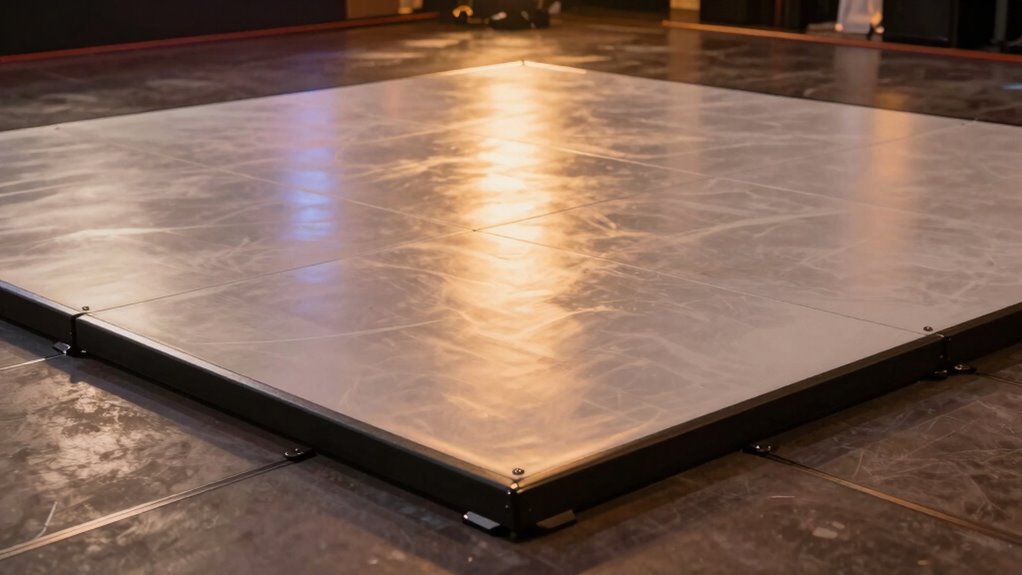

To stop wobble on portable dance floors, focus on creating a solid, level subfloor. Choose rigid, durable materials like high-quality plywood and make certain the surface is flat and free of debris. Use shims or leveling compounds if needed, and secure panels tightly to prevent shifting. Proper support and even weight distribution also help stabilize the floor. Want to discover more tips to boost stability and enjoy seamless dancing? Keep going to learn the secret.
Key Takeaways
- Choose rigid, durable subfloor materials like high-quality plywood or composite panels for stability.
- Ensure the existing surface is flat, level, and free of debris before installation.
- Use shims, spacers, and leveling compounds to correct unevenness and maintain a smooth, stable base.
- Secure panels properly and anchor edges to prevent movement and wobbling during use.
- Regularly inspect and maintain the subfloor to sustain a wobble-free, secure dance surface.
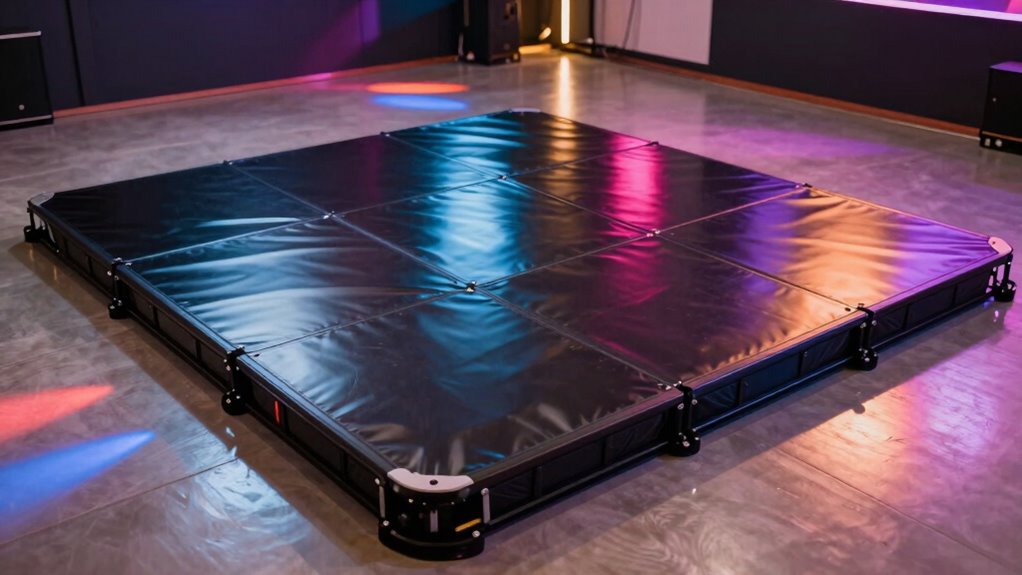
Ever wondered how to turn any space into a vibrant dance floor? The secret often lies beneath the surface — specifically, in your choice of subfloor and how you install your portable dance floor. Getting this right makes all the difference in preventing wobble and ensuring stability, so you can dance confidently without distraction. When it comes to installation tips, start by evaluating the underlying surface. A flat, level foundation provides the best support and minimizes movement. If the existing surface isn’t perfectly even, consider using shims or leveling compounds to create a smooth, stable base. This step is critical because uneven surfaces will cause your portable dance floor to wobble, diminishing the experience and potentially damaging the flooring over time. Selecting the right installation materials is also vital to achieve a secure setup. Material choices for the subfloor are equally important. Opt for durable, rigid materials like plywood or specialized subfloor panels designed for flooring applications. These materials provide a sturdy, even platform that absorbs minor irregularities in the underlying surface. Avoid soft or flexible materials, such as foam or thin plywood, as they can introduce instability and wobble. If you’re installing indoors, a high-quality plywood sheet, at least half an inch thick, works well under most portable dance floors. For outdoor settings, consider weather-resistant options like treated plywood or composite panels that resist moisture and warping. When planning your installation, also think about the distribution of weight across the subfloor. Distribute the load evenly by placing your portable dance floor panels on a solid, level base. Use shims or spacers if needed to keep everything aligned. Secure the panels together according to the manufacturer’s instructions to prevent shifting during use. Proper installation tips include anchoring the edges if possible, especially on uneven or outdoor surfaces, to stop any movement or separation between sections. Additionally, check for any debris or small objects on the subfloor that could cause bumps or wobbling. Clean the surface thoroughly before laying down your panels.

VEVOR Dance Floor Roll 6.6 x 15.7 ft, Portable Dance Practice Floor 1.5mm Thickness PVC Dance Flooring Grey/Black Roll Out Dance Mat Non-Slide & Wearproof Dance Floor Easy Cleaning for Ballet
- Color Options: Grey and Black available
- Dimensions: 6.6 x 15.7 ft roll
- Thickness: 1.5 mm (0.06 inches)
As an affiliate, we earn on qualifying purchases.
As an affiliate, we earn on qualifying purchases.
Frequently Asked Questions
How Long Does a Portable Dance Floor Typically Last?
A portable dance floor typically lasts 5 to 10 years with proper care. Its durability lifespan depends on factors like usage frequency, weight capacity, and maintenance tips. To extend its life, you should regularly clean the surface, avoid dragging heavy furniture, and store it properly when not in use. Proper maintenance helps prevent damage, ensuring your dance floor remains stable and safe for many events.
Can Portable Dance Floors Be Used Outdoors?
Yes, you can use portable dance floors outdoors. They offer good outdoor durability and weather resistance, making them suitable for various outdoor events. Just make certain you select a floor designed for outdoor use, with features like water-resistant surfaces and sturdy subfloors. It’s also helpful to set up on a flat, stable surface to prevent wobbling and protect the floor from excessive moisture or debris that could cause damage.
What Are the Weight Limits for These Dance Floors?
While elegance often masks strength, portable dance floors have impressive weight capacities, typically ranging from 300 to 1,000 pounds per panel. Your choice of floor material influences this limit—resilient vinyl or plywood panels support more weight. Always check the manufacturer’s specifications to guarantee the total weight, including dancers and equipment, stays within the recommended capacity. That way, you keep your dance surface safe and wobble-free.
Are They Suitable for All Types of Dance Styles?
Yes, portable dance floors are suitable for all types of dance styles because they offer excellent floor compatibility and style versatility. You can confidently dance ballet, hip-hop, salsa, or ballroom on these surfaces, as they’re designed to guarantee various movements and impact levels. Their sturdy, adaptable construction ensures stability and safety, making them an ideal choice whether you’re practicing at home or performing professionally.
How Easy Is It to Set up and Dismantle?
You’ll be amazed at how quickly you can set up and dismantle these portable dance floors. Thanks to their ease of installation, you won’t need special tools or skills—just a few simple steps. The dismantling process is just as effortless, letting you pack up in minutes. This seamless setup and takedown guarantee you spend more time dancing and less time worrying about complicated procedures.
Conclusion
When you choose a portable dance floor with a solid subfloor, you guarantee stability, reduce wobble, and boost confidence. When you prioritize quality, you enjoy seamless dancing, safer moves, and happier guests. When you invest in the right subfloor, you create a space that’s reliable, enjoyable, and memorable. So, whether you’re hosting a party or setting up for a performance, remember: a stable subfloor makes all the difference. Dance confidently, dance comfortably, dance with ease.