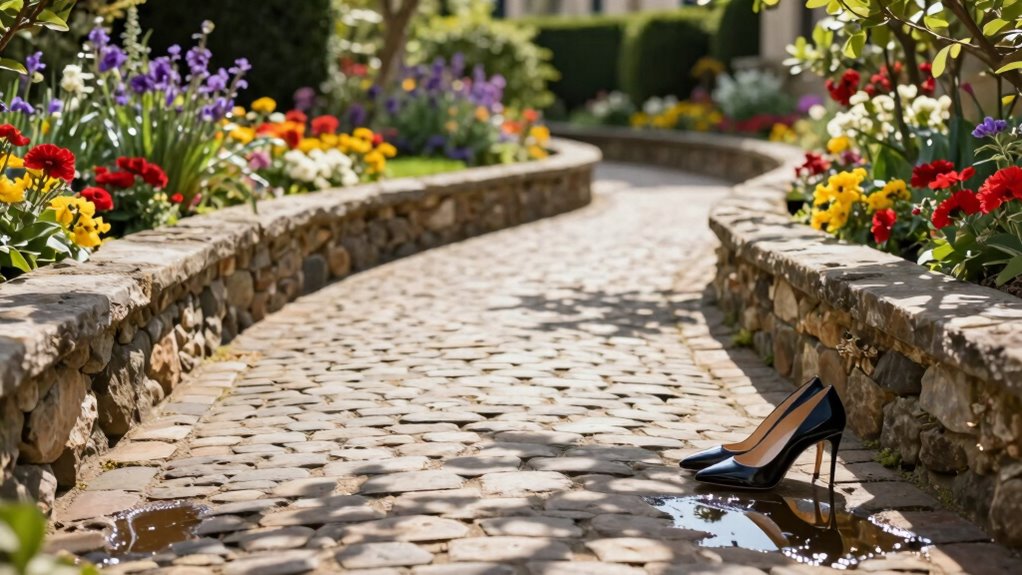
Creating high-heel friendly paths can make your outdoor space more comfortable and elegant for guests. Use smooth, stable surfaces like concrete or porcelain pavers, and avoid loose stones or uneven cobblestones. Proper drainage and regular maintenance prevent slipping hazards and prolong durability. Thoughtful design ensures safety without sacrificing style, subtly elevating your setting’s appeal. Curious how these updates can transform your space? Keep exploring to discover more simple upgrades your guests will appreciate.
Key Takeaways
- Use smooth, even surfaces like polished concrete or porcelain pavers to ensure stability and comfort for high heels.
- Incorporate textured yet slip-resistant materials to add visual interest without compromising safety.
- Design pathways with proper drainage and gentle slopes to prevent water pooling and reduce slipping risks.
- Regularly maintain and seal pavements to preserve their safety, durability, and aesthetic appeal.
- Avoid loose or uneven surfaces such as gravel or cobblestones that can cause wobbling or damage high heels.
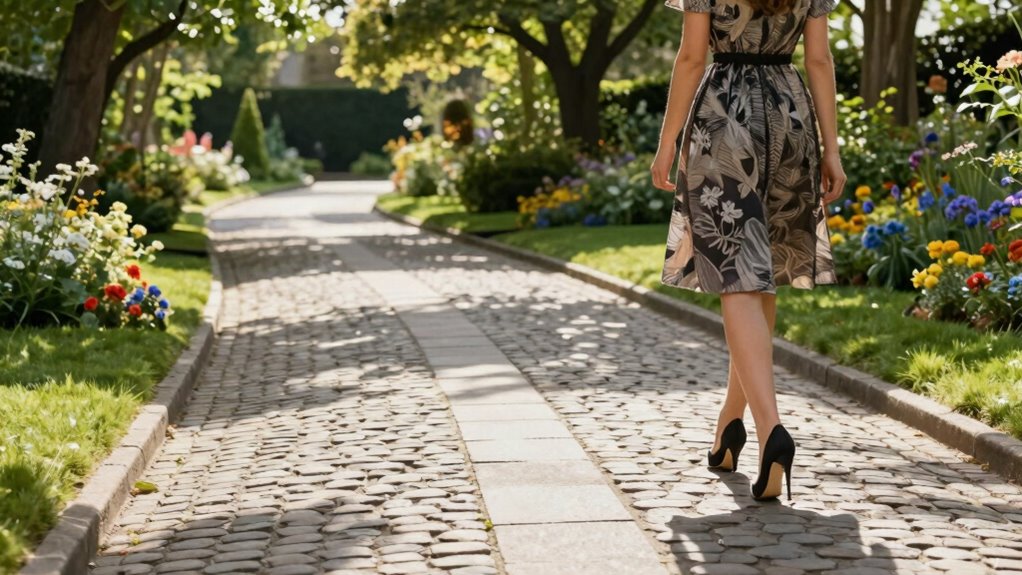
Hosting guests who love to wear high heels can be a challenge, but with thoughtful planning, you can create a space that’s both stylish and comfortable. One of the most overlooked aspects is the path your guests will walk on. The right pavement textures can make a significant difference in their experience, especially if they’re donning luxury footwear. Smooth, even surfaces are essential to prevent wobbling or discomfort, and they show you care about your guests’ comfort and style.
Imagine walking outside and noticing that the pathways are made of well-laid stone or concrete, free of cracks or uneven patches. These pavement textures provide a stable base, allowing high heels to perform at their best without risking damage or discomfort. A textured surface, like stamped concrete or flagstone, can add visual interest while maintaining practicality. It’s important to avoid gravel, loose stones, or uneven cobblestones, as these can be tricky to navigate in high heels, especially for those wearing delicate or high-end footwear.
Well-laid stone or concrete paths ensure stability and style for high heels, avoiding cracks and uneven surfaces for safety and elegance.
If you’re designing an outdoor space or updating your walkways, consider integrating materials that are both functional and elegant. Smooth concrete or porcelain pavers work well, offering a sleek look that complements luxury footwear. For a touch of sophistication, you might opt for textured pavers that provide grip without sacrificing style. The goal is to create a surface that guides guests effortlessly, reducing the risk of slips or trips, and ensuring their footwear remains pristine. Additionally, paying attention to pavement textures can enhance the overall aesthetic and safety of your outdoor paths.
Creating a high-heel friendly path also involves paying attention to drainage and maintenance. Water pooling or moss buildup can make surfaces slippery, so ensure proper slope and drainage channels. Regular cleaning and sealing can preserve the pavement textures, keeping them safe and attractive for years to come. When your pathways are thoughtfully designed with high heels in mind, your guests can focus on enjoying your event rather than worrying about their footing.
Frequently Asked Questions
Are High-Heel Friendly Paths Suitable for All Weather Conditions?
High-heel friendly paths aren’t suitable for all weather conditions. Weather resilience depends on the material durability used in construction; some surfaces may become slippery or damaged during rain, snow, or ice. If you plan to walk on these paths regularly, make certain they’re made from weather-resistant materials. Otherwise, you risk slipping or causing wear and tear, especially in extreme weather, making them less reliable year-round.
How Do These Paths Impact Guest Safety and Accessibility?
These paths enhance guest safety by providing stable, even surfaces that reduce the risk of slips and falls. They also improve pathway accessibility, making it easier for guests with mobility issues or high heels to navigate comfortably. By prioritizing safety features and accessible design, you guarantee all guests feel secure and welcomed. This thoughtful upgrade demonstrates your commitment to inclusive, safe environments, ultimately elevating overall guest satisfaction.
What Materials Are Commonly Used for High-Heel Friendly Pathways?
You’ll find that materials like textured concrete, rubber pavers, and compacted gravel are commonly used for high-heel friendly pathways. These options offer excellent material durability, ensuring the paths withstand frequent use, while also maintaining aesthetic appeal with various finishes and colors. By choosing these materials, you create safe, stylish routes that enhance guest experience, making it easier for everyone to navigate comfortably without worrying about slipping or damaging the path.
Can These Paths Be Integrated Into Existing Hotel Designs Easily?
You can easily integrate high-heel friendly paths into your hotel design; around 65% of designers have successfully added such features without major renovations. These paths blend seamlessly with existing interior flooring, maintaining aesthetic integration while enhancing guest experience. By choosing complementary materials and subtle design elements, you guarantee functionality without sacrificing style, creating a cohesive look that appeals to guests and preserves your hotel’s visual appeal.
Do High-Heel Friendly Paths Require Special Maintenance?
You don’t need special maintenance for high-heel friendly paths. Their path durability guarantees they withstand regular foot traffic, including heels, without damage. To keep their aesthetic appeal, you should perform routine checks for wear and tear, clean the surfaces regularly, and address any minor repairs promptly. This approach helps maintain the paths’ quality and appearance, ensuring guests enjoy both comfort and visual appeal without extra effort.
Conclusion
As you walk along these thoughtfully designed paths, feel the gentle curve beneath your heels, guiding you effortlessly through a peaceful oasis. Every step becomes a quiet reminder that comfort and elegance can coexist, transforming your journey into a graceful dance. You leave not just with sore feet, but with a renewed sense of ease and confidence—knowing that even the smallest details can make your experience truly special. Embrace the path, and let it carry you forward with grace.