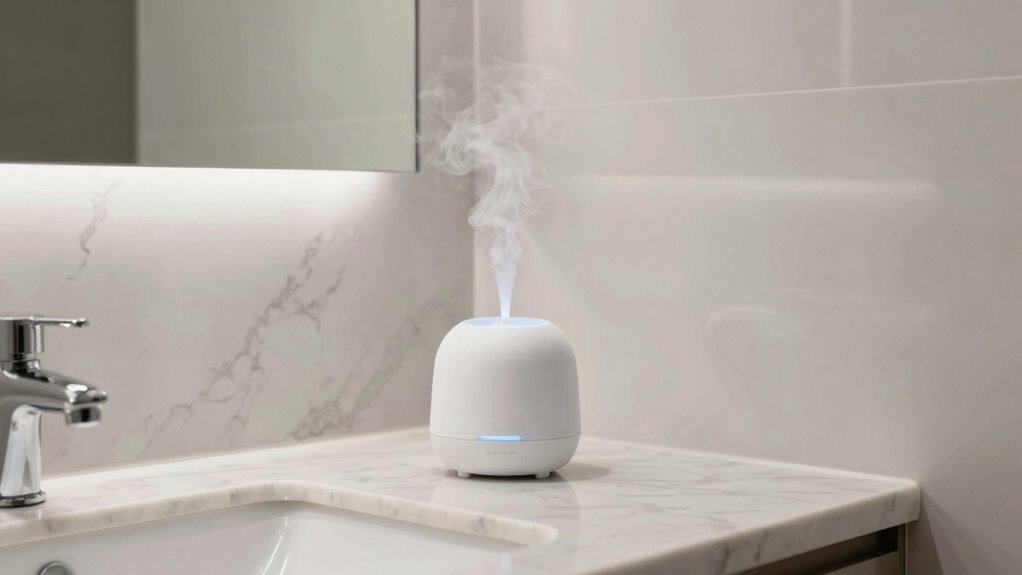

To avoid headaches and complaints from scent diffusers in restrooms, choose natural, plant-based essential oils and make certain the scent isn’t overpowering. Place diffusers thoughtfully, away from direct contact with users, and adjust their settings for a balanced aroma. Proper ventilation and odor neutralizers help distribute scents evenly and eliminate bad smells. Managing these factors carefully creates a comfortable, fresh environment—if you want practical tips to fine-tune your approach, keep exploring this guide.
Key Takeaways
- Choose diffusers with subtle, plant-based essential oils to prevent overpowering scents.
- Adjust diffuser settings and placement to control scent intensity and avoid discomfort.
- Incorporate odor neutralizers alongside natural fragrances for balanced air quality.
- Ensure proper ventilation to evenly distribute scents and reduce concentration buildup.
- Regularly monitor user feedback and modify diffuser use to maintain a comfortable environment.
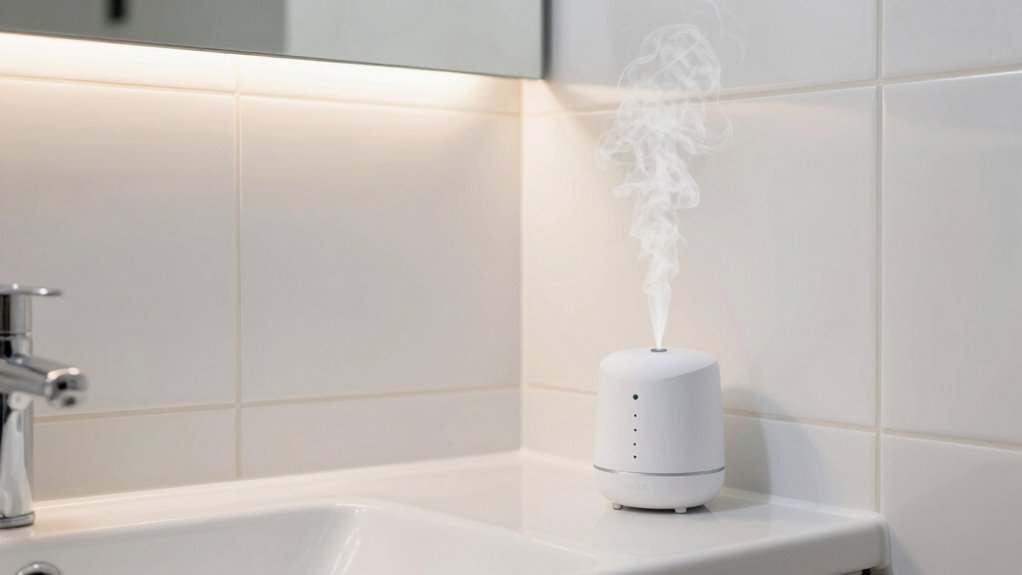
Have you ever wondered how to keep restrooms smelling fresh and inviting? Using scent diffusers can be a great solution, but it’s vital to do it right. When aiming for a pleasant environment, natural scenting can make a huge difference. Instead of overwhelming fragrances, choose diffusers that use subtle, plant-based essential oils. These not only create a welcoming atmosphere but also promote a sense of calm and cleanliness. Keep in mind that strong artificial scents can quickly become annoying or cause headaches, so opt for gentle, natural aromas. This approach guarantees the restroom smells inviting without becoming overpowering or irritating to anyone using the space. Additionally, selecting safer scenting options ensures a healthier environment for all users. Odor neutralization is another essential element when selecting scent diffusers. The goal isn’t just to mask unpleasant smells but to eliminate them altogether. Look for diffusers that incorporate odor neutralizers alongside their fragrances. These neutralizers work by breaking down odor molecules at a molecular level, effectively erasing the source of bad smells rather than just covering them up temporarily. When you combine natural scenting with odor neutralization, you create a more balanced and effective air quality. This dual approach helps maintain a fresh environment, especially in high-traffic restrooms, where odors can be persistent. To avoid headaches and complaints, it’s important to control the intensity and placement of your scent diffusers. Place them strategically, away from direct contact with users or areas where airflow is limited. This way, the scent disperses evenly and gently, preventing any sudden bursts of fragrance that could cause discomfort. Additionally, select diffusers with adjustable settings so you can customize the scent intensity based on the size of the restroom and the volume of traffic. Regularly monitor how the scent levels are perceived by users; if anyone mentions it’s too strong or causes headaches, dial back the intensity or switch to a milder scent. Another tip is to keep the environment well-ventilated. Proper airflow helps distribute the scent more evenly and prevents it from becoming overpowering in confined spaces. If your restroom has a ventilation system, make sure it’s functioning properly and complements your scenting strategy. This synergy enhances the natural aroma and helps neutralize odors more efficiently. Remember, the goal is to create a fresh, inviting space without overwhelming the senses. By selecting the right natural scenting options, incorporating effective odor neutralization, and managing diffuser settings carefully, you can maintain a restroom environment that feels clean, pleasant, and headache-free for everyone who walks through the door.

Diffuser Fragrance Oils, Aromtopia Essential Oils for Diffusers for Home, 6x10ml Fresh Home Set, Clean Scents for Candle Soap Making, Dryer Ball, Fresh Linen, Crisp Breeze, Fresh Laundry, Lemon
- Fresh Home Scent Set: 6x10ml bottles of fresh aromas
- Premium Quality: IFRA compliant, additive-free oils
- Versatile Uses: Diffusers, candles, soaps, DIY projects
As an affiliate, we earn on qualifying purchases.
As an affiliate, we earn on qualifying purchases.
Frequently Asked Questions
Are Scent Diffusers Safe for Individuals With Allergies?
Scent diffusers can pose allergy risks for individuals with scent sensitivity, so you should be cautious. If someone has allergies or sensitivities, opt for fragrance-free or hypoallergenic products. Always test a small area first, and consider using natural alternatives like essential oils with minimal additives. Keep the restroom well-ventilated to reduce scent buildup and prevent allergic reactions, ensuring everyone feels comfortable and safe.
How Often Should Scent Diffusers Be Replaced or Refilled?
You should refill your scent diffuser according to the recommended refill schedules, usually every 4 to 6 weeks, depending on usage. Keep an eye on the diffuser’s lifespan, as most diffusers last between 6 months to a year with proper maintenance. Regular refills guarantee consistent scent without overwhelming the space, and replacing or refilling on time helps prevent headaches and complaints caused by overly strong fragrances.
Can Scent Diffusers Cause Respiratory Issues in Sensitive People?
Yes, scent diffusers can cause respiratory issues in sensitive people because they release volatile chemicals that affect air quality. If you’re aware of sensitivities, it’s best to choose diffusers with natural or low-emission scents. Make sure the restroom is well-ventilated, and monitor for any symptoms like coughing or irritation. Regularly replacing or refilling diffusers with safer options helps minimize potential health risks and maintain better air quality.
What Are Eco-Friendly Options for Restroom Scent Diffusers?
Did you know that 65% of consumers prefer eco-friendly products? For restroom scent diffusers, opt for natural essential oils and biodegradable packaging. These options reduce environmental impact and are gentler on sensitive noses. You can choose diffusers that use plant-based ingredients and eco-conscious materials, making your restroom both inviting and sustainable. This way, you create a fresh space while supporting eco-friendly practices.
How Do I Choose a Scent That Appeals to Most Users?
To choose a scent that appeals to most users, consider fragrance preferences and scent intensity. Opt for subtle, universally liked fragrances like citrus or lavender, which tend to be calming and widely appreciated. Test different options to gauge scent strength, ensuring it’s not overpowering. Listen to feedback from users, and be ready to adjust to create a comfortable restroom environment that minimizes headaches and complaints.
Conclusion
So, next time you notice a pleasant scent in a restroom, remember it might just be a diffuser working quietly in the background. Sometimes, it’s the small details—like choosing the right scent or proper placement—that make all the difference. Keep an eye out for any headaches or complaints, and adjust accordingly. After all, a well-managed diffuser can turn an ordinary restroom into a surprisingly invigorating space, just when you least expect it.