When pressure washing restrooms, you should first wear protective gear and clear fragile fixtures to prevent damage. Check hoses and nozzles for leaks, and start with low pressure, gradually increasing to avoid surface harm. Cover electrical outlets and target specific areas carefully, maintaining proper distance. Regularly inspect equipment for irregular sounds or leaks, and adjust pressure settings as necessary. mastering these safety steps guarantees effective cleaning while preventing costly damage—keep going to discover more tips.
Key Takeaways
- Use biodegradable detergents to clean restroom surfaces safely and reduce environmental impact.
- Inspect hoses, nozzles, and pressure settings before operation to prevent equipment failure and surface damage.
- Wear protective gear and cover electrical fixtures to ensure safety during pressure washing.
- Target specific areas carefully, maintaining proper distance and adjusting pressure to avoid fixture or tile damage.
- Regularly maintain and utilize equipment features to enhance safety, efficiency, and prevent accidental harm.
Pressure washing restrooms is an effective way to thoroughly remove stubborn dirt, grime, and mold that accumulate over time. However, guaranteeing safety and preventing damage requires careful planning and execution. One of the first steps is choosing the right cleaning agents. Biodegradable detergents are an excellent choice because they’re eco-friendly and gentle on surfaces, reducing the risk of damage to plumbing fixtures, tiles, and painted surfaces. These detergents break down naturally, making them safer for the environment and safer for your restroom surfaces. Using biodegradable options also helps you meet health and safety standards, especially in public or commercial facilities.
Using biodegradable detergents ensures eco-friendly, surface-safe restroom cleaning.
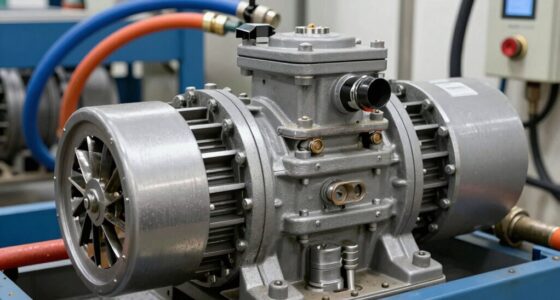
Next, proper equipment maintenance is critical. Before starting, inspect your pressure washer thoroughly. Check hoses for leaks, ensure the nozzle is in good condition, and verify that the pressure settings are appropriate for restroom surfaces. Overly high pressure can damage delicate fixtures or grout, so adjusting the pressure to a safe level is essential. Regularly maintaining your equipment not only prolongs its lifespan but also prevents malfunctions that could lead to accidents or inconsistent cleaning results. Keep nozzles clean and replace worn-out parts promptly to ensure the equipment operates smoothly throughout the cleaning process.
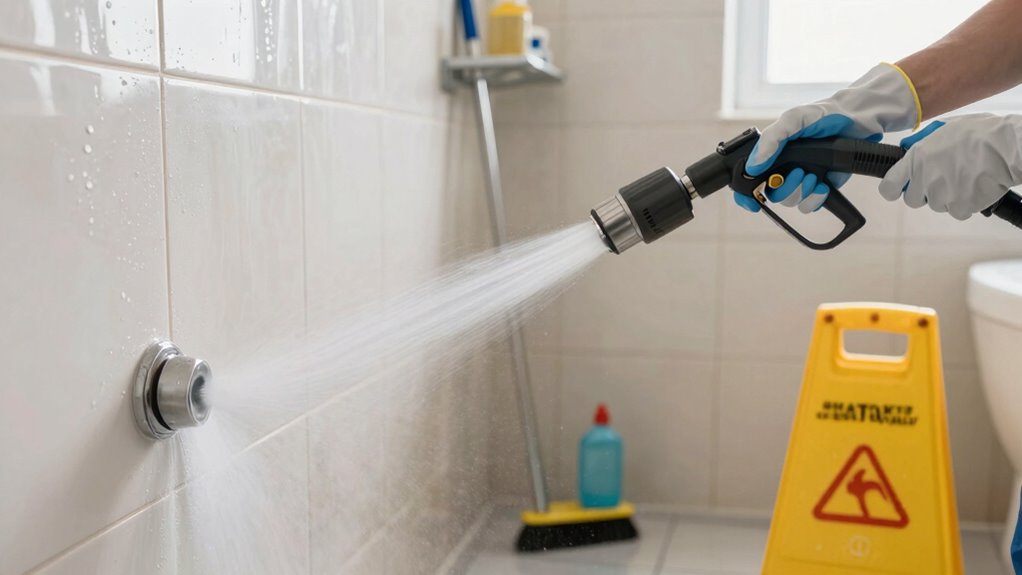
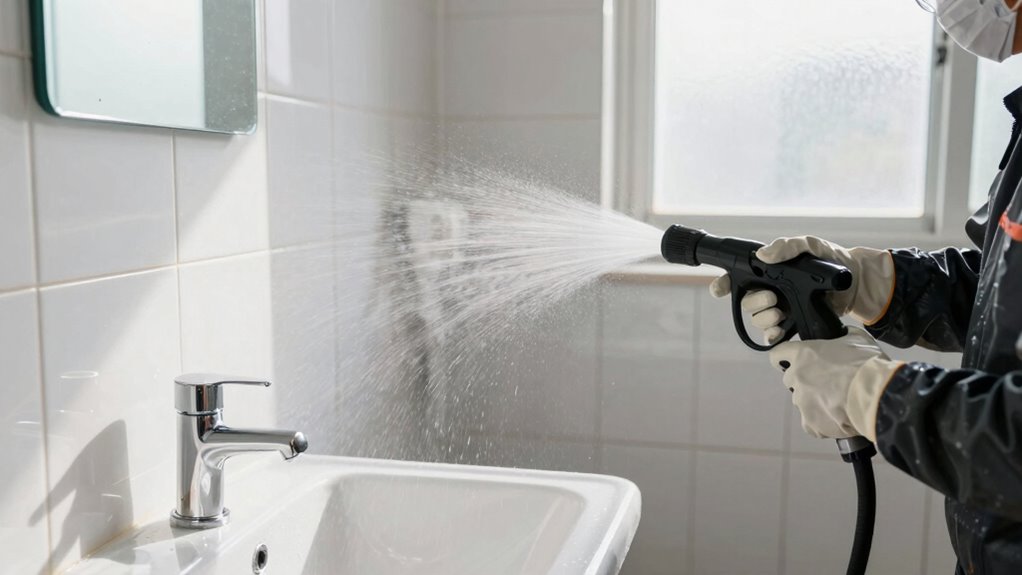
When preparing to pressure wash, pay close attention to safety precautions. Wear protective gear, including gloves and goggles, to shield yourself from splashes and debris. Clear the area of any fragile fixtures or items that could be damaged by the spray. Cover electrical outlets and switches with waterproof covers to prevent water intrusion, which could cause electrical hazards. It’s also wise to start with a lower pressure setting and gradually increase it if necessary. This approach minimizes the risk of damaging surfaces or fixtures in the restroom.
Another key safety step involves controlling the water flow and targeting specific areas carefully. Use the appropriate nozzle and hold the spray wand at the correct distance from surfaces. This prevents unnecessary wear and tear on fixtures or tiles. Be cautious around plumbing fixtures, as high-pressure water can loosen fittings or crack porcelain. Regularly monitor your equipment during the process, listening for any irregular sounds or leaks that might indicate a problem. Proper equipment maintenance and using eco-friendly detergents not only protect your surfaces but also guarantee your safety and that of your team. Additionally, being aware of navigation and mapping features on modern pressure washers can help you operate more efficiently and avoid accidental damage.
Frequently Asked Questions
What Types of Surfaces Are Most Vulnerable to Damage From Pressure Washing?
You should be cautious with surfaces like ceramic tiles, painted walls, and soft wood, as they’re most vulnerable to damage from pressure washing. Always consider surface compatibility to prevent damage. Use lower pressure settings and gentle techniques on delicate surfaces, and test in small areas first. Damage prevention relies on understanding each surface’s durability and adjusting your approach accordingly, ensuring thorough cleaning without causing harm.
How Often Should Restrooms Be Pressure Washed for Optimal Safety?
You should pressure wash restrooms at least once every three to six months, depending on usage and cleanliness needs. Skipping cleaning can lead to grime buildup, making surfaces slippery and unsafe. Following a consistent maintenance schedule ensures safety, prolongs the lifespan of fixtures, and prevents damage from mold or bacteria. Regular cleaning keeps your restroom hygienic and visually appealing, so sticking to this frequency is essential for crucial safety and cleanliness.
Are There Specific Cleaning Agents Recommended for Restroom Pressure Washing?
You should choose cleaning agents specifically designed for restroom surfaces, guaranteeing they are compatible with the materials you’re washing. Avoid harsh chemicals that could damage surfaces or cause safety hazards. Look for cleaning agents labeled as safe for plumbing, tile, and porcelain, and always follow manufacturer instructions. Proper surface compatibility minimizes damage, preserves the restroom’s integrity, and ensures effective cleaning without risking costly repairs or safety issues.
Can Pressure Washing Be Safely Done Around Electrical Fixtures?
Think of electrical fixtures as delicate flowers in a storm—you must protect them. When pressure washing around electrical fixtures, prioritize electrical safety by turning off power and using waterproof covers. Keep the pressure washer at a safe distance to avoid water intrusion. Proper fixture protection prevents damage and electrical hazards, making your cleaning safe and effective. Always follow manufacturer guidelines for both electrical safety and fixture protection.
What Are the Signs Indicating That Pressure Washing Has Caused Damage?
If pressure washing causes damage, you’ll notice signs of corrosion, cracks, or chips on surfaces. You might see peeling paint, rust spots, or water stains indicating corrosion. Cracks or chips in tiles, fixtures, or walls suggest structural damage. Keep an eye out for these issues; addressing them early prevents further problems. Regular inspections help catch damage early, ensuring your restroom stays safe and well-maintained after pressure washing.
Conclusion
By following proper safety steps, you can prevent costly damage and keep restrooms spotless. Did you know that improper pressure washing can cause structural damage in up to 30% of cases? Staying vigilant and using the right techniques not only protects your property but also saves you money. So, always prioritize safety, use appropriate equipment, and inspect thoroughly. With these tips, you’ll maintain clean restrooms without risking expensive repairs.