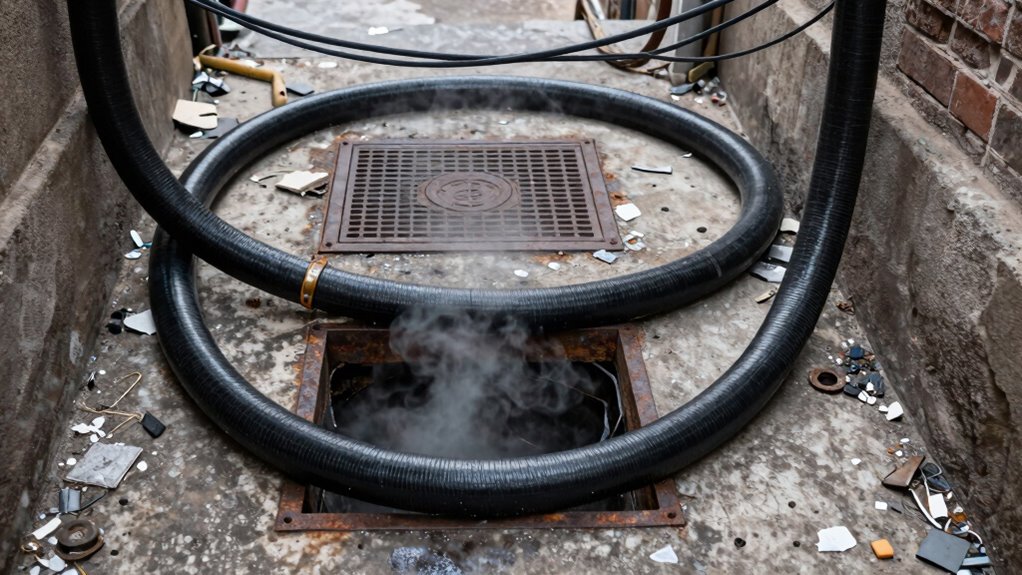

When setting up temporary sewer connections, you must eliminate backflow risks by installing proper backflow prevention devices like check valves and ensuring all joints are securely sealed. Regular inspections and maintenance are vital to catch blockages early and prevent wastewater from flowing back into your property. Neglecting these steps can lead to serious health hazards, property damage, and regulatory penalties. Keep these safety measures in mind—continuing will help you understand how to protect your system effectively.
Key Takeaways
- Installing backflow prevention devices like check valves is essential to eliminate sewer backflow risk during temporary connections.
- Regular inspection and maintenance of connections help identify potential blockages or leaks that could cause backflow.
- Proper sealing of all joints and connections prevents wastewater from flowing back into the property.
- Adhering to local safety standards and regulations ensures that temporary sewer setups minimize backflow hazards.
- Maintaining detailed records of inspections and repairs supports ongoing compliance and effective risk management.
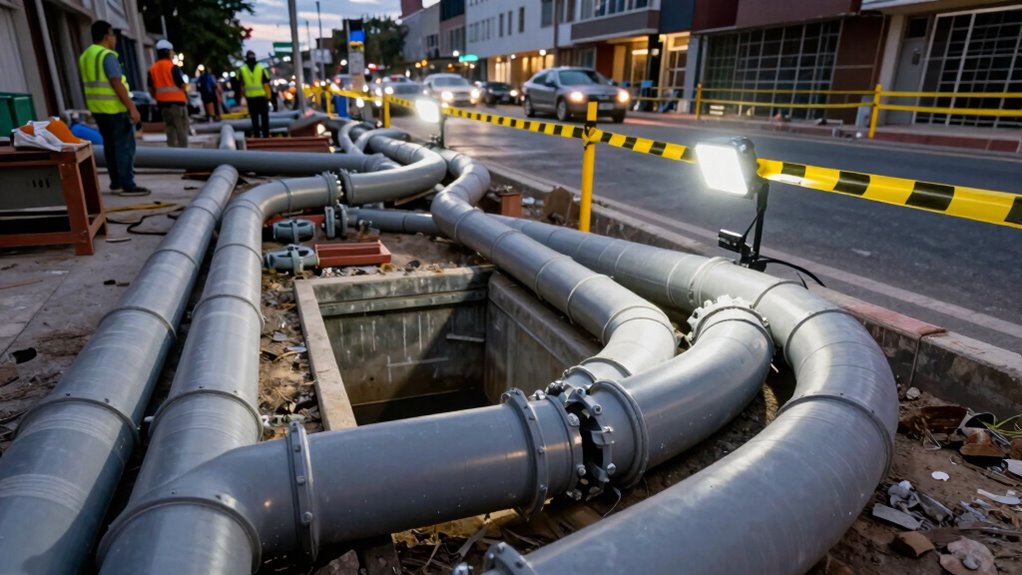
Have you ever needed a quick, temporary solution to connect your property to the sewer system? If so, you’re likely aware that such connections are often necessary during repairs, construction projects, or emergencies. While temporary sewer connections can be a lifesaver in these situations, they come with risks if not managed properly. One of the most critical concerns is backflow—wastewater flowing back into your property—which can lead to serious health hazards and costly damages. To prevent this, you must prioritize proper sewer system maintenance and follow strict connection safety protocols.
Temporary sewer connections require proper maintenance and safety protocols to prevent backflow and protect health and property.
When setting up a temporary sewer connection, it’s essential to understand that the connection isn’t just about plugging in a hose or pipe; it’s about guaranteeing the entire system functions safely and efficiently. Regular sewer system maintenance plays a fundamental role in this process. Maintenance involves inspecting pipes, checking for blockages, and ensuring the flow is unobstructed. When you perform routine checks, you reduce the risk of backups that could cause backflow. If you notice any issues, addressing them promptly prevents potential contamination and keeps the connection safe for your property and the environment.
Equally important are connection safety protocols. These are specific procedures you should follow to minimize backflow risks and ensure your temporary setup is secure. For example, installing backflow prevention devices, like backwater valves or check valves, creates a barrier that stops wastewater from reversing course. These devices are indispensable, especially in areas prone to flooding or high water tables. Additionally, proper sealing of all joints and connections prevents leaks, which can also lead to backflow and contamination. When establishing a temporary connection, always verify that your setup complies with local regulations and guidelines—skipping this step can result in fines or environmental violations.
Monitoring your temporary sewer connection is another key step. Regularly inspecting the setup during its use helps catch issues early before they escalate. Make sure to keep records of inspections and maintenance activities, so you have documentation that your system complies with safety standards. Furthermore, educating yourself on the specific connection safety protocols in your area ensures you’re following best practices, reducing the chance of backflow incidents. Additionally, understanding the importance of proper backflow prevention can significantly enhance the safety and reliability of your temporary sewer connection.

3 Inch Pvc Backwater Valve,Sewer Check Back Flow Preventer Drain Backflow Preventer Valve,Prevent Sewage And Rainwater From Flowing Backflow
- Backflow Prevention: Prevents sewage and rainwater backflow
- Easy Installation: Simple, tool-free setup with automatic operation
- Durable Construction: Made from corrosion-resistant, high-quality PVC
As an affiliate, we earn on qualifying purchases.
As an affiliate, we earn on qualifying purchases.
Frequently Asked Questions
How Long Can a Temporary Sewer Connection Remain in Place?
You should keep a temporary sewer connection in place for as short a time as possible, ideally only during necessary construction or repairs. Connection duration varies depending on project scope, but it’s vital to regularly check and maintain the connection to prevent backflow risks. Frequent maintenance ensures the connection stays secure and functional, minimizing potential health hazards and environmental issues caused by prolonged or unattended temporary sewer setups.
What Are the Costs Associated With Installing a Temporary Sewer Connection?
The costs for installing a temporary sewer connection vary depending on your project’s scope. You should consider a thorough cost estimation that includes equipment rental, such as pumps and hoses, and labor. Additional expenses may include permits and site preparation. Planning ahead guarantees you allocate enough budget for these essentials, helping you manage expenses effectively while ensuring a safe, reliable connection that minimizes backflow risks.
Are There Specific Permits Required for Temporary Sewer Hookups?
Imagine holding a key to your project’s success—that’s your permit. You’ll need specific permit requirements to guarantee legal compliance for temporary sewer hookups. Check with your local authorities or environmental agencies early, as regulations vary by location. Securing the right permits prevents delays and legal issues, helping you maintain smooth operations and safeguard public health. Always verify permit details before installation to stay compliant and avoid costly penalties.
How Often Should Backflow Prevention Devices Be Inspected?
You should inspect backflow prevention devices at least annually, but more frequent inspections are wise if you have temporary sewer connections. Regular inspection schedules help guarantee device maintenance is up-to-date, preventing backflow risks. Keep a detailed record of each inspection, and immediately address any signs of malfunction. Proper maintenance and timely inspections are vital to eliminate backflow hazards and protect your water supply.
Can Temporary Sewer Connections Be Used for Industrial Waste?
You shouldn’t use temporary sewer connections for industrial waste, especially if it contains hazardous materials. These connections are designed for non-hazardous, sanitary waste only, and using them for industrial waste can lead to severe backflow risks and environmental contamination. Always consult local regulations and guarantee proper, dedicated systems are in place for handling industrial waste to prevent health hazards and legal issues.
Conclusion
Remember, nearly 80% of backflow incidents occur due to improper temporary sewer connections. By ensuring your connections are secure and regularly inspected, you can substantially reduce the risk of backflow contamination. Don’t overlook these small but essential steps—they protect your health, your property, and your community’s water quality. Stay vigilant, follow best practices, and eliminate the backflow risk before it becomes a costly problem. Your proactive approach makes all the difference.