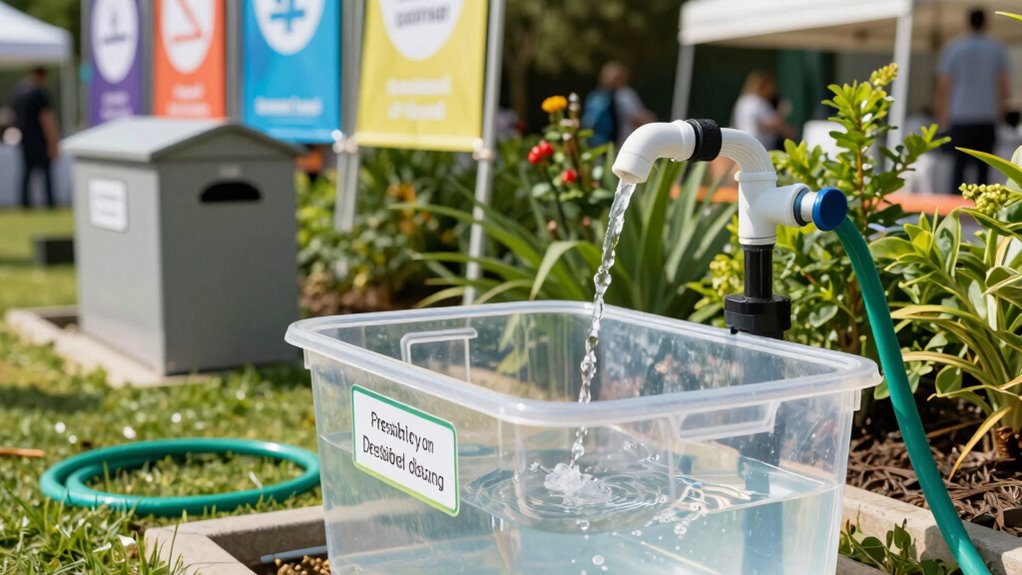

During events, you can generally discharge greywater from sinks and dishwashers if it’s free from harmful chemicals or contaminants. Avoid releasing greywater that contains hazardous substances like paints, solvents, or sewage, as these require special treatment. Proper systems must be used to treat greywater, ensuring it meets water quality standards before disposal. Staying compliant protects the environment and your event’s legality—keep exploring as there’s more to learn about proper greywater management.

Get pool and patio gear delivered free with Prime
- Fast, free delivery on millions of items
- Prime Video, Amazon Music and more included
- Member-only deals all year
Key Takeaways
- Uncontaminated greywater from sinks and dishwashers is generally acceptable for discharge when properly treated.
- Greywater containing hazardous chemicals, paints, or fecal matter must be treated thoroughly or not discharged at all.
- Blackwater, including sewage or heavily contaminated greywater, requires specialized treatment and stricter regulations.
- Use certified greywater treatment systems to ensure water quality meets local standards before disposal.
- Always comply with local laws and regulations, discharging only into approved facilities or areas designated for greywater disposal.

Planning an event often involves managing waste, and greywater is an important aspect to contemplate. Greywater, which comes from sources like sinks, dishwashers, and washing stations, needs careful handling to prevent environmental harm and guarantee safety. One of the first steps is understanding greywater treatment—how you process and manage this water before disposal. Proper greywater treatment involves filtering out solids, oils, and contaminants so that the water can be safely released or reused. This step is crucial because untreated greywater can spread bacteria, chemicals, and pollutants that harm local ecosystems and public health.
Greywater management is vital for environmental safety and compliance during events.
When planning your event, you must also consider legal compliance. Different jurisdictions have specific laws dictating what you can discharge as greywater and the methods you must use to treat it. Ignoring these regulations can lead to hefty fines, cleanup orders, or even event shutdowns. So, it’s essential to research local regulations beforehand. Many areas require you to use approved greywater treatment systems or to discharge greywater only into designated facilities. Some regions prohibit discharging greywater directly onto the ground or into storm drains, emphasizing the importance of proper treatment and disposal methods.
In terms of what you can discharge, typically, greywater from sinks and dishwashers that hasn’t come into contact with hazardous substances is acceptable for certain reuse or disposal methods. However, what you can’t discharge is equally important to recognize. Greywater contaminated with chemicals from cleaning agents, paints, or other hazardous materials should never be released into the environment without proper treatment. These substances can be toxic to plants, animals, and water systems. Additionally, greywater containing fecal matter or sewage must be treated as blackwater, which involves more complex systems and stricter regulations.
To stay compliant, you should always use certified greywater treatment systems designed for your event’s scale. These systems often include multi-stage filtration and disinfection processes to assure water quality. Remember, you’re responsible for maintaining documentation proving your compliance with local laws—this can be vital if authorities inspect your event or if issues arise later.
greywater treatment system for events
As an affiliate, we earn on qualifying purchases.
As an affiliate, we earn on qualifying purchases.
Frequently Asked Questions
Are There Specific Permits Required for Discharging Greywater at Events?
Yes, you need specific permits for discharging greywater at events to guarantee regulatory compliance. Check local, state, and federal regulations, as permit requirements vary depending on your location and the volume of greywater discharged. You might need to apply for a wastewater discharge permit or special authorization. Failing to secure proper permits can lead to fines or legal issues, so always verify requirements before discharging greywater at your event.
How Can I Treat Greywater On-Site Before Disposal?
To treat greywater on-site before disposal, you should use greywater filtration systems designed for event settings. Start by collecting greywater in a designated tank, then run it through filtration units that remove solids and contaminants. Consider using biological or chemical treatment methods if necessary. Regularly monitor and maintain your system to guarantee effective on-site treatment, reducing environmental impact and complying with local regulations.
What Are the Penalties for Improper Greywater Discharge?
Think of this as your “Fawlty Towers” moment — ignoring greywater rules can lead to serious legal consequences. If you discharge improperly, you could face hefty penalty fines, environmental cleanup costs, and potential legal action. Authorities take greywater violations seriously, so always guarantee proper treatment and disposal. Staying compliant protects you from these penalties and helps keep the environment safe, so don’t risk it by cutting corners.
Can Greywater Be Reused for Irrigation After Event Cleanup?
Yes, you can reuse greywater for irrigation after event cleanup. Greywater reuse offers great irrigation potential, helping conserve fresh water resources. Just make sure the greywater is free from harmful chemicals and proper filtration is in place. Check local regulations before reusing greywater, and avoid applying it to edible plants or areas where it might contaminate groundwater. Proper management ensures safe and effective greywater reuse for your landscape.
Are There Eco-Friendly Cleaning Products Recommended for Greywater?
Yes, you can use eco-friendly detergents and biodegradable cleaners for greywater. These products are designed to break down naturally without harming the environment, making them ideal for event cleanup. Look for certified biodegradable cleaners that avoid harsh chemicals and phosphates. By choosing eco-friendly detergents, you guarantee your greywater is safer for reuse in irrigation or disposal, supporting sustainable practices and minimizing ecological impact.
Conclusion
Understanding what you can safely discharge as greywater is vital for eco-friendly events. Remember, not all wastewater is created equal—some substances harm our environment and are illegal to dispose of improperly. By researching and following regulations, you can challenge the misconception that greywater disposal is simple and harmless. Embrace responsible practices, and you’ll demonstrate that caring for the planet isn’t just about regulations but about making a meaningful difference. Your efforts truly matter.
Columbus Day / Indigenous Peoples' Day Picks
long weekend sales
As an affiliate, we earn on qualifying purchases.

![Bukit Bintang Hicks Flat: DBKL Orders Cleanup After Viral Video Exposes Dirty Conditions [WATCH] - NST Online](https://pottyporta.com/wp-content/uploads/2026/09/bukit-bintang-hicks-flat-dbkl-orders-cleanup-after-viral-video-exposes-dirty-con-featured-560x300.jpg)