
If you install your UV water purifier in the wrong spot—like before sediment filters or in an area with poor water flow—you’ll weaken its ability to disinfect effectively. Proper placement ensures the UV light penetrates water fully and doesn’t get blocked or damaged by environmental factors. Poor installation shortens the lamp’s lifespan and reduces purification. For tips on avoiding these mistakes and maintaining ideal performance, keep exploring the key points that make a difference.

Get pool and patio gear delivered free — and shop member deals
- Fast, free delivery on millions of items
- Access to Prime Big Deal Days deals on October 6–7
- Prime Video, Amazon Music and more included
Key Takeaways
- Installing the UV purifier in the wrong location, such as before sediment filters or in turbulent water, reduces its effectiveness.
- Exposure to sunlight or environmental factors can damage the UV lamp if the purifier is placed outdoors or in unsuitable areas.
- Incorrect installation that causes poor water flow or blocks UV light penetration shortens the lamp’s lifespan and diminishes disinfection.
- Failing to maintain proper placement for easy access hampers regular cleaning and replacement, decreasing overall efficiency.
- Neglecting environmental considerations like temperature fluctuations or moisture exposure can render the UV purifier ineffective.
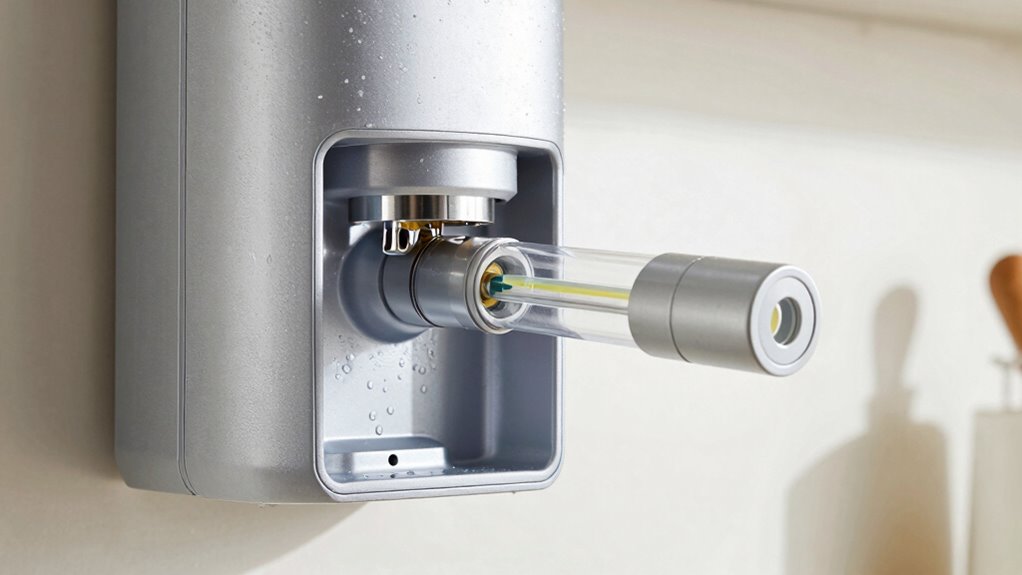
UV water purifiers are an effective way to guarantee your drinking water is safe and free from harmful pathogens. However, their effectiveness depends heavily on proper installation and maintenance. One common mistake people make is choosing the wrong installation location, which can render the purifier useless. It’s essential to understand that UV purifiers need a specific setup to work ideally. If you place the unit where water flow is inconsistent or where sunlight or other environmental factors interfere, you compromise its ability to disinfect effectively. For instance, installing the UV purifier in an area prone to temperature fluctuations or where it’s exposed to direct sunlight can damage the UV lamp or reduce its lifespan. The UV lamp lifespan is a key consideration because, over time, the lamp’s ability to emit the necessary ultraviolet rays diminishes, decreasing the purifier’s efficiency. Most UV lamps last between 9,000 and 12,000 hours, but if the installation isn’t correct, the lamp may burn out prematurely or not reach its full lifespan, leading to ineffective disinfection. Proper installation also involves understanding the importance of contrast ratio, which in this context relates to ensuring the UV light penetrates thoroughly and unimpeded for effective germicidal action.
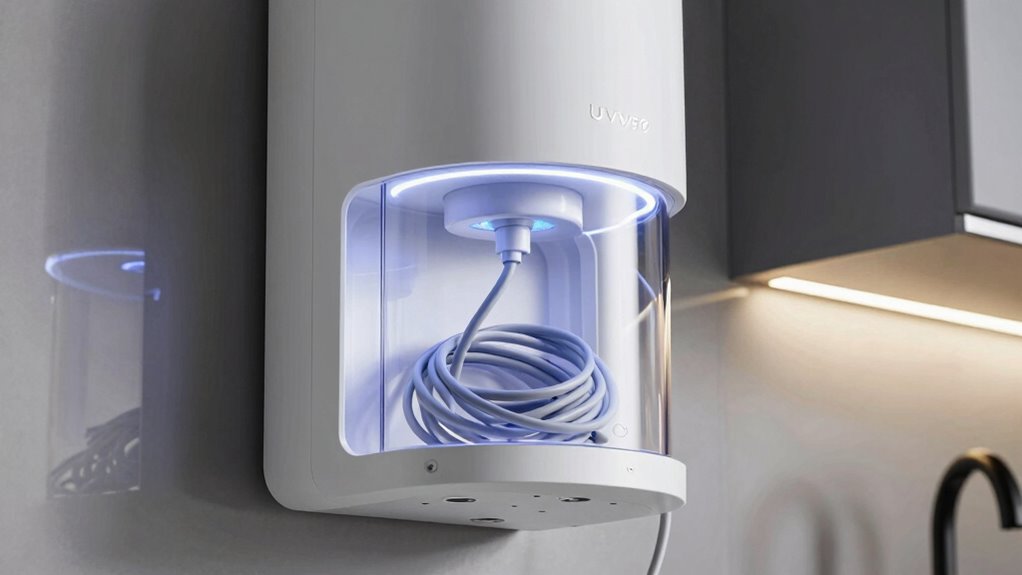
You should also pay close attention to where you install the unit within your water system. The ideal location is after the water has been filtered for sediments and other large particles but before it reaches your tap. This placement ensures that the water is clear and allows UV light to directly contact pathogens without obstruction. Installing the purifier in a spot where water is turbulent or contaminated with sediments can block UV rays and reduce their germicidal effect. Additionally, make sure that the unit is installed at a height and orientation that makes maintenance easy and allows for regular cleaning of the quartz sleeve—the glass part of the UV lamp that needs to stay transparent for UV rays to penetrate effectively.
UV water purifier installation kit
As an affiliate, we earn on qualifying purchases.
As an affiliate, we earn on qualifying purchases.
Frequently Asked Questions
How Often Should I Replace the UV Bulb in My Purifier?
You should replace the UV bulb in your purifier every 9 to 12 months, depending on the UV bulb lifespan and usage. Regular replacement guarantees your UV water purifier remains effective at disinfecting water. Keep an eye on the manufacturer’s recommendations, as replacement frequency can vary with different models. Don’t wait until the bulb burns out completely—timely changes maintain ideal water safety and prevent ineffective disinfection.
Can UV Water Purifiers Remove Chemical Contaminants?
Think of UV water purifiers like a flashlight in a dark room; they’re great for certain issues but can’t reveal everything. They mainly target biological contaminants, so they don’t remove chemical contaminants or secondary contaminants. For chemicals like pesticides or heavy metals, you need chemical filtration systems, such as activated carbon filters. Relying solely on UV won’t guarantee safe drinking water if chemical pollutants are present.
What Are the Signs That My UV Purifier Is Not Working Properly?
If your UV purifier isn’t working properly, you’ll notice UV malfunction signs like cloudy or discolored water, or a persistent bad odor. Check the indicator lights—if they’re off or flashing, that’s a clear sign of malfunction. Additionally, if the purifier isn’t producing clear water despite proper operation, it’s time to examine the UV bulb and confirm the device is functioning correctly. Regular maintenance helps prevent these issues.
Is Professional Installation Necessary for Optimal Performance?
You might think DIY installation is enough, but professional services are vital for peak UV purifier performance. Installation errors, such as incorrect bulb placement or wiring, can render the device ineffective. Investing in professional installation guarantees correct setup, avoiding mistakes that compromise water safety. This way, your purifier functions efficiently, giving you peace of mind and safe, clean water without unnecessary worries or costly repairs later on.
Do UV Purifiers Affect the Taste of Drinking Water?
UV purifiers typically don’t cause significant taste alteration in your drinking water. However, if they aren’t properly maintained, mineral impact or bacterial growth can develop, subtly affecting the flavor. You might notice a slight change if the UV system isn’t functioning correctly or if contaminants remain, so guarantee regular cleaning and correct installation to keep your water tasting fresh and pure. Proper upkeep minimizes any undesirable mineral impact or taste issues.
Conclusion
Remember, even the best equipment can fall short if installed incorrectly. A UV water purifier only works if the UV light directly contacts the water, so make sure proper installation. Don’t let a simple mistake turn a potentially lifesaving device into a useless gadget. As the saying goes, “A chain is only as strong as its weakest link.” Take the time to install your purifier correctly, and you’ll enjoy safe, clean water every day.
Fall Picks
fall essentials
As an affiliate, we earn on qualifying purchases.