
Mixing valves are vital for your home’s safety because they prevent scalding injuries by controlling water temperature. Without them, hot water can unexpectedly reach dangerous levels, risking burns—especially for children, seniors, or sensitive skin. Proper installation, regular checks, and choosing certified models guarantee your family stays protected. By understanding how these valves work, you’ll see why they’re more than just convenience—they’re essential safeguards that keep your household safe. Keep going to discover more details.
Key Takeaways
- Mixing valves prevent water from reaching dangerously high temperatures, reducing scalding risk.
- Proper installation and regular maintenance ensure valves function effectively for safety.
- Certified valves meet strict safety standards, providing reliable temperature control in households.
- They help keep hot water within safe limits, protecting vulnerable groups like children and the elderly.
- Properly functioning mixing valves create a safer home environment and prevent painful burns.
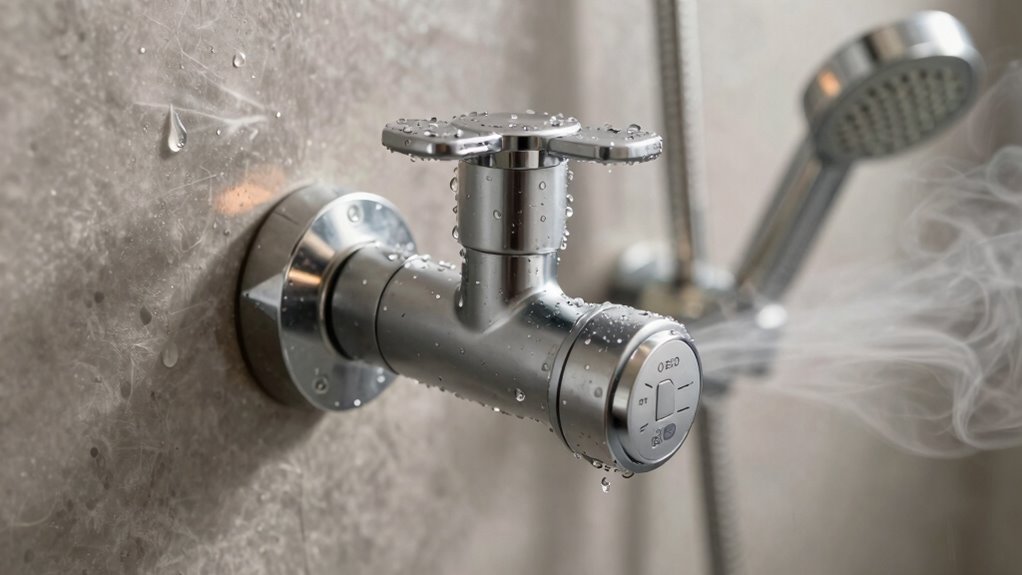
Understanding how mixing valves work is vital for preventing scalding injuries in your home. These devices play an essential role in temperature regulation, making sure that the water coming out of your taps remains safe and comfortable. Without proper mixing valves, hot water can easily reach hazardous temperatures, increasing the risk of burns or scalds, especially for children, elderly family members, or anyone with sensitive skin. By blending hot and cold water precisely, mixing valves help maintain a consistent, safe temperature, giving you peace of mind during daily routines. They are designed to meet strict safety standards, which are put in place to prevent accidental scalding incidents. When a mixing valve is installed correctly, it effectively limits the maximum temperature of the water, reducing the chance of injury if someone unintentionally turns on the hot water full blast.
You should pay close attention to how these valves are set up, because proper installation and adjustment are key to effective temperature regulation. Many safety standards recommend setting the maximum water temperature to around 120°F (49°C) to prevent burns, especially in households with vulnerable individuals. If the temperature exceeds this, the risk of scalds increases considerably. Regular maintenance and testing of your mixing valves ensure they continue to operate within safety standards, preventing unpredictable surges of hot water. If you notice that hot water still feels dangerously hot or that the valve isn’t effectively controlling temperature, it’s a sign you need to replace or calibrate it. Properly functioning mixing valves are also crucial for water safety compliance, ensuring your household adheres to relevant safety standards and reduces the risk of injury.
In addition, understanding the importance of safety standards can guide you in choosing the right mixing valve for your home. Look for models that are certified by relevant safety organizations, as these meet rigorous quality and safety criteria. This certification guarantees that the device will reliably regulate water temperature and protect against accidental scalds. Also, consider the specific needs of your household—if you have young children or elderly residents, a more advanced mixing valve with additional safety features might be worth the investment. Remember, the goal is to create a safe environment where hot water is accessible without risking burns. Properly functioning mixing valves help you achieve consistent temperature regulation, adhere to safety standards, and protect everyone in your home from painful and potentially dangerous injuries.
certified mixing valve for water safety
As an affiliate, we earn on qualifying purchases.
As an affiliate, we earn on qualifying purchases.
Frequently Asked Questions
How Do Mixing Valves Prevent Accidental Burns?
Mixing valves prevent accidental burns by ensuring proper temperature regulation through safety mechanisms. They blend hot and cold water to deliver water at a safe, consistent temperature, preventing sudden hot water surges. This automatic adjustment helps protect you from scalding, especially in households with children or elderly residents. By maintaining a controlled water temperature, mixing valves provide peace of mind and improve overall safety in your plumbing system.
Are Mixing Valves Suitable for All Water Heater Types?
Ever wondered if mixing valves work with any water heater? They’re suitable for most types, offering reliable temperature regulation and enhancing safety. You’ll find that installation compatibility is generally straightforward, but always check specific model requirements. Mixing valves are versatile, fitting into tank and tankless systems alike. So, whether you have a traditional or modern water heater, installing a mixing valve helps prevent scalding and maintains consistent hot water.
What Are the Signs a Mixing Valve Needs Replacement?
You’ll know a mixing valve needs replacement when you notice inconsistent temperature regulation, with hot or cold spots in your water. If the valve makes strange noises or leaks, it’s a sign it’s failing. Over time, the valve’s lifespan ends, leading to reduced effectiveness. Regular inspections can help catch these issues early, preventing scalding risks and ensuring your water stays at a safe, steady temperature.
Can Mixing Valves Improve Overall Water Efficiency?
Yes, mixing valves can improve your overall water efficiency. By accurately controlling water temperature, they reduce unnecessary hot water use, leading to water conservation. This control also minimizes energy consumption since less hot water needs to be heated and stored. You’ll see energy savings on your utility bills while conserving water, making mixing valves a smart choice for both environmental impact and cost efficiency.
Do Mixing Valves Require Regular Maintenance or Testing?
You’ll want to regularly maintain and test your mixing valves to ensure proper temperature regulation and compliance with safety standards. Some might think it’s unnecessary, but neglecting maintenance can lead to malfunction, risking scald injuries. Routine checks help detect wear or leaks early, keeping your water system safe and efficient. By staying proactive, you protect everyone from potential burns and make sure your mixing valve continues to operate reliably.
Conclusion
Remember, mixing valves act as your home’s gentle gatekeeper, preventing scalding temperatures from turning your daily routine into a fiery ordeal. Without them, hot water can feel like an unpredictable storm, ready to strike when you least expect it. By installing and maintaining these valves, you’re planting a shield of safety around your family—transforming your bathroom into a calm, protected sanctuary instead of a battleground against burns. Your peace of mind is worth every effort.