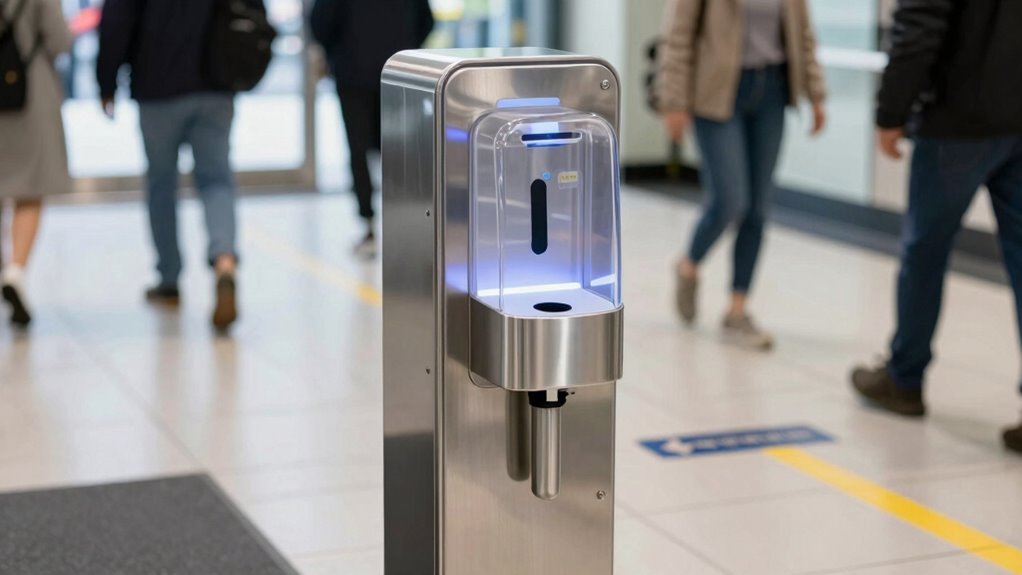

To reduce germ spread, place touchless hand sanitizer kiosks at high-traffic and visible spots like entrances, exits, and gathering areas. Guarantee they’re accessible to everyone and positioned where foot traffic naturally flows, encouraging frequent use. Regularly maintain and refill the dispensers to keep them functional and inviting. Clear signage can boost awareness and usage. Following these strategic placement rules helps create a safer environment—discover more tips to maximize effectiveness.
Key Takeaways
- Place kiosks in high-traffic, visible areas at entrances, exits, and gathering spots to maximize usage and reduce germ transmission.
- Ensure kiosks are accessible and easy to reach for all users, encouraging consistent hand hygiene practices.
- Regularly maintain and refill sanitizer supplies, and clean dispensers to prevent bacteria buildup and ensure proper function.
- Use touchless dispensers to eliminate contact points, significantly lowering the risk of cross-contamination.
- Incorporate clear signage to promote awareness and proper use, reinforcing hygiene habits and consistent sanitizer application.
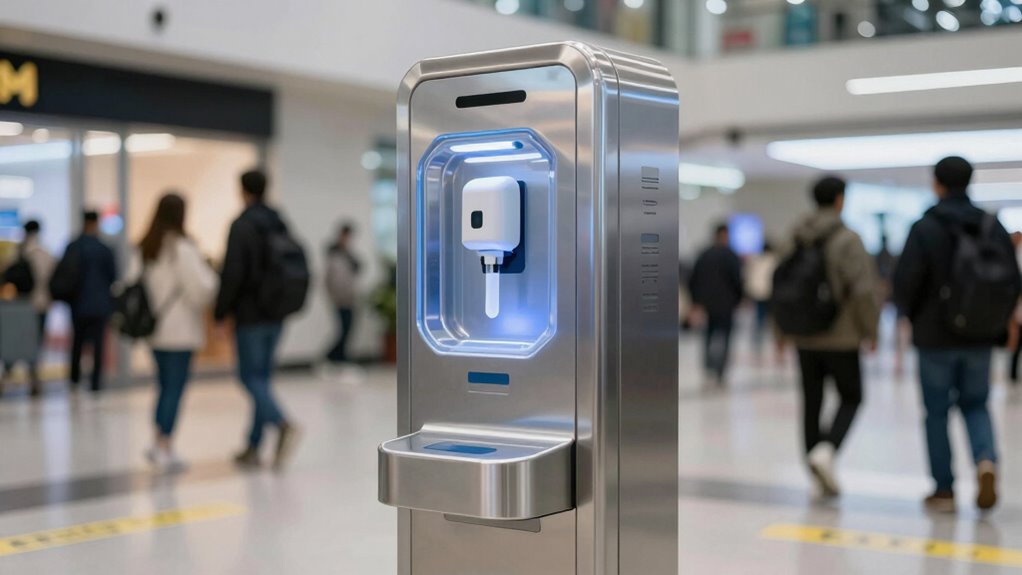
Have you noticed the increasing presence of hand sanitizer kiosks in public spaces? These stations have become a common sight in airports, malls, schools, and office buildings. Their purpose is clear: reduce the spread of germs by providing easy access to hand sanitizer. But simply placing these kiosks isn’t enough. To truly maximize their effectiveness, you need to pay attention to how they’re designed and maintained. Touchless dispensers are essential because they eliminate the need for physical contact, which is a major factor in germ transfer. When people don’t have to touch a pump or button, the risk of cross-contamination drops considerably. Ensuring that these dispensers are touchless is one of the most important placement rules. Positioning them at entrances, exits, and high-traffic areas encourages frequent use and reduces the chance of germs traveling from hand to surface or vice versa. Proper dispenser maintenance is crucial for maintaining hygiene standards, as neglect can lead to sanitizer buildup or malfunction. However, just installing touchless dispensers isn’t enough if they’re not properly maintained. Kiosk maintenance plays a critical role in keeping these stations effective. Regularly refilling sanitizer supplies guarantees that they’re always ready for use, preventing people from skipping the station because it’s empty or malfunctioning. Maintenance also involves cleaning the dispensers and surrounding area to prevent buildup of bacteria or mold, which can occur if cleaning is neglected. Inspecting the dispensers for any mechanical issues, like jammed sensors or leaks, is equally important. Malfunctioning kiosks can discourage use and create frustration, defeating their purpose altogether. It’s advisable to establish a routine maintenance schedule, especially in high-traffic locations, to monitor sanitizer levels and dispenser functionality. Training staff or maintenance personnel to troubleshoot minor issues on site can save time and keep these stations operational at all times. Placement rules extend beyond just location and maintenance. You should also consider visibility and accessibility. Position kiosks where they’re easy to see and reach for everyone, including children and individuals with disabilities. Clear signage explaining the benefits of using the kiosk can also encourage more frequent use. Additionally, consider the flow of foot traffic—placing kiosks at choke points or gathering spots maximizes their usage. By combining strategic placement with diligent kiosk maintenance and the use of touchless dispensers, you enhance the likelihood of reducing germ spread effectively. Ultimately, these combined efforts create a safer environment, making hand hygiene more convenient and consistent for everyone.
As an affiliate, we earn on qualifying purchases.
Frequently Asked Questions
How Often Should Hand Sanitizer Kiosks Be Refilled?
You should refill hand sanitizer kiosks regularly, ideally daily or whenever the sanitizer runs low, to guarantee continuous protection. Follow your specific refill schedules based on kiosk usage and foot traffic. Use high-quality sanitizer types, like alcohol-based gels with at least 60% alcohol, to maximize germ reduction. Consistent refills prevent shortages, keeping everyone safe and encouraging frequent hand hygiene without interruption.
Are Touchless Kiosks More Effective Than Traditional Ones?
Touchless kiosks are more effective than traditional ones, especially since studies show that 80% of germs transfer through contact. With touchless technology, you eliminate surface contact, reducing cross-contamination and encouraging user engagement in hygiene practices. This contactless approach not only minimizes germ spread but also appeals to health-conscious users, making it a smarter choice for high-traffic areas. You’ll see better compliance and safer environments with touchless kiosks.
What Maintenance Is Required for Sanitizer Kiosks?
You need to follow regular maintenance schedules and cleaning procedures for sanitizer kiosks to keep them effective. This includes refilling sanitizer bottles before they run out, checking for hardware issues, and cleaning touch surfaces daily with disinfectant. Regular inspections ensure the kiosk functions properly and remains hygienic. Staying consistent with these tasks prevents germ buildup and guarantees users always have access to clean, effective hand sanitizer.
Can Kiosks Be Customized for Branding Purposes?
Yes, kiosks can be customized for branding purposes. For example, a retail chain might incorporate their logo and signature colors into the kiosk design, enhancing brand visibility. By focusing on branding customization, you can tailor the kiosk’s appearance to match your business identity, making it more attractive and recognizable. Customization options include graphics, colors, and signage, allowing you to create a cohesive look that aligns with your overall branding strategy.
Are There Specific Regulations for Installing Sanitizer Kiosks?
Yes, there are specific regulations for installing sanitizer kiosks. You should confirm regulatory compliance by following local health and safety standards. Carefully review installation guidelines to position the kiosks securely and accessibly without obstructing pathways or creating hazards. It is crucial to verify permits if required and adhere to industry best practices to promote safety and hygiene. Doing so helps you avoid legal issues and ensures effective germ reduction.
Conclusion
By placing hand sanitizer kiosks strategically and following simple spacing suggestions, you can substantially reduce germ spread. Remember, thoughtful placement fosters safer spaces, stops bacteria in its tracks, and supports healthier habits. So, step up, set up, and stay sanitized—your small steps can make a notable, sanitary difference. With these rules in mind, you’ll make your environment safer, smarter, and more sanitized, encouraging everyone to stay healthy and hygiene-minded every day.